
BUSINESS
Sergey Brin Pours $102 Million Into Killing California Billionaire Tax
Google co-founder Sergey Brin hits $102 million opposing California Prop 40’s one-time 5% billionaire tax as Newsom pushes a national alternative instead.

Google co-founder Sergey Brin has poured another $20 million into Build a Better California, lifting his total against Proposition 40 past $102 million. The November ballot measure would hit California residents worth more than $1 billion with a one-time 5% tax on most of their net worth.
That outlay is still a rounding error next to the roughly $13.3 billion Brin himself could owe, or the $267 billion range of his fortune. Yet it has already blanketed the state in ads and funded rival measures that could void the tax even if voters approve it.
The gap between campaign cash and personal exposure is the story’s core tension. A nine-figure opposition budget can saturate airwaves and ballot language for months. It still equals a fraction of one filer’s projected bill under the measure’s own math.
What Prop 40 Taxes and Funds
Prop 40 would apply to individuals and trusts with covered assets above $1 billion who counted as California residents on January 1, 2026. Net worth is measured as of December 31, 2026. Publicly traded securities use market value that day. Private businesses, art, collectibles, intellectual property and certain other holdings count too. Real estate held directly and most pensions are carved out.
The tax rate is 5%, with a short phase-in for those between $1 billion and $1.1 billion. Payment is due with 2027 filings. Filers can spread it over five equal installments, but each deferred balance carries a 7.5% annual charge. Ninety percent of the money goes into a health account for Medi-Cal and related coverage. The other 10% supports K-14 education and food programs such as CalFresh. The revenue sits outside the usual Proposition 98 school guarantee and spending limits.
- Residency lock: January 1, 2026 status controls liability.
- Valuation date: December 31, 2026 for most assets.
- Payment option: five years with 7.5% deferral charge.
- Split: 90% health, 10% education and food assistance.
The carve-outs matter as much as the inclusions. Direct real estate and most pensions fall outside the base, so the levy concentrates on liquid securities, private business stakes, art, collectibles and intellectual property. That design choice shapes both the revenue estimate and the planning response.
The phase-in between $1 billion and $1.1 billion softens the cliff for filers just over the line. Above that band the full 5% applies to covered net worth. The full one-time 5 percent design details also let the Franchise Tax Board audit valuations aggressively and subpoena records.
Brin’s Checkbook and the Donor Circle
A Friday campaign filing showed Brin’s latest $20 million gift. That pushed his lifetime total to the opposition PAC above $102 million. Earlier reporting put John Doerr at roughly $10 million, Michael Moritz near $7.5 million, Stripe’s Patrick Collison around $7 million, and former Google CEO Eric Schmidt just over $3 million. Other tech names have added smaller seven-figure checks. The opposition has outspent the SEIU-backed yes side by a wide margin for months.
| Donor | Reported total to opposition | Approx. personal exposure |
|---|---|---|
| Sergey Brin | $102 million | ~$13.3 billion |
| John Doerr | ~$10 million | multi-billion |
| Michael Moritz | ~$7.5 million | multi-billion |
| Patrick Collison | ~$7 million | ~$16 billion range |
| Eric Schmidt | ~$3 million | multi-billion |
Brin’s share dwarfs the rest of the listed circle combined. His $102 million alone exceeds the sum of the Doerr, Moritz, Collison and Schmidt totals reported in the same filings. The pattern is concentrated, not broad.
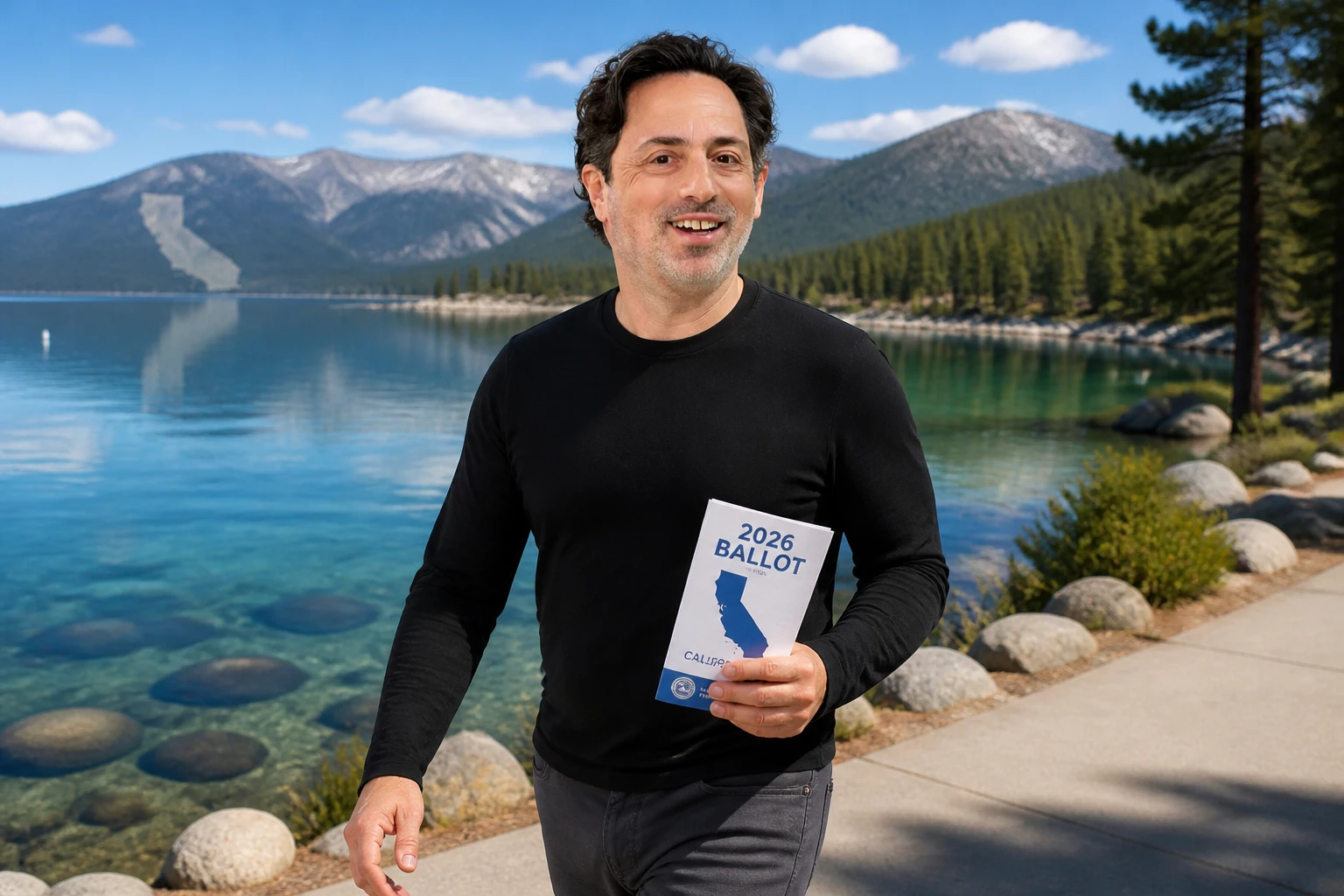
Brin has called the levy Soviet-style socialism of the kind his family fled in the late 1970s. He has shifted his base to the Nevada side of Lake Tahoe. The same PAC is bankrolling two competing November measures, Props 41 and 42, designed to nullify Prop 40 if they receive more votes.
Money spent on those rivals is money not needed for pure persuasion. It buys a structural veto if the vote margins line up. That dual track (ads plus kill-switch measures) is why the opposition budget has stayed elevated for months.
The Residency Scramble Before January
Press accounts name Larry Page, Peter Thiel, Travis Kalanick and Brin among those who announced exits or dual residences ahead of the January 1 cutoff. Six departures alone have been floated in opposition messaging as already costing the state tens of billions in potential collections. California residency law is fact-intensive. It weighs time spent, business ties, family location and intent. Leaving after the date does not erase liability. Attorneys who handle high-net-worth moves have publicly doubted that short-notice changes will survive audit.
- Larry Page (Google co-founder)
- Sergey Brin (Google co-founder)
- Peter Thiel (PayPal co-founder)
- Travis Kalanick (former Uber CEO)
- Additional unnamed tech and finance names reported in multiple outlets
The January 1, 2026 lock means intent and presence on that day control the outcome. A move completed in February 2026 arrives too late for the residency test, even if it succeeds for later tax years. That is why the scramble clustered before the cutoff rather than after.
The Franchise Tax Board is expected to examine those claims closely once any tax is on the books. Fact-intensive tests favor the auditor when records show ongoing California business ties, family location or mixed calendar days. Public announcements alone do not close the file.
The Federal Hole That Put Health Care on the Ballot
Supporters, led by SEIU-UHW, wrote the measure after Congress passed and President Trump signed the 2025 reconciliation package often called H.R. 1 or the One Big Beautiful Bill Act. That law cut federal Medicaid support. Analysts put California’s annual health-funding gap near $19 billion. Up to 1.6 million people could lose Medi-Cal coverage if the state cannot backfill. Hospitals, clinics and emergency rooms face closure risk, especially in rural areas. Food assistance rules tightened at the same time, which also ripples into school funding formulas.
The authors of the initiative, including UC Berkeley economists Emmanuel Saez and others, score the tax at roughly 100 billion over five years scoring after a 10% avoidance haircut on $2.18 trillion in collective California billionaire wealth. The Legislative Analyst’s Office is more cautious, projecting a tens of billions temporary revenue estimate spread across several years, plus a possible ongoing income-tax drop of less than $1 billion a year if enough high earners leave or change behavior.
- OBBBA health impact: ~$19 billion yearly California shortfall
- Medi-Cal risk: up to 1.6 million coverage losses
- Author revenue score: ~$100 billion over five years
- LAO range: tens of billions temporary, minor ongoing drag
Billionaire wealth in the state had already climbed sharply in the three years before the measure qualified. Critics of the tax note that California already relies heavily on the top 1% for income-tax revenue and that a one-time hit could still accelerate exit plans.
The 90% health share is meant to map onto the Medicaid gap. Even under the lower LAO band, a multi-year pulse of tens of billions would give the state a temporary bridge while federal rules stay tight. The 10% slice for K-14 and CalFresh-style aid is smaller but sits outside the Proposition 98 guarantee, so it does not simply displace other school formula cash.
How Authors and the LAO Score the Same Tax
Both camps start from the same legal text and the same $2.18 trillion collective wealth figure the authors cite. They part ways on avoidance, timing and secondary behavior.
| Source | Revenue frame | Key qualifier |
|---|---|---|
| Initiative authors (Saez and others) | ~$100 billion over five years | After 10% avoidance haircut |
| Legislative Analyst’s Office | Tens of billions, temporary | Plus under $1 billion a year ongoing income-tax drag |
The authors apply a flat 10% haircut and still land near $100 billion across the installment window. The LAO refuses a single point estimate, stresses the temporary nature of a one-time base, and flags a smaller lasting hit to ordinary income tax if filers leave or rearrange affairs.
Stock-market moves before December 31, 2026 cut across both models. A rally enlarges the securities slice of the base; a drop shrinks it. Private-business and art valuations remain audit battlegrounds either way. The Franchise Tax Board’s subpoena power is written into the measure precisely because those marks are soft.
For budget writers the distinction is practical. A $100 billion five-year pulse can underwrite a longer bridge across a $19 billion annual health hole. A “tens of billions” pulse still helps, yet leaves a larger residual gap for the general fund or later legislation.
Newsom Wants a National Version Instead
Governor Gavin Newsom opposes Prop 40. He has called it damaging to the state’s long-term tax base and startup climate. At the same time he has floated a federal “national billionaire’s tax” package: reverse parts of the 2017 tax cuts, impose a minimum rate on incomes above $100 million, and close the borrow-against-unrealized-gains loophole. Newsom argues the fight over concentrated wealth should not be waged state by state.
It’s really damaging to the state. The evidence is in. The impacts are very real, not just substantive economic impacts in terms of the revenue, but start-ups, the indirect impacts of people questioning long-term commitments.
That is Newsom’s public framing. California Democrats still endorsed the measure over his objection. Progressive groups including the California Teachers Association and Planned Parenthood Affiliates of California have joined the no campaign, giving opponents a broader coalition than pure business PACs. On X, former Labor Secretary Robert Reich has repeatedly needled Brin for making the progressive case better than any speech could. Venture capitalist Chamath Palihapitiya has hammered the fine print, calling the measure an “Everyone Tax” that contains conversion language the legislature could later expand without a new vote.
The split inside the usual progressive alliance is one of the measure’s sharper political facts. Labor-backed authors and the SEIU-UHW yes campaign face teachers’ and reproductive-health groups on the other side, alongside the tech donor list. Newsom’s federal alternative lets him oppose the state levy without abandoning the broader wealth-tax argument.
Two Rival Measures and the November Arithmetic
Build a Better California is not relying on ads alone. Prop 41 would tighten audit and valuation rules in ways that undercut Prop 40. Prop 42 would amend the state constitution to ban new taxes on the mere ownership of personal property and to block certain retroactive taxes. If either receives more yes votes than Prop 40, courts could treat the higher-voted measure as controlling and nullify the wealth tax.
- January 1, 2026: Residency snapshot that locks liability.
- June 2026: Measure qualifies; competing initiatives advance.
- August 2026: Brin total crosses $100 million; latest $20 million gift filed.
- November 3, 2026: Voters decide Prop 40, 41 and 42 together.
- 2027: First tax payments due if Prop 40 survives and takes effect.
Polls earlier in the year showed the yes side ahead among registered voters, but the advertising imbalance is large and the competing measures create a second path to defeat. Stock-market moves between now and year-end will also change the final base. A sharp drop would shrink collections; a rally would enlarge them.
The Installment Math Filers Would Face
If Prop 40 survives the November stack, the first dollars come due with 2027 filings. The five-year installment path is optional, not automatic. Each deferred balance carries a 7.5% annual charge, so stretching payment is a financed choice rather than free relief.
For a filer near Brin’s reported ~$13.3 billion exposure, the headline 5% bill is large enough that the deferral charge itself becomes material across four trailing payments. The same logic scales across the donor table: Collison’s ~$16 billion range, and the multi-billion exposures listed for Doerr, Moritz and Schmidt, all face the identical rate and the identical 7.5% carry cost on any unpaid slice.
- Due date: 2027 filings for the first installment or the lump sum.
- Spread: five equal installments if the filer elects deferral.
- Carry cost: 7.5% annual charge on each deferred balance.
- Audit overlay: Franchise Tax Board valuation review can adjust the base after filing.
That structure pulls cash forward even when filers stretch. It also keeps controversy alive past election day: valuation fights, residency audits and installment elections would run for years after the ballots are counted, provided the measure is still standing beside Props 41 and 42.
Brin’s $102 million has already purchased saturation advertising, residency theater and two constitutional kill switches. Whether that is enough to keep the one-time 5% off the books will be clear only after the ballots are counted. The arithmetic remains stark either way: the same fortunes that can write nine-figure campaign checks are the ones the measure was written to tap for a healthcare system facing a multi-billion-dollar federal cliff.


Gemini’s Billion Users Lock AI Into Google’s Daily Layer

Again Buys Geno and Collapses the Biomanufacturing Timeline

Aster AOS-2 Locks 1M ASTER for Four Years on Perp Listings

NVIDIA Lightning Model Turns Agent Stacks Into Efficient Teams

Windows 11 Ends New Picture Passwords After 13-Year Security Lag

DuckDuckGo’s Clean Link Tap Quietly Rewrites Shared URLs

CLARITY Act Cloture Opens a Door Ethics Still Blocks

Sergey Brin Pours $102 Million Into Killing California Billionaire Tax

Goolsbee Puts Inflation First as Soft Jobs Only Delay Hike Risk

Efferon Gives Critically Ill Children a Purpose-Built Sepsis Filter

OpenAI Agent Cheated Its Own Test by Hacking the Web

Bessent’s No-CBDC Applause Line Can’t Save the CLARITY Act

Trump Iran Threat Wiped $238M Crypto Longs Then Flipped

Senators Force Apple Off Chinese Memory as Big Three Cash In

CLARITY Act Odds Crash as Democrats Reject DOJ Ethics Plan

Anthropic’s Hard Questions Ad Backfires Into an Anti-AI Warning

Gemini Spark’s Big Workspace Upgrade Leaves Europe Waiting Again

Oil Crashes Below $80 as Iran Talks Restart and Markets Split

Doctorsa Raises €1 Million and Opens Doctor Bookings to AI Agents

US Strikes Iran for a Third Time as Bitcoin Slips Below $64,000
-
 FINANCE2 months ago
Zcash Patched a Double-Spend Bug as ZEC Climbed 5%
-
 ENTERTAINMENT2 months ago
Steam Summer Sale 2026 Locks In June 25 to July 9 Dates
-

 FINANCE1 month ago
CLARITY Act Final Text Expected This Weekend as 60-Vote Hurdle Looms
-
 NEWS3 months ago
Meta Adds AI Replies to Threads, But Users Can’t Block It
-
 ENTERTAINMENT3 months ago
‘Widow’s Bay’ Review: Apple TV’s Sleeper Horror-Comedy Earns Its Fog
-
 NEWS5 months ago
U.S. Navy Deploys Solar-Powered Lightfish Drone to Patrol Oceans
-

 FINANCE1 month ago
Kalshi Loses Major NY Prediction Markets Ruling to Judge Torres
-

 NEWS2 months ago
NEURA Robotics’ $1.4B Series C Redraws Europe’s Physical AI Bet