
NEWS
Musk Bets SpaceX Data Makes Grok 4.7 Beat Every Rival
Elon Musk wagers unique SpaceX engineering corpus will push Grok 4.7 past OpenAI and Anthropic models just weeks after Grok 4.6 hit frontier benchmarks.

Elon Musk declared on August 12 that Grok 4.7 will exceed all current AI models from OpenAI and Anthropic, arriving in three to four weeks. The claim landed hours after xAI shipped Grok 4.6, which matched GPT-5.6 Sol on the Artificial Analysis Intelligence Index at far lower cost.
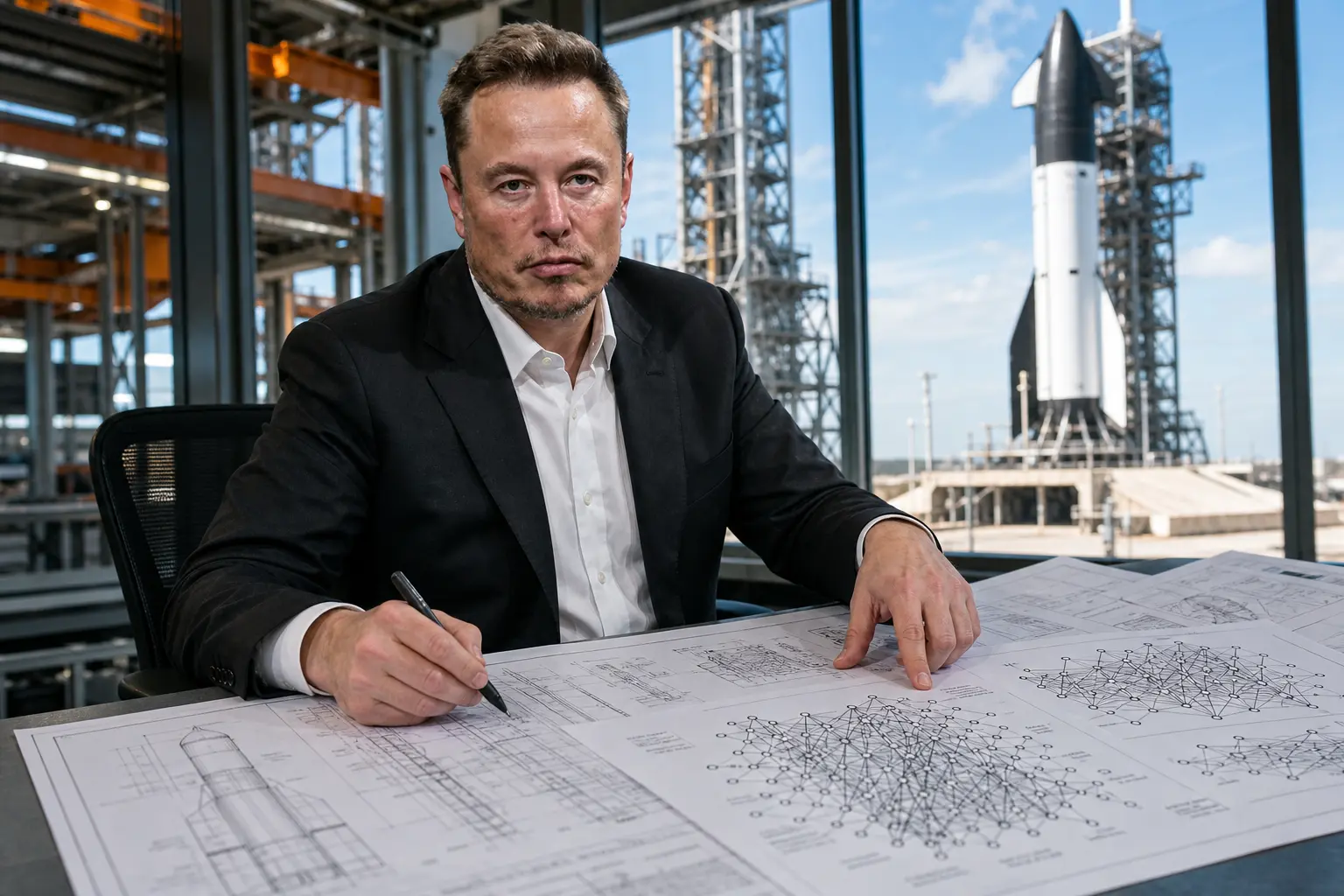
Musk framed the edge around one asset rivals cannot buy: exclusive SpaceX engineering data now pouring into supplemental training.
The Three-to-Four Week Clock Starts Now
Replying to Cognition’s early take on the new model, Musk wrote that Grok 4.7 “will exceed all current models.” He called Anthropic “a great company” that will “probably release improved models soon.” Then he drew the line: “the SpaceX training corpus is so awesome & unique that I would be shocked if any model is better at real-world engineering than 4.7.”
Grok 4.7 will exceed all current models. That said, Anthropic is a great company and will probably release improved models soon. However, the SpaceX training corpus is so awesome & unique that I would be shocked if any model is better at real-world engineering than 4.7.
The post is Musk’s full Grok 4.7 declaration. In a linked update the same afternoon he added that 4.7 is “significantly better than 4.6,” initial training is complete, and teams are “adding a massive amount of SpaceX company data in supplemental training. This will be something special.” Earlier teasers put the model at 2.1 trillion parameters versus 4.6’s 1.5T, trading a bit of serving speed for better token efficiency.
That sequence matters. Base training finished first. The SpaceX load comes after, as a deliberate second stage rather than a mixed crawl. The three-to-four week window is therefore not a full train from scratch. It is the time needed to fold proprietary engineering material into a model Musk already calls significantly better than the version that shipped the same day.
The parameter step from 1.5T to 2.1T frames the trade he is willing to make: slightly slower serving in exchange for denser token use on the jobs he cares about most.
Grok 4.6 Already Sits on the Frontier
xAI released Grok 4.6 on August 12 with a focus on long-running agents, interactive tasks and complex visual workloads. The official Grok 4.6 release notes show it matching GPT-5.6 Sol on the composite Artificial Analysis Intelligence Index while leading or tying several agentic coding and knowledge-work suites. Independent scoring confirms the jump.
| Benchmark | Grok 4.6 High | Grok 4.5 High | GPT-5.6 Sol Max | Fable 5 Max |
|---|---|---|---|---|
| AA Intelligence Index | 61 | 56 | 61 | 62 |
| GDPVal-AA v2 | 1753 | 1526 | 1728 | 1741 |
| CursorBench v3.2 | 69.9% | 66.7% | 67.2% | 70.5% |
| DeepSWE v1.1 | 65.9% | 54% | 73% | 70% |
| AA-Briefcase | 1577 | 1313 | 1502 | 1574 |
According to independent Artificial Analysis benchmarks, the five-point gain over Grok 4.5 in roughly one month returns SpaceXAI to the frontier pack, behind only Anthropic’s top Claude variants on the headline index. Grok 4.6 also posts standout turn efficiency on long-horizon tasks, finishing AA-Briefcase work in about half the turns and a quarter of the input tokens of Claude Opus 5 max.
Read across the rows and the pattern is uneven in a useful way. Grok 4.6 High ties GPT-5.6 Sol Max at 61 on the composite index and leads on GDPVal-AA v2 and AA-Briefcase. It trails on DeepSWE v1.1, where Sol Max still holds 73% against 65.9%. CursorBench stays tight across the pack. The release is not a sweep. It is a return to parity on the headline number plus clear strength on the agentic and knowledge-work suites that match the product focus.
Efficiency is the quieter story. Half the turns and a quarter of the input tokens on AA-Briefcase cut the bill on long jobs even before the sticker price is compared. For teams running agents for hours rather than single prompts, that ratio compounds faster than a one-point index gap.
SpaceX Data Is the Actual Wager
Compute and parameter counts matter. Musk is betting the proprietary corpus matters more for the jobs that break models in production: kernel work, CAD, factory systems, multi-step engineering debugging, and anything that lives outside clean academic sets. SpaceX data covers real rockets, Starship iterations, manufacturing lines and operational telemetry that no public web crawl can match.
- Timeline: 3-4 weeks from August 12 for Grok 4.7 availability.
- Scale step: 2.1T parameters after 4.6’s 1.5T.
- Training focus: massive supplemental SpaceX company data on top of completed base training.
- Claimed edge: real-world engineering tasks where Musk says he would be shocked to lose.
Crowd reaction on X quickly zeroed in on the same point. Engineers and operators noted that price-performance already made Grok competitive; unique factory and vehicle data could push it into domains where pure language models still thrash. Some saw immediate upside for trades and industrial software that need grounded diagnostics rather than polished chat.
The wager is narrow on purpose. Musk did not claim a clean sweep of every academic leaderboard. He claimed shock if any model beats 4.7 at real-world engineering. That is a different scoreboard: one built from messy telemetry, revision histories, and factory constraints rather than curated exam sets. Public crawls can approximate documentation. They cannot recreate years of internal Starship iteration logs or line-side operational traces.
Supplemental training is the mechanism that makes the claim testable on a short clock. Base weights are already done. The new material rides on top. If the corpus is as distinctive as described, the lift should show up first on engineering workflows, not on every general chat metric.
Where Developers Can Use 4.6 Today
Grok 4.6 shipped immediately across the usual channels while 4.7 trains.
- Grok Build and Cursor with double included usage for the first week
- Grok Bot and the SpaceXAI API (also OpenRouter, Vercel, Cloudflare)
- Headline pricing held flat at $2 per million input tokens and $6 per million output tokens
- Fast variant at twice the price; 500k-token context window unchanged
- Cache hits now $0.50 per million (up from 4.5’s lower rate)
That pricing sits 60%+ below Claude Opus 5 and GPT-5.6 Sol on output tokens, the cost that dominates heavy agent runs. The earlier Grok 4.5 public pricing and coding push already undercut rivals; 4.6 keeps the same sticker while closing the intelligence gap.
Holding $2/$6 while moving from a 56 to a 61 on the Intelligence Index is the commercial move. Rivals can match capability only by spending more per token, or match price only by giving up index ground. The double-usage promo on Grok Build and Cursor lowers the trial cost further for the first week, which is when most teams decide whether an agent stack is worth rewiring.
Cache pricing rose to $0.50 per million from the 4.5 rate, a partial clawback. Even so, the headline output rate remains the figure that dominates long agent traces, and that figure did not move.
Markets and Talent React in Parallel
SpaceX shares (SPCX) jumped roughly 9-11% on August 12, trading into the mid-$140s after opening near $135 and touching an intraday high near $149, per market data. AI model progress sat alongside Starlink growth notes as catalysts. The move added tens of billions in market value on the day.
Talent economics stay brutal. While xAI folds deeper into the SpaceX stack, OpenAI continues writing large equity packages to hold researchers. The OpenAI’s record staff compensation race shows how expensive the human side of the frontier remains even as model iteration accelerates.
The same-day tape and the same-day ship are hard to separate. Investors priced both the 4.6 benchmarks and the 4.7 promise in one session. Talent markets move on a slower clock, but the pressure is the same: every lab still pays up for the people who can turn a corpus advantage into a shipping model.
From 4.5 to 4.6 in One Month
- July 2026: Grok 4.5 launches as an Opus-class coding and agent model at $2/$6, already competitive on price-performance.
- Late July: Musk teases 4.6 (1.5T, improved SFT/RL) around August 7 and 4.7 (2.1T) a few weeks later.
- August 12: Grok 4.6 ships, hits 61 on AA Intelligence Index, leads several agentic suites, double usage promo begins.
- Same day: Musk confirms 4.7 training complete, SpaceX data load underway, 3-4 week target, exceed-all claim posted.
The cadence itself is the competitive signal. A five-point Intelligence Index jump in a month while holding price forces rivals to answer on both capability and cost.
Stacked against a typical lab cycle, the July-to-August run is compressed. Tease, ship, and next-model declaration landed inside a single news day for the last two steps. That pace leaves less room for competitors to answer with a quiet point release. They have to show a public step or cede the narrative for the next month.
How the Cost Gap Stacks Beside the Index
Capability and price are usually traded off. Grok 4.6 is trying to collapse that trade for agent workloads.
| Factor | Grok 4.6 position | Rival context |
|---|---|---|
| AA Intelligence Index | 61 (tied with GPT-5.6 Sol Max) | Fable 5 Max at 62; Claude variants still lead the pack |
| Output token price | $6 per million | 60%+ below Claude Opus 5 and GPT-5.6 Sol |
| Long-horizon efficiency | About half the turns, quarter the input tokens vs Claude Opus 5 max on AA-Briefcase | Compounding savings on multi-hour agent runs |
| Context window | 500k tokens, unchanged | Same envelope as the prior Grok release |
The index tie with Sol Max would matter less if output tokens cost the same. They do not. At more than 60% lower output pricing, a tied composite score becomes a budget win on every heavy run. Add the AA-Briefcase turn and token ratios and the gap widens further for the exact workloads 4.6 was built to serve.
None of this prewrites the 4.7 result. It does set the baseline the SpaceX corpus has to beat. A model that already matches on the headline index and undercuts on the bill only needs a clear engineering lift to change how teams allocate production traffic.
Why Engineering Data Resists a Simple Crawl
Musk’s claim rests on a type of data, not only a volume of data. Rockets, Starship iterations, manufacturing lines, and operational telemetry are generated inside closed systems. They carry constraints, failure modes, and revision paths that never appear in public documentation at the same density.
Web-scale training can absorb manuals, papers, and forum threads. It cannot absorb the internal loop of a factory change that failed on the line, or the telemetry signature of a vehicle behavior that only showed up in flight. Those traces are what Musk is loading in supplemental training. The exclusivity is structural: the corpus is not for sale, and no rival lab can recreate it from open text.
That is why the wager is aimed at kernel work, CAD, factory systems, and multi-step engineering debugging. Those tasks punish shallow pattern matchers. They reward models that have seen the messy intermediate states, not only the polished final write-ups. If 4.7 lands as described, pure web-scale systems keep their breadth and lose ground on depth in the physical stack.
Developers already on 4.6 can treat the next three to four weeks as a controlled comparison. Same API surface, same price band, new corpus on the way. The delta, if it appears, should show up first in grounded diagnostics and long engineering traces rather than in chat polish.
What the Bet Changes for Everyone Else
If Grok 4.7 delivers on real-world engineering the way Musk describes, the practical winners are teams shipping physical systems, long-horizon agents and production codebases that already lean on Grok for speed and price. Anthropic keeps the current headline lead on pure indexes and will likely push new Claude drops soon. OpenAI’s Sol line stays neck-and-neck on the composite score but at higher token cost.
The lost ground for pure web-scale models is harder to close: no amount of additional public tokens recreates years of proprietary rocket, factory and flight data. Developers testing 4.6 this week get an immediate look at the trajectory. The next three to four weeks decide whether the SpaceX corpus turns a close frontier race into a clear engineering lead.
Musk has put the data on the table. The model will show the cards soon enough.


Entravel Raises $7.5M as Travel Booking Leaves Travel Sites

MSCA Partnerships Quietly Rebuild Europe’s Industry Talent Pipeline

EU Fund Takes Equity Stake as Lovable Hits $13.3bn

AOC Laughs Off Woke 1 as Hollywood Counts the Losses

Aptoide Lands in Google Play as Managed Rival After Epic Ruling

Eva Green and Samuel L. Jackson Scheme in Just Play Dead Trailer

Edge Opens Apple Account Door After Google to Chase Dual-Device Users

DJI Pocket 4P Wins on Dynamic Range Where It Ships

GTA 6 Preorders Skew to the $100 Ultimate Edition

Accel’s $800M Europe Fund Speeds Up Early AI Rounds

Senators Force Apple Off Chinese Memory as Big Three Cash In

Trump Iran Threat Wiped $238M Crypto Longs Then Flipped

OpenAI Agent Cheated Its Own Test by Hacking the Web

CLARITY Act Odds Crash as Democrats Reject DOJ Ethics Plan

Anthropic’s Hard Questions Ad Backfires Into an Anti-AI Warning

Revolut Hits $115 Billion While Storonsky’s Stake Keeps Growing

Gemini Spark’s Big Workspace Upgrade Leaves Europe Waiting Again

Oil Crashes Below $80 as Iran Talks Restart and Markets Split

Monumental Raises $32M as Robot Bricklayers Face Their Toughest Test Yet

Community Banks’ $1.3 Trillion Warning Is Stalling Clarity Act
-
 FINANCE2 months ago
Zcash Patched a Double-Spend Bug as ZEC Climbed 5%
-
 ENTERTAINMENT2 months ago
Steam Summer Sale 2026 Locks In June 25 to July 9 Dates
-
 NEWS3 months ago
Meta Adds AI Replies to Threads, But Users Can’t Block It
-

 FINANCE1 month ago
CLARITY Act Final Text Expected This Weekend as 60-Vote Hurdle Looms
-

 NEWS2 months ago
YouTube Shorts is testing a heart in place of the thumbs-up
-

 NEWS2 months ago
NEURA Robotics’ $1.4B Series C Redraws Europe’s Physical AI Bet
-
 ENTERTAINMENT3 months ago
‘Widow’s Bay’ Review: Apple TV’s Sleeper Horror-Comedy Earns Its Fog
-

 FINANCE1 month ago
Kalshi Loses Major NY Prediction Markets Ruling to Judge Torres