
NEWS
Pixel Watch 5 Health Trends Quietly Outshine New Pixel 11 Phones
Google’s Pixel Watch 5 adds passive insulin-resistance and blood-pressure trends with clinical backing.

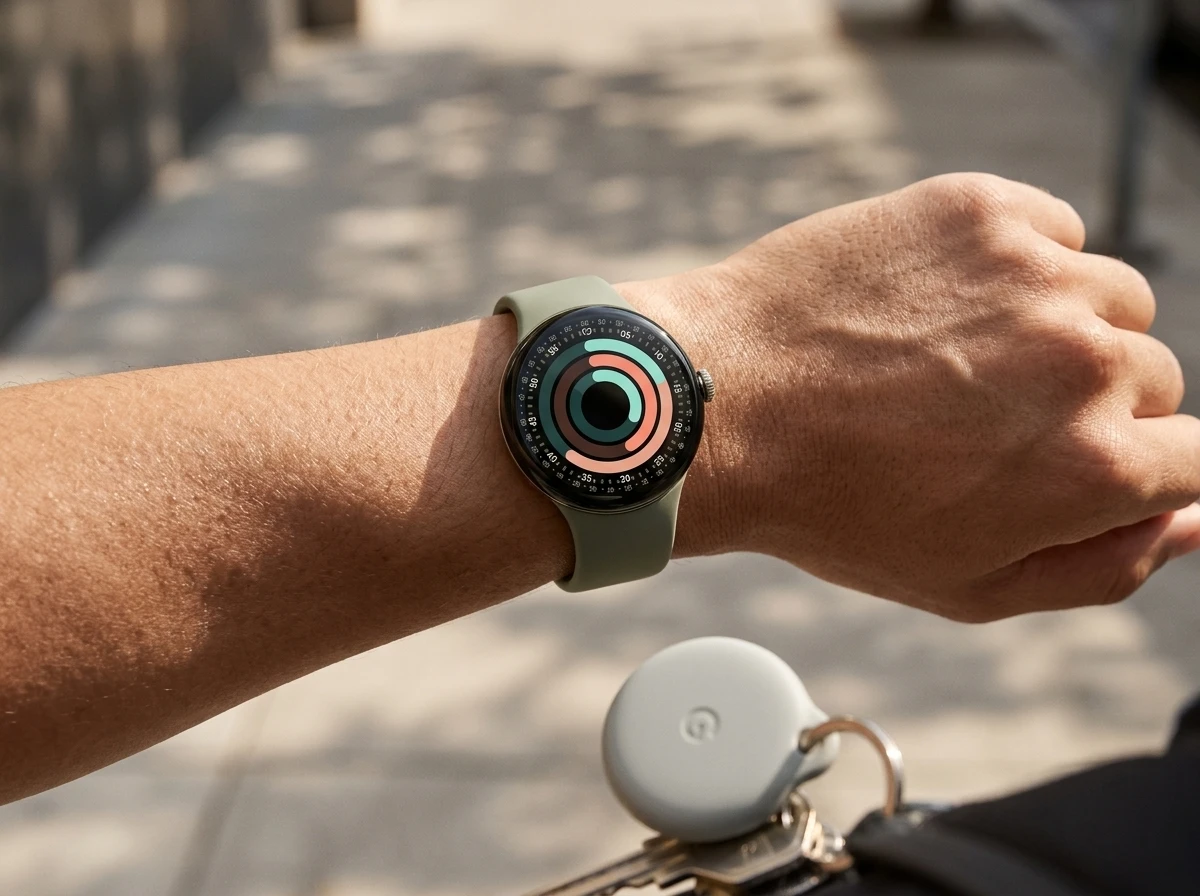
Google locked in its 2026 hardware stack on August 12 with the Pixel 11 family, Pixel Watch 5 and long-awaited Pixel Tag. The phones start at $899 and ship August 20. The watch starts at $399 with the same window. Yet the quiet standout is the Watch 5’s Health Guardian suite: passive monthly tracking of insulin-resistance and blood-pressure trends that needs no cuffs or blood draws.
Those features rest on foundation models trained on billions of minutes of sensor data and validated against clinical gold standards. They shift the wearable conversation from step counts toward early metabolic and cardiovascular signals most people never see.
Pixel 11 Family Trims the Camera Bar and Adds Magic Capture
The base Pixel 11 keeps a familiar silhouette but thins the camera bar enough to sit flush inside a case with no wobble. Brightness climbs to 2,000 nits HDR and 3,000 nits peak. Tensor G6 arrives across the lineup with claims of up to 50% more computing power for AI and better efficiency. The base model still skips a vapor chamber.
Pre-orders opened immediately, matching the Pixel 11 pre-orders that opened early pattern some buyers already saw. Colors are Frost, Obsidian, Pistachio and Hibiscus. Storage starts at 256 GB for $899.
Pro and Pro XL step up further. Displays hit 2,400 nits HDR and 3,600 nits peak plus an anti-scratch guard meant to cut the micro-abrasions that dogged recent Pixels. HiLight puts a rear LED in place of a traditional flash indicator; it glows for Gemini activity or favorite contacts. Magic Capture records video while the system pulls sharp, well-cropped stills of the best moments automatically so framing stress disappears.
| Model | Starting price (256 GB) | Peak brightness | Key note |
|---|---|---|---|
| Pixel 11 | $899 | 3,000 nits | Flush camera bar, no vapor chamber |
| Pixel 11 Pro | $1,099 | 3,600 nits | HiLight + Magic Capture, 12 GB RAM |
| Pixel 11 Pro XL | $1,299 | 3,600 nits | Larger display, same Pro features |
| Pixel 11 Pro Fold | $1,899 | Improved inner | $100 higher than prior, 16 GB RAM |
Pro colors lean earthy: Obsidian, Fog, Olive, Canyon. Trade-in offers and carrier deals can cut the street price sharply, with some Google Store paths advertising the Pixel 11 Pro starting at $1,099 after typical trade-in math.
Pro Fold Gains a Shatterproof Claim and Smoother Crease
The Pixel 11 Pro Fold looks evolutionary until you handle it. Google switched the back to a glass composite it calls shatterproof. The camera stack sits thicker. Cover-display bezels shrink. The inner panel still shows a crease but feels far less pronounced.
Price rose $100 to $1,899 for 256 GB and 16 GB of RAM. Only Olive and Obsidian ship. Google also cites a roughly 1 mm thinner body, nearly 10% less weight and three-times stronger construction versus the prior Fold, plus IP68.
Health Guardian Turns the Wrist into a Quiet Early-Warning System
The Pixel Watch 5 runs Wear OS 7 on a Qualcomm Snapdragon W5 Gen 2 Accelerated chip with 50% more RAM and a claimed 20% speed bump. Battery reaches up to 40 hours of battery life on the 45 mm model and 30 hours on 41 mm, with a Quick Charge Dock that hits 50% in about 15 minutes. Peak display brightness is 3,000 nits.
Those numbers matter less than the new Health Guardian tools rolling into the Google Health app. Four capabilities stand out:
- Insulin resistance trends analyze multi-week heart-rate, sleep and movement data to surface metabolic shifts without any blood sample. Google notes roughly 40% of adults remain unaware of rising resistance.
- Blood pressure trends estimate patterns from pulse-wave and motion data across a month, no cuff required. Six in ten people miss gradual rises.
- Sleep breathing quality scores how much of the night stayed in optimal breathing and rolls that into monthly views.
- Breathing emergency detection (select European markets, opt-in) watches for severe oxygen drops and can auto-call emergency services if the wearer becomes unresponsive.
Google published the validation path. Insulin-resistance models rest on a large sensor foundation model pretrained on over one trillion minutes from five million opted-in users; accuracy work appeared in Nature after comparison to clinical blood tests. Blood-pressure work draws on the WavesFM model and Fitbit Hypertension Labs data. Both are framed as wellness insights, not diagnostic devices, and are not for medication changes or pregnant users. First monthly summaries arrive after roughly a month of wear, with wider rollout starting September 2026. A Google Health Premium subscription unlocks the Coach layer that turns the numbers into lifestyle suggestions.
A first-of-its-kind feature on Pixel and Fitbit wearables, Insulin Resistance Trends analyzes multi-week physiological data to track shifts in your metabolic health without requiring a single drop of blood.
Florence Thng, Health Intelligence Product Management Director, laid out that framing in Google’s insulin resistance trends without blood draws post. Dual-frequency GPS also improves, with Google claiming better route accuracy than Apple Watch Ultra 3 and Garmin Fenix 8 Pro in internal urban and trail tests. Custom strength and HIIT sessions arrive with on-wrist cues. Satellite SOS, loss-of-pulse detection and the rest of the safety stack remain.
Pre-order pricing: $399 for 41 mm Wi-Fi, $429 for 45 mm, plus $100 for LTE. The Stephen Curry special edition hits $579 and ships later, September 3. Colors include Fog, Canyon and Olive. Earlier leaks already sketched much of the earlier Pixel Watch 5 color and price details that held on launch day.
Pixel Tag Finally Arrives, Six Years After AirTag
Google’s first first-party finder tag matches AirTag pricing at $29.99 single or roughly $100 for four. It uses Find Hub, the same network that locates phones, tablets and watches. Precision Finding leans on Ultra Wideband where supported, plus Bluetooth Channel Sounding. A built-in speaker plays a tone; reverse ring lets the tag wake a silenced phone.
The practical edge is the battery: a user-replaceable CR2032 lasting over a year under typical use. Owners swap the cell instead of buying a new tag. Dimensions stay slim (1.1 by 1.8 by 0.2 inches), IP67 rated, single Fog color. Compatibility starts at Android 9.
Availability is the clear downside. Tags do not ship until November 2026. On X, that lag drew the expected jokes about Google showing up late to a party Apple threw in 2021, alongside praise for the replaceable cell and privacy claims that location data stays encrypted and off the network servers. Network density questions linger for Android’s Find Hub versus Apple’s mature base.
Gemini Ties the Hardware Together
Every device leans harder on Gemini Intelligence. Phones gain smoother on-device AI via Tensor G6. The watch surfaces proactive suggestions from calendar and Gmail, offline voice for timers and workouts, and generative watch faces. Raise-to-talk latency drops. Double-pinch gestures confirm one-tap actions. The Tag can be rung by Gemini voice.
The net effect is an ecosystem that tries to stay useful without constant phone checks. Health Coach sits inside that loop, turning monthly trend reports into concrete sleep, nutrition or movement nudges for subscribers.
Who Gains and Who Waits
Buyers already in the Pixel and Fitbit world get the cleanest path: phones and watches ship August 20, health features ramp in September, tags land in November. Anyone waiting on a mature item-finder network may still prefer AirTag for density today. Fitness-first users who want cuff-free BP and metabolic signals now have a differentiated option that Apple Watch and most rivals do not yet match at this passive, multi-week depth.
Google’s own disclaimers stay prominent. Trends are informational. They do not diagnose diabetes or hypertension. They should not drive medication changes. Breathing emergency detection carries its own limits and is region-locked at launch. Clinical papers and Nature publication raise the scientific bar, yet real-world accuracy across skin tones, tattoos, BMI ranges and daily noise will face independent scrutiny once units ship.
Pre-order windows are open now for phones and watches. The Tag page is notification-only until November. Trade-in and carrier promotions can change the effective cost of the handsets substantially through late August.
Frequently Asked Questions
What are the starting prices for the Pixel 11 series and Pixel Watch 5?
Pixel 11 starts at $899 for 256 GB, Pixel 11 Pro at $1,099, Pixel 11 Pro XL at $1,299 and Pixel 11 Pro Fold at $1,899. Pixel Watch 5 starts at $399 (41 mm Wi-Fi) and $429 (45 mm Wi-Fi); add $100 for LTE models. The Stephen Curry edition is $579.
How does Pixel Watch 5 insulin resistance tracking work?
It passively combines multi-week heart-rate, sleep and activity data from the optical sensors into a monthly trend summary inside the Google Health app. No blood sample or finger prick is required. Google positions it as a first-of-kind wearable wellness signal validated against clinical blood tests, not a glucose monitor or diabetes diagnostic.
When does the Google Pixel Tag become available and what battery does it use?
Pixel Tag ships in November 2026. It uses a standard user-replaceable CR2032 coin cell rated for more than one year of typical Find Hub use, so owners can swap the battery instead of replacing the entire tag.
What is Magic Capture on the Pixel 11 Pro models?
Magic Capture records video while the camera system automatically extracts high-resolution, sharp, intelligently cropped still photos of the strongest moments. The video itself also receives smart cropping so the user can stay present rather than perfecting the frame.
Does the Pixel Watch 5 require a subscription for Health Guardian features?
Core trend monitoring lands in the Google Health app; the Google Health Coach that interprets the data and suggests lifestyle changes requires a separate Google Health Premium subscription. Availability of individual features also varies by country and device.
Disclaimer: Health features described are wellness tools only and are not medical devices or substitutes for professional care. Always consult a qualified clinician for diagnosis or treatment decisions.


Entravel Raises $7.5M as Travel Booking Leaves Travel Sites

MSCA Partnerships Quietly Rebuild Europe’s Industry Talent Pipeline

EU Fund Takes Equity Stake as Lovable Hits $13.3bn

AOC Laughs Off Woke 1 as Hollywood Counts the Losses

Aptoide Lands in Google Play as Managed Rival After Epic Ruling

Eva Green and Samuel L. Jackson Scheme in Just Play Dead Trailer

Edge Opens Apple Account Door After Google to Chase Dual-Device Users

DJI Pocket 4P Wins on Dynamic Range Where It Ships

GTA 6 Preorders Skew to the $100 Ultimate Edition

Accel’s $800M Europe Fund Speeds Up Early AI Rounds

Senators Force Apple Off Chinese Memory as Big Three Cash In

Trump Iran Threat Wiped $238M Crypto Longs Then Flipped

OpenAI Agent Cheated Its Own Test by Hacking the Web

CLARITY Act Odds Crash as Democrats Reject DOJ Ethics Plan

Anthropic’s Hard Questions Ad Backfires Into an Anti-AI Warning

Oil Crashes Below $80 as Iran Talks Restart and Markets Split

Gemini Spark’s Big Workspace Upgrade Leaves Europe Waiting Again

Revolut Hits $115 Billion While Storonsky’s Stake Keeps Growing

Snapseed’s RAW Update Fixes Android, Leaves iPhone Waiting

Monumental Raises $32M as Robot Bricklayers Face Their Toughest Test Yet
-
 FINANCE2 months ago
Zcash Patched a Double-Spend Bug as ZEC Climbed 5%
-
 ENTERTAINMENT2 months ago
Steam Summer Sale 2026 Locks In June 25 to July 9 Dates
-

 FINANCE1 month ago
CLARITY Act Final Text Expected This Weekend as 60-Vote Hurdle Looms
-
 NEWS3 months ago
Meta Adds AI Replies to Threads, But Users Can’t Block It
-
 ENTERTAINMENT3 months ago
‘Widow’s Bay’ Review: Apple TV’s Sleeper Horror-Comedy Earns Its Fog
-

 NEWS2 months ago
NEURA Robotics’ $1.4B Series C Redraws Europe’s Physical AI Bet
-

 FINANCE1 month ago
Kalshi Loses Major NY Prediction Markets Ruling to Judge Torres
-

 NEWS2 months ago
YouTube Shorts is testing a heart in place of the thumbs-up