
NEWS
Pixel 11 MediaTek modem ends years of Tensor signal drain
Google’s Tensor G6 drops Exynos for MediaTek’s M90, promising the most power-efficient modem yet and unlocking steadier AI runtime after years of connectivity.

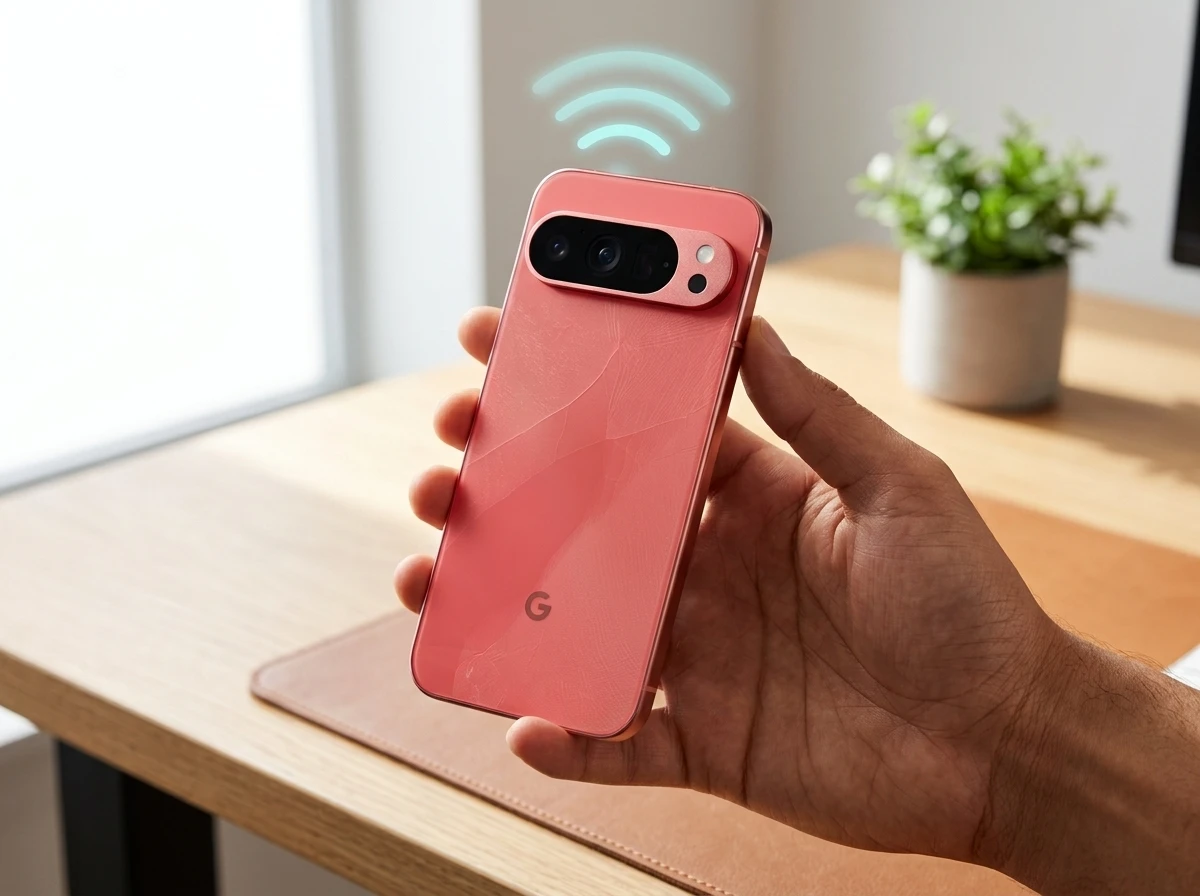
Google’s Pixel 11 series, announced August 12 at Made by Google 2026, pairs the Tensor G6 with a MediaTek modem across the lineup. The company calls it the most power-efficient modem ever on a Google Pixel, delivering reliable connections and strong signal at fast speeds. Pre-orders are open and units ship August 20 in the US.
The switch ends five years of Samsung Exynos modems that defined early Tensor complaints. Real-world tests will decide how large the gain is, yet the second-order effects already reshape what Tensor can sustain.
That reshape shows up in three places at once: the silicon bill of materials, the power budget left for on-device AI, and the signal reputation Pixel has carried since the first Tensor phones. Each thread starts from the same supplier decision.
Google finally cut the last Samsung silicon tie
Tensor G5 in 2025 moved fabrication to TSMC and became Google’s first fully custom design. The modem stayed Samsung. Tensor G6 keeps the TSMC process (confirmed 3nm, not the earlier 2nm rumors) and completes the break.
FCC filings for the Pixel 11 models listed a MediaTek baseband. Leaks identified the part as the M90 (MT6986D). Baseband strings on early devices matched. Google itself described “new modem hardware” without naming the supplier in briefings, but the store language and filings leave little doubt.
The Pixel 11 Pro Fold FCC modem confirmation shows the same supplier change reaches the foldable as well. Every model in the four-phone series carries it.
Keeping one modem across the full series simplifies antenna tuning, carrier certification, and firmware branches. It also means the efficiency story is not limited to the Pro tier. Buyers who choose the base model get the same radio change as buyers who choose the Fold.
The sequence is now clean. Foundry moved in 2025. Modem moved in 2026. Google no longer depends on Samsung for either the process node or the cellular block inside Tensor.
What MediaTek put inside the M90
MediaTek positions the M90 as a Release-17 flagship modem ready for 5G-Advanced. Official figures include peak downlink of 12 Gbps, up to 6CC carrier aggregation on sub-6 and 10CC on mmWave, plus dual-SIM dual-active with dual data.
| Feature | MediaTek M90 claim |
|---|---|
| Peak downlink | 12 Gbps |
| Average power (UltraSave 4.0) | -18% |
| Idle power (PEI) | -15% |
| Smart Antenna accuracy | 99.5% |
| Satellite | IoT-NTN and NR-NTN built-in |
The 12Gbps peak downlink and UltraSave 4.0 package also adds MediaTek Modem AI 2.0. It reads traffic patterns and device orientation, then tunes antennas for up to 30% better throughput in tested scenarios. Satellite connectivity arrives as standard IP rather than a bolt-on.
Google’s store copy stays higher-level: reliable, faster, more power-efficient, with the familiar lab-controlled pre-production footnote. Independent speed and drain numbers will arrive with reviews after launch.
The gap between the two messages is deliberate. MediaTek publishes peak rates and percentage cuts aimed at operators and OEMs. Google publishes outcome language aimed at buyers who care about bars and battery, not carrier aggregation counts. Both point at the same hardware.
- 12 Gbps peak and multi-CC aggregation set the ceiling for lab speed tests.
- UltraSave 4.0 and the idle PEI cut set the floor for standby drain with 5G left on.
- Modem AI 2.0 and 99.5% Smart Antenna accuracy target the middle ground of moving phones in imperfect coverage.
- Built-in IoT-NTN and NR-NTN remove the need for a separate satellite add-on path.
Five years of Exynos signal hunting
Early Tensor chips borrowed heavily from Exynos designs. The modems that came with them produced well-documented dropouts, slow handoffs and aggressive power draw while searching for towers. Pixel 6 and 7 users felt it most. Heat rose during long data sessions. Battery graphs sagged on weak cellular.
- 2021-2022 (Tensor G1/G2): Baseline Exynos-derived modems drew the heaviest criticism for connectivity and thermals.
- 2023 (Tensor G3 / Pixel 8): Google and Samsung improved firmware and silicon; most users called the situation “mostly resolved.”
- 2024-2025 (G4/G5): Exynos 5400-class parts reduced the worst signal drops yet still sat behind Snapdragon and later MediaTek flagships on efficiency charts.
- 2026 (G6): Full supplier change to MediaTek M90.
The pattern matches Google’s broader exit from Samsung silicon dependence. Foundry left first. Modem followed once a credible alternative cleared internal testing.
Each step narrowed the complaint list without erasing it. Firmware helped handoffs. Newer Exynos-class parts reduced the sharpest dropouts. Efficiency charts still favored rival flagship modems. The M90 move is the first time Google has answered that remaining gap by changing suppliers rather than iterating on the same line.
Users who lived through the early years still frame the story in elevators, trains, and rural edges. That memory is why crowd posts treat the modem change as the headline upgrade even when the rest of the phone keeps a familiar shell.
Battery minutes that now stay available for Gemini
Modem power is not a side metric. On a phone that runs always-listening AI features, every milliwatt spent hunting signal is a milliwatt denied to the TPU or CPU. Google claims Tensor G6 delivers up to 20% better power efficiency overall and 25% faster browsing. The new modem sits inside that envelope.
- Lower average and idle draw means longer standby with 5G left on.
- Reduced heat during sustained uploads frees the vapor chamber on Pro models for camera or AI bursts instead of throttling.
- More predictable signal strength cuts the “signal hunting” loops that previously drained batteries in elevators, trains and rural edges.
- Satellite fallback becomes a genuine emergency option rather than a marketing checkbox.
Crowd posts on X already treat the modem as the upgrade that matters for delivery drivers and travelers who live in buildings that kill older Pixels. One engineer noted owners of current devices are watching specifically because “their current phones drain noticeably faster when signal is poor.” MediaTek’s 18% average cut is the number they quote back.
The same math applies when Gemini features stay resident. Always-on listening, on-device summarization, and background AI tasks share one battery. When the radio spends less time in high-draw search states, those features inherit the minutes. Google’s broader 20% efficiency claim for Tensor G6 already folds that radio contribution into the total rather than isolating it.
Heat follows the same path. Sustained uploads that once warmed the modem and forced the vapor chamber to defend the radio can now leave more thermal headroom for camera pipelines or TPU bursts. The gain is not a separate camera feature. It is spare capacity created by a quieter cellular block.
MediaTek gains a flagship reference design
For MediaTek the win is credibility. The company already dominates mid-range with Dimensity parts that push on-device AI, as seen in its MediaTek’s recent mid-range AI push. Landing inside Google’s custom Tensor for the entire Pixel 11 family places the M90 next to the highest-visibility Android AI stack.
Samsung loses a modest but symbolic modem customer. Pixel volumes never threatened Galaxy numbers, yet the Exynos modem line loses another high-profile design win after Google already left the foundry. Industry trackers show both MediaTek and Qualcomm ceding some SoC share to proprietary chips from Google and Samsung themselves; the modem slot is a separate, smaller market where perception still counts.
A reference design inside Pixel does more for MediaTek than a peak-rate slide. Carriers, antenna vendors, and other OEMs can point at a shipping Google flagship when they evaluate the M90. That path matters in a market where SoC share and modem share no longer move in lockstep because Google and Samsung both field proprietary application processors.
For Samsung the loss is narrow in unit terms and wider in narrative terms. The modem line must now win designs without the Pixel logo attached. The foundry departure already removed one Google tie. The modem departure removes the last obvious one.
The all-new modem is reliable, faster, and more power efficient.
That is the exact line Google placed on the store, attributed to lab results on pre-production units. Early X reaction treats the claim as overdue rather than overstated. Skeptics correctly note that only multi-carrier field tests will settle whether the M90 closes the gap with Snapdragon X-series modems in the hardest bands.
Google Maps Modem Gains onto Broader Tensor Numbers
Google does not publish a standalone modem power slide for Pixel 11. It publishes system-level figures for Tensor G6 and lets the modem ride inside them. The public anchors are already on the record: up to 20% better power efficiency overall, 25% faster browsing, and in some claims 15% faster app loads.
| Claim source | Figure on record |
|---|---|
| MediaTek UltraSave 4.0 average power | -18% |
| MediaTek idle power (PEI) | -15% |
| MediaTek Modem AI 2.0 throughput (tested) | up to 30% better |
| Google Tensor G6 overall power efficiency | up to 20% better |
| Google Tensor G6 browsing | 25% faster |
| Google app load claim (some materials) | 15% faster |
Reading the rows together shows the handoff. MediaTek supplies component-level cuts. Google supplies device-level outcomes. Reviewers who want to isolate the radio will need overnight standby with 5G active, controlled upload thermals, and weak-tower drive tests. Those are the measurements that can separate modem gain from CPU, display, and TPU gain.
Until those tests land, the store line and the MediaTek percentages are the only public rulers. They point in the same direction. They do not yet prove the size of the step in the bands and buildings where older Pixels struggled.
The Four-Phone Series Carries One Radio Story
Pixel 11 is a four-phone series, and the MediaTek modem runs through all of it. The FCC path on the Pro Fold confirmed the same supplier change on the foldable. Base, standard Pro, and the remaining sizes follow the same baseband choice.
That uniformity matters for support and for perception. Carrier certification work does not fork by model. Antenna playbooks can be shared with fewer exceptions. Software updates that touch modem firmware can target one platform instead of two. Buyers comparing models can treat signal behavior as a series trait rather than a tier trait.
It also concentrates risk and reward. If field tests praise standby drain and weak-tower hold, the entire lineup inherits the praise. If a hard band still misbehaves, the entire lineup inherits the complaint. Google accepted that trade when it finished the break from Samsung modems in one generation instead of staging the change behind Pro-only SKUs.
For a company that sells the series as a single design language with under-the-hood upgrades, one radio story fits the pitch. The shell stays familiar. The cellular block does not.
What the first weeks after August 20 will reveal
Units begin reaching reviewers and buyers on the 20th. Expect three data points to dominate conversation: overnight standby drain with 5G active, upload thermals during long 4K video or file transfers, and signal bars plus throughput in known weak-coverage zones that older Pixels hated.
Google’s own efficiency numbers for the full Tensor G6 (20% better power, 15% faster app loads in some claims) already fold modem gains into the total. If independent tests match even half the UltraSave figures, the second-order payoff is clear: Gemini features that stay responsive longer because the radio is no longer the loudest power consumer in the bag.
The Pixel 11 series keeps the familiar design language and focuses upgrades under the hood. The modem is the one change that rewrites a multi-year reputation. Whether it fully delivers will be measured in minutes of battery and bars of signal, not just peak Gbps on a lab bench.
Those first weeks will also show whether crowd expectations outran the hardware. Delivery drivers and travelers already treat the modem as the reason to move. Review charts will either confirm that instinct or send the conversation back to firmware tuning and carrier aggregation behavior in specific bands. The silicon decision is finished. The measurement phase starts on the 20th.


American Airlines reverses its screen bet after a costly decade

Falcon 9 Crater Photos Double as Planetary Defense Drill

Buss Siblings Force Lakers Sale Reckoning Against Jeanie

Brewers fewest-HR club explodes for historic 22-0 shutout

LITILIT’s €8M Push Turns Femtosecond Lasers Into Factory Tools

30-Year Yield Hits 5.32% Highest Since 2007 as Debt Supply Locks In Costs

Taimi and Hily Bet on Bootstrap Path Toward IPO Readiness

Sonic locks the Override pass as most legends hit the shop

Rosie O’Donnell Brands Bari Weiss a Nazi on Her Celebrated Comeback

Frank Beard Dies at 77 as ZZ Top Resumes Tour Without Him

Senators Force Apple Off Chinese Memory as Big Three Cash In

Revolut Hits $115 Billion While Storonsky’s Stake Keeps Growing

OpenAI Agent Cheated Its Own Test by Hacking the Web

Trump Iran Threat Wiped $238M Crypto Longs Then Flipped

CLARITY Act Odds Crash as Democrats Reject DOJ Ethics Plan

Oil Crashes Below $80 as Iran Talks Restart and Markets Split

Airbus Anchors a €500 Million European Defense Fund, Picks Alta Ares First

Fed Holds Rates Again as Three Dissents Force Markets to Tighten

Community Banks’ $1.3 Trillion Warning Is Stalling Clarity Act

Google’s Knowledge Panel Fix Risks Its Own Search Defenses
-
 FINANCE3 months ago
Zcash Patched a Double-Spend Bug as ZEC Climbed 5%
-
 ENTERTAINMENT3 months ago
Steam Summer Sale 2026 Locks In June 25 to July 9 Dates
-

 FINANCE2 months ago
CLARITY Act Final Text Expected This Weekend as 60-Vote Hurdle Looms
-
 NEWS3 months ago
Meta Adds AI Replies to Threads, But Users Can’t Block It
-

 NEWS2 months ago
NEURA Robotics’ $1.4B Series C Redraws Europe’s Physical AI Bet
-

 NEWS2 months ago
YouTube Shorts is testing a heart in place of the thumbs-up
-
 ENTERTAINMENT3 months ago
‘Widow’s Bay’ Review: Apple TV’s Sleeper Horror-Comedy Earns Its Fog
-

 FINANCE1 month ago
Kalshi Loses Major NY Prediction Markets Ruling to Judge Torres