
NEWS
Spotify Playlist Notes turn picks into stories users and editors share
Spotify’s Playlist Notes let users and editors add context to songs, podcasts and audiobooks, rolling out with Editor Profiles after the July User Notes launch.

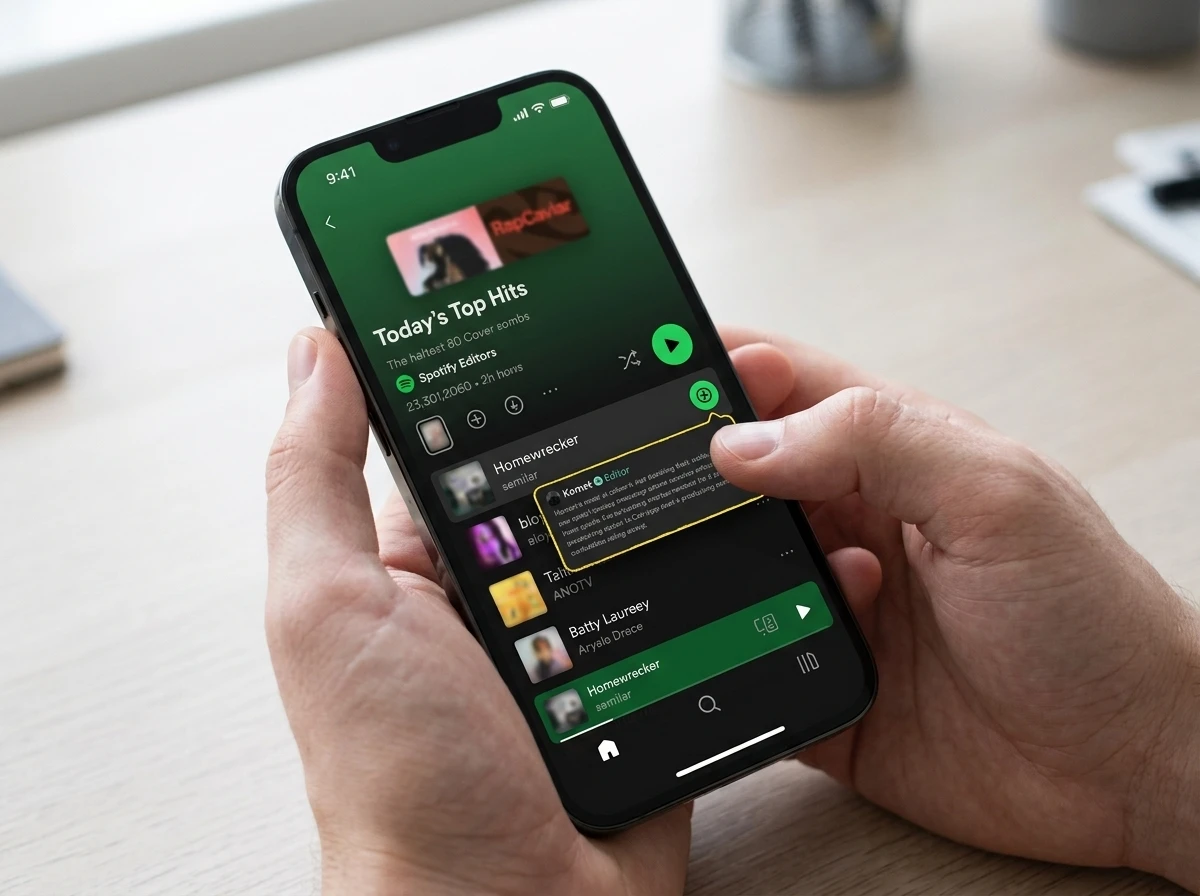
Spotify began rolling out Playlist Notes on August 17, 2026, letting users and editors attach short context to songs, podcast episodes and audiobooks inside playlists. The feature expands last month’s User Notes and pairs with new Editor Profiles in six markets.
The company frames it as another way for playlist makers to tell a story beyond track order, cover art or transitions. Notes appear in the playlist and can surface in Now Playing even when the track plays elsewhere.
That dual placement matters. A note written once can follow a song from a private list into a shared one and still surface when the same track plays on shuffle. The design treats context as portable rather than locked to a single screen.
Playlist Notes expand beyond songs
User Notes, launched July 30, were limited to individual tracks. Playlist Notes keep the same short-form approach and add podcast episodes and audiobooks that sit in a playlist. Spotify’s official Playlist Notes announcement says editors will use the tool to explain why a track matters, what makes it culturally relevant, or why it belongs on that list.
Anyone who can view the playlist can see the notes. The note author’s name links to their profile. Notes must follow the Spotify Platform Rules that notes must follow and the service’s terms of use.
User-curated Playlist Notes are rolling out on iOS and Android in more than 100 markets. Availability can differ from the editor version.
The podcast and audiobook addition is the clearest break from the July version. A list that mixes music with spoken word can now carry the same short captions across every item type, so a recommendation for a track and a reason for an episode share one format.
Because the author’s name links out, a note also becomes a light discovery path. Listeners who like a caption can jump to the writer’s profile without leaving the playlist flow.
Editors step out from behind the lists
Editor Profiles launch alongside the notes. Each profile shows an editor’s top tracks, top albums and the playlists they contribute to. Listeners tap an editor’s name next to a note or at the top of a playlist to open the profile.
The first wave of editor notes and profiles reaches Free and Premium users aged 16 and older in the United States, Canada, the United Kingdom, Ireland, Australia and New Zealand. Spotify is seeding notes on several flagship lists.
| Playlist | Initial notes presence |
|---|---|
| Today’s Top Hits | Yes |
| RapCaviar | Yes |
| Hot Country | Yes |
| All New Pop | Yes |
| mint | Yes |
| Fresh Finds Hip-Hop | Yes |
Tap Notes at the top of a participating playlist to browse. The move gives the people who build Spotify’s biggest editorial lists a public face after years of relatively anonymous curation.
Those six markets form a tight English-language first wave. The age gate matches the July User Notes rollout, so the same 16-and-older audience that already saw personal captions now sees editorial ones on the major lists.
Seeding notes on flagship playlists means the feature arrives with visible examples rather than empty slots. Listeners who open Today’s Top Hits or RapCaviar can browse notes immediately instead of waiting for a gradual fill.
How users add a note on mobile
The steps stay simple and match the earlier User Notes flow.
- Open a playlist you own or collaborate on.
- Tap the three dots next to a track, podcast episode or audiobook you added.
- Select Add note.
- Type the note and tap Save.
Early coverage and the July launch put the limit near 240 characters, enough for a memory, a recommendation or a one-line reason the pick made the cut. Users on X have already described the result as turning a playlist into a personal music diary that makes sharing with friends feel more intentional.
Ownership and collaboration both unlock the add path. That keeps notes inside lists the user already controls, rather than opening every public playlist to open annotation.
The three-dot entry point mirrors other track-level actions, so the new option does not demand a separate menu. Save is the only extra tap after typing.
The July launch that seeded this
User Notes arrived July 30 for users 16 and older on free and Premium plans in select markets. Spotify told TechCrunch the notes would let people caption why a track joined a playlist or when they first heard it, citing examples such as discovering a song walking in Paris or hearing it on a first date.
“Over time, these notes paint a picture of the music listeners love and the moments that shaped it,” the company said then. Playlist Notes keep that journal logic and extend it to podcasts and audiobooks while handing the same tool to the editorial team.
The same July day also brought Running Mode, another personalization layer. The August expansion shows the company is stacking small social and context tools rather than waiting for one large redesign.
The stretch from late July to mid-August is short enough to read as one product arc rather than two unrelated drops.
- July 30, 2026 – User Notes and Running Mode ship together for eligible free and Premium accounts.
- August 4, 2026 – Q2 results land with fresh subscriber, MAU, revenue and margin figures.
- August 17, 2026 – Playlist Notes and Editor Profiles begin rolling out, extending the July caption idea to lists, podcasts, audiobooks and editorial teams.
Each step reuses the short-form caption idea instead of replacing it. Editors inherit the same character style users already saw, which keeps the product surface familiar even as the audience for notes widens.
300 million subscribers and a social habit
The timing sits against fresh scale numbers. Spotify reported 300 million Premium subscribers in Q2, up 9 percent year over year, and 777 million monthly active users, up 12 percent. Revenue reached €4.8 billion and gross margin hit a record 33.4 percent.
Co-CEO Alex Norström pointed to the breadth of daily listening moments the service already occupies. Co-CEO Gustav Söderström stressed faster shipping of products people love. Playlist Notes fit that pattern: low-friction, high-frequency context that keeps users inside the app longer.
- 300 million Premium subscribers at the end of Q2 2026
- 777 million monthly active users
- €4.8 billion total revenue, up 14 percent year over year
- 33.4 percent gross margin, an all-time high
Earlier this year the company also ran the Spotify 20 personal music retrospective, which drew nearly 100 million people in its first six days. Context and nostalgia tools keep proving sticky.
Subscriber growth, MAU growth and a record margin give the company room to ship social features that do not need to monetize on day one. Notes add time-in-app and sharing value first; any ad or Premium lift would come later.
The Spotify 20 response showed that large audiences will open the app for personal context when the framing is clear. Playlist Notes aim at a smaller, repeatable version of that habit: a caption per track instead of a once-a-year retrospective.
Where Apple Music still trails on context
Spotify has long led on social listening. Friend activity, Blend playlists that merge tastes, easy sharing to Instagram and TikTok, Spotify Codes and collaborative editing all pre-date notes. Collaborative playlists already let friends edit tracks, reorder them and react. Notes add the missing layer of written reason.
Apple Music closed the collaborative-playlist gap in recent iOS updates and added emoji reactions, yet it still lacks an equivalent public note system tied to editorial profiles. YouTube Music remains lighter on friend-graph features. Independent comparisons in 2026 still credit Spotify with the clearest social toolkit.
The company is also shipping parallel personalization work such as the AI playlist tool for US Premium users and a setting that turns off music videos. Notes sit on the human side of that mix: users and editors supply the words while algorithms keep serving the next track.
Collaborative editing already solved who can change a list. Notes answer why a change happened. That split keeps the mechanical tools and the explanatory tools distinct, so a friend can reorder a track while another friend explains the pick in plain text.
| Capability | Spotify | Apple Music | YouTube Music |
|---|---|---|---|
| Collaborative playlists | Yes | Yes (recent iOS updates) | Lighter friend-graph overall |
| Emoji or quick reactions | Yes (react on collab lists) | Yes | Not a focus |
| Public notes plus editorial profiles | Yes (Playlist Notes) | No equivalent | No equivalent |
Users and editors share one caption format
Playlist Notes reuse the short-form style from User Notes for both audiences. Editors explain cultural relevance or programming choices; listeners log memories, recommendations or one-line reasons a pick made the cut. The character limit stays near the same 240-character band described at the July launch.
That shared format lowers the learning curve. Someone who already wrote a personal note on a track knows how an editor note will look on Today’s Top Hits or Hot Country. Profiles then separate the two groups: an editor profile surfaces top tracks, top albums and contributed playlists, while a listener’s name still links to their own profile from any note they write.
Platform Rules and terms of use apply to every note, so the same safety layer covers flagship editorial captions and private diary-style lines. Visibility follows the playlist: anyone who can view the list can read its notes.
The six-market editor wave and the broader 100-plus-market user wave will not always match. A listener in a user-only market can still write notes on their own lists while waiting for editorial profiles to arrive later.
How notes change shared and flagship lists
Collaborative playlists already let friends edit tracks, reorder them and react. Notes fill the gap those tools left open: a durable written reason that survives after the chat moves on. A shared list can now carry both the song choice and the sentence that justified it.
On editorial side, the seeded flagship lists turn programming judgment into something listeners can browse without leaving the playlist. Tap Notes at the top, read why a track belongs, and optionally open the editor’s profile for more of their work. Years of relatively anonymous curation give way to named bylines next to the same short captions users already understand.
- Private lists gain a portable diary layer tied to tracks, episodes and audiobooks.
- Collaborative lists gain explanations that sit beside reactions and reorder history.
- Flagship editorial lists gain public faces and browsable cultural or programming context.
None of that replaces cover art, track order or transitions. Notes stack on top of those older signals instead of swapping them out.
Notes show up even outside the playlist
Once a note exists, it can appear in Now Playing when the same song, episode or audiobook plays outside the original list. That small detail turns a one-time annotation into ambient context across the app.
Editors gain a low-effort channel to surface cultural or programming reasons that used to live only in internal docs or occasional video explainers. Users gain a lightweight journal that travels with shared playlists. Both groups now leave a readable trail that passive listeners never saw before.
Playlist Notes remain in active rollout. User versions continue spreading across more than 100 markets on mobile while editor notes and profiles start in the six named countries. Update the app to receive the feature as it reaches each account.
Until the rollout finishes, availability will look uneven by market and by account type. The path stays the same either way: keep the app current, open a playlist you own or collaborate on, and look for Add note beside the items you placed there.


American Airlines reverses its screen bet after a costly decade

Falcon 9 Crater Photos Double as Planetary Defense Drill

Buss Siblings Force Lakers Sale Reckoning Against Jeanie

Brewers fewest-HR club explodes for historic 22-0 shutout

LITILIT’s €8M Push Turns Femtosecond Lasers Into Factory Tools

30-Year Yield Hits 5.32% Highest Since 2007 as Debt Supply Locks In Costs

Taimi and Hily Bet on Bootstrap Path Toward IPO Readiness

Sonic locks the Override pass as most legends hit the shop

Rosie O’Donnell Brands Bari Weiss a Nazi on Her Celebrated Comeback

Frank Beard Dies at 77 as ZZ Top Resumes Tour Without Him

Senators Force Apple Off Chinese Memory as Big Three Cash In

Revolut Hits $115 Billion While Storonsky’s Stake Keeps Growing

OpenAI Agent Cheated Its Own Test by Hacking the Web

Trump Iran Threat Wiped $238M Crypto Longs Then Flipped

CLARITY Act Odds Crash as Democrats Reject DOJ Ethics Plan

Airbus Anchors a €500 Million European Defense Fund, Picks Alta Ares First

Oil Crashes Below $80 as Iran Talks Restart and Markets Split

Fed Holds Rates Again as Three Dissents Force Markets to Tighten

Memory Shortage Now Dictates Apple’s Two-Year Mac Roadmap

Google’s Knowledge Panel Fix Risks Its Own Search Defenses
-
 FINANCE3 months ago
Zcash Patched a Double-Spend Bug as ZEC Climbed 5%
-
 ENTERTAINMENT3 months ago
Steam Summer Sale 2026 Locks In June 25 to July 9 Dates
-

 FINANCE2 months ago
CLARITY Act Final Text Expected This Weekend as 60-Vote Hurdle Looms
-
 NEWS3 months ago
Meta Adds AI Replies to Threads, But Users Can’t Block It
-

 NEWS2 months ago
NEURA Robotics’ $1.4B Series C Redraws Europe’s Physical AI Bet
-

 NEWS2 months ago
YouTube Shorts is testing a heart in place of the thumbs-up
-
 ENTERTAINMENT3 months ago
‘Widow’s Bay’ Review: Apple TV’s Sleeper Horror-Comedy Earns Its Fog
-

 FINANCE1 month ago
Kalshi Loses Major NY Prediction Markets Ruling to Judge Torres