
ENTERTAINMENT
Spotify 20 Put Play Counts Behind a Disco Ball
Spotify 20 showed first songs and lifetime play counts, then a glitter app icon and templated share cards took over the 20-year party.

Spotify opened Spotify 20: Your Party of the Year(s) on May 12, 2026, a mobile recap of each user’s full listening history, including a 120-song list with play counts. The company framed it as a birthday gift after a month of global data drops. It ran on phones in 144 markets and 16 languages, with a share card at the end of each data story.
A green disco ball replaced the app icon the next day. Within a week, Spotify was walking the glitter back in public, while the recap’s social life collapsed into one canned line about join dates.
Spotify Finally Put Play Counts on the Record
Wrapped has always been a year in a bottle. Party of the Year(s) reached back to the first day on the account and, for the first time in the product, printed how many times each all-time favourite had actually played. That raw count is the piece annual cards have danced around with ranks, minutes, and personality labels.
The newsroom listed never-before-shared lifetime listening data: first day on Spotify, total unique songs, first streamed song, and all-time most-streamed artist. Then came the All-Time Top Songs Playlist, 120 tracks, play counts shown, ready to save. Free and Premium accounts both got in. Desktop did not.
Wrapped already turns a year of plays into a public card. For 2025, Spotify Engineering said it pre-built up to five Archive reports per user, about 350 million eligible accounts and roughly 1.4 billion reports, each tied to a real listening day. Party of the Year(s) used the same hunger for a story about the self, then stretched the plot to day one.
The first-song slide is the one that stings. It is not a taste claim. It is a timestamp: whatever was playing when someone finally tapped play on a new account, including a friend’s party, a store playlist, or a track that did not survive the next month. The 120-song list is the opposite object. It is volume, ranked, with the number sitting where a vibe used to be.
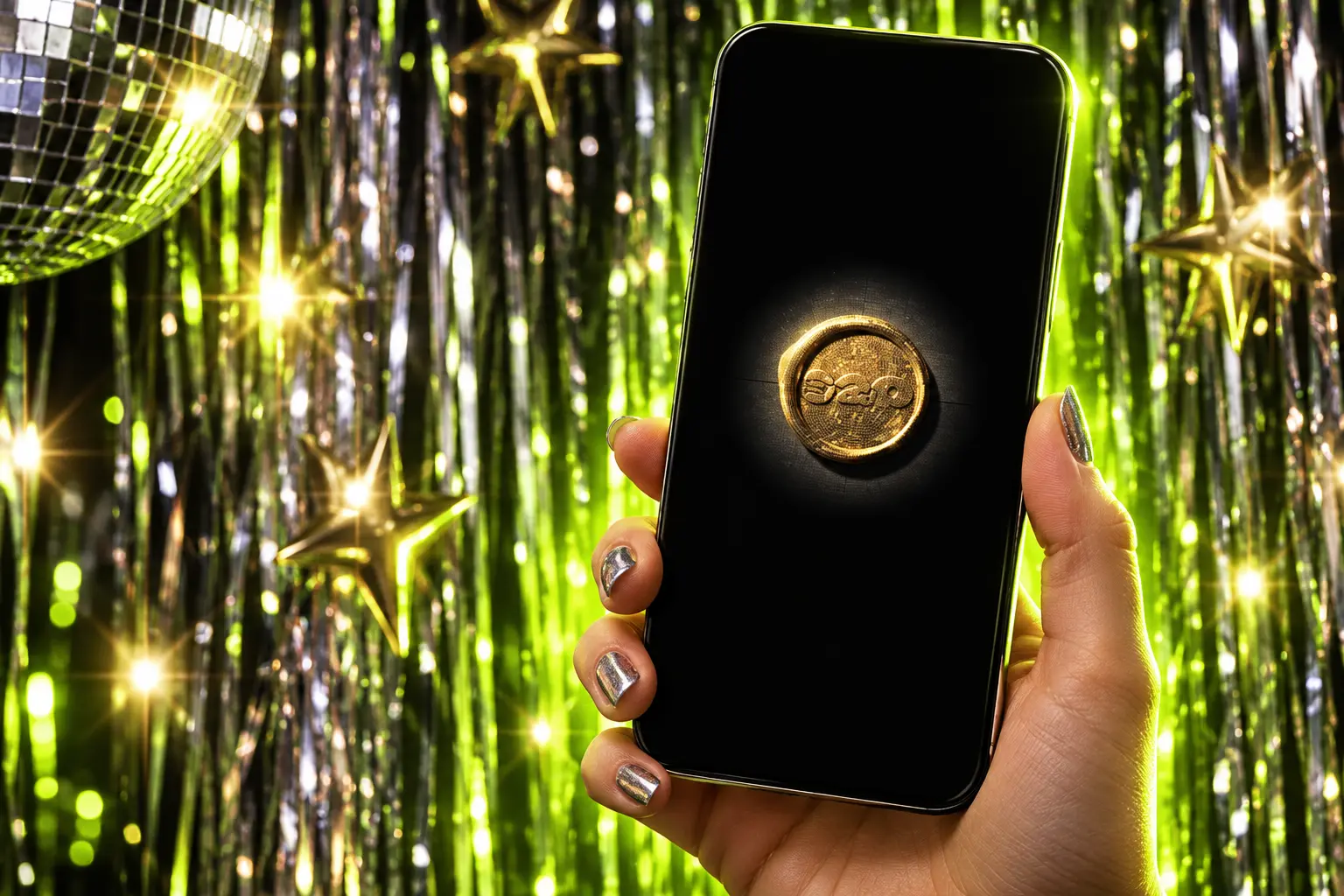
Glitter Was Not for Everyone
The recap needed a costume. Spotify put a dark green mirrorball on the mobile icon, tied to the same 20-year party, and told users they would spot it for a limited time. App store tracking firm AppTweak logged the icon live on May 13, 2026, and gone on June 11, 2026, later than the company’s own “next week” line.
On May 17, the official account posted the walk-back that newsrooms then chased for a month.
Alright, we know glitter is not for everyone. Our temp glow up ends soon. Your regularly scheduled Spotify icon returns next week.
— Spotify (@Spotify) May 17, 2026
The complaint was practical. The ball sat darker than the usual lime disc, and the sparkle read as noise on a small grid of apps. Some home screens showed a dim blob instead of a mark people could find at a glance. Media intelligence firm CARMA tracked a more than 300 percent spike in social mentions against Spotify’s average daily volume, then found 56 percent of that talk was neutral and 18 percent negative, with the visual doing more work than the anniversary copy.
Spotify had already said the glow-up was temporary. The icon still outlasted the promised week. By the time the old logo returned in a mid-June app update, the fight was about glitter, readability, and whether a birthday hat belonged on a daily tool. The lifetime archive was the product underneath that hat.
What the In-App Recap Unlocked
Search “Spotify 20” or “Party of the Year(s)” in the mobile app, or open spotify.com/20 on a phone. The company also pointed people at how to open the recap if the hub was buried under other anniversary programming. Each slide ended on a card built to save, send, or post.
WHAT THE RECAP PUT ON A CARD
- First day: The date the account started streaming, not the year Wrapped happened to cover.
- Unique songs: A running total of distinct tracks played since that date, a breadth number Wrapped never led with.
- First stream: The first song the account played, which is a fact about a moment, not a claim about taste.
- Top artist: The all-time most-streamed artist on that account, across every year on the service.
- Top 120: A playlist of the most-played songs, with play counts visible, that could be saved to the library.
Editors also built editorial playlists for two decades of eras and scenes, sitting in the same anniversary hub. Those lists are a public soundtrack. The recap is a private ledger that only works if the account has history to show.
That split matters. A new user gets a thin story. A 2009 account gets a first song from a different decade than their current top artist, and a 120-song pile that may not match any single Wrapped. The play count is the tell. It is hard to pose as a casual listener of a track you have played 800 times.
Taylor Swift Leads the All-Time Lists
Three weeks before the personal recap, on April 23, 2026, Spotify published the global scoreboard that the party was always going to bump into. Data reflected streams as of April 2026. Taylor Swift is the most streamed artist of all time on the service, ahead of Bad Bunny, Drake, The Weeknd, and Ariana Grande. Bad Bunny’s Un Verano Sin Ti leads albums. The Weeknd’s “Blinding Lights” leads songs.
A personal all-time artist sitting next to that canon is the quiet joke of the recap. Plenty of cards will show Swift or The Weeknd because the catalogue is inescapable. The interesting cards are the ones that do not.
THE 20-YEAR CANON, APRIL 2026
| Category | Leader | Runner-up |
|---|---|---|
| Artists | Taylor Swift | Bad Bunny |
| Albums | Un Verano Sin Ti, Bad Bunny | Starboy, The Weeknd |
| Songs | Blinding Lights, The Weeknd | Shape of You, Ed Sheeran |
| Podcasts | The Joe Rogan Experience | Gemischtes Hack |
The same drop said fans have streamed over 1.2 trillion hours of audio since the start. “Chill” is the most streamed mood, with 4.4 trillion all-time streams. Listeners have created over 9.67 billion playlists. As of April 29, 2026, more than 1,200 songs sit in the Billions Club. Drake’s “One Dance,” with Kyla and Wizkid, was the first to 1 billion, on December 16, 2016. “Die With A Smile” by Lady Gaga and Bruno Mars later did it in 96 days, on November 20, 2024.
THE 20-YEAR LISTENING PILE
- Audio hours: Over 1.2 trillion hours streamed on the service since launch.
- Playlists made: Over 9.67 billion playlists created across all time.
- Christmas peak: December 24, 2025, was the biggest day for global music streams, over 11 billion.
- Recap window: 144 markets, 16 languages, 120 personal tracks with counts.
K-Pop moved from the 579th genre in 2008 to the top 50 in 2026, with over 61 billion streams from listeners outside South Korea in 2025 alone. Afrobeats grew 349 times between 2014 and 2025. Spanish-language music, with Bad Bunny and J Balvin near the top of the artist list, is the language line the company says grew more than any other. The personal recap does not show those maps. It shows whether your own 120 songs ever left the lanes those lists describe.
At its May 2026 investor day, the company put the service at 761 million monthly active users and nearly 300 million subscribers across 184 markets. The recap’s 144 markets are a smaller stage inside that footprint, which is why some accounts never saw the disco ball or the slides.
The Share Card That Wrote Itself
Spotify asked for receipts. On May 12 it posted that the gifts were for users, and told people to reply with results. On May 13 it posted that Party of the Year(s) had “brought receipts from our first day on Spotify.”
It’s our 20th birthday, but the gifts are for you 💚🥳
Join Party of the Year(s) on Spotify to rediscover your all-time listening history.
Reply with your results below ⬇️
— Spotify (@Spotify) May 12, 2026
What filled the replies was not a messy pile of first songs. It was a single export line: “Well-played: I checked out my first song, top listens, and all-time hits since my first day on Spotify,” then a date. Join days from 2011, 2017, 2020, 2024, even late 2025, sat in the same sentence. The first track, the thing that would have made the card specific, often never made it into the caption.
That is a product choice showing up as a social one. Wrapped cards are ugly in a way people argue about, because the categories shift and the boasts are ranked. These cards flattened the boast to tenure. A 2011 date looks like seniority. A first song would have looked like taste, or like an accident. Tenure won the paste buffer.
The people who did try to swap first songs in the open got a thinner thread than the icon fight. By September 11, 2026, that recap language had dropped out of the live feed. The object that still sits in libraries, if anyone tapped save, is the 120-song list.
The 120-Song List Outlived the Icon
The slides were a campaign. The playlist is a file. Once saved, it behaves like any other list: it can be shuffled, shared as a link, or left to rot under New Music Friday. The difference is the count beside each title, a figure users could not see in this form before May 12.
THE ANNIVERSARY CALENDAR
- April 23, 2026: Spotify publishes all-time most streamed artists, albums, songs, podcasts, and audiobooks, and starts 20 days of listener data drops.
- May 12, 2026: Party of the Year(s) opens on mobile, with first-song slides and the 120-track list.
- May 13, 2026: The green disco ball icon replaces the standard mark on phones.
- May 17, 2026: Spotify posts that glitter is not for everyone and says the old icon returns the next week.
- June 11, 2026: AppTweak and device checks show the classic icon restored, after a longer stay than that post promised.
The newsroom copy that launched the recap still reads like a toast. “Here’s to the next 20, it’s all about you.” The you in that line got a look at a ledger the company has been writing since the account was created. The public got a mirrorball, a walk-back, and a pasteable sentence about the day someone joined.
Play counts on those 120 songs are the part that does not need another campaign to exist. They sit in the library with the rest of the evidence.

UPI MDR Delay Hands Traders the Calendar After Paytm Falls

Google Messages Builds Nine In-Chat Games After Samsung’s Exit

Anthropic’s $100 Million Academy Trains the Firms That Bill Both Sides

Toyota’s Electric C-HR Leaves the Cheap Twin to Subaru

Markets Bet the Fed Skips October After Hawkish Minutes

The Orchard Bug Forced Zcash to Open an Empty Pool

The $5.99 Game That Won Steam’s 2026 Summer Sale

Don Lee Joins Hemsworth as Extraction 3 Starts Shooting

YouTube Shorts Retires Dislikes and Swaps Likes for Hearts

NEURA Robotics Is Spending Its $1.4B on a Machine Stack
-
 NEWS5 months ago
The Orchard Bug Forced Zcash to Open an Empty Pool
-
 GAMING5 months ago
The $5.99 Game That Won Steam’s 2026 Summer Sale
-
 ENTERTAINMENT7 months ago
Don Lee Joins Hemsworth as Extraction 3 Starts Shooting
-
 NEWS4 months ago
YouTube Shorts Retires Dislikes and Swaps Likes for Hearts
-
 NEWS4 months ago
NEURA Robotics Is Spending Its $1.4B on a Machine Stack
-
 NEWS5 months ago
Atlantic City Turned WWE’s Return Into a Civic Night
-

 AUTO6 months ago
Kawasaki Bets the New Z1100 Against Its Own Supercharger
-

 BUSINESS5 months ago
Norway’s Export Bank Backs Nscale’s $790 Million Narvik Loan