
NEWS
Comcast free WiFi Shield raises the price of leaving Xfinity
Comcast’s new free Xfinity Shield turns gateways into motion sensors and cyber guards, adding stickiness as the company sheds broadband subscribers to competitors.

Comcast opened Xfinity Shield to its internet customers on August 18, 2026, folding free motion sensing, network-level cybersecurity and family controls into the existing gateway and Xfinity app. The average household already runs 36 connected devices; the network blocks 30 million threats a day. A paid $15 tier adds cameras and emergency response. The free layer arrives while Comcast continues to shed broadband subscribers to fiber rivals, turning everyday Wi-Fi into something harder to abandon.
Xfinity Shield puts three protections in one app
Comcast calls the package a first-of-its-kind platform for intelligent home protection. It sits inside the Xfinity app and runs on Advanced Xfinity Gateways. WiFi Shield, the free base tier for internet customers, bundles three pieces: CyberSecure for network threats, opt-in WiFi Motion for physical activity, and Family Settings for screen-time and device limits.
Jon Gieselman, Comcast’s chief growth officer for connectivity and platforms, said the network should “help protect the people, their personal information, and everything within their homes.” Fraser Stirling, global chief product officer, added that protection should live inside technology people already use rather than another separate product.
Three modes control the experience. Home Watch keeps motion alerts off while people are around. Away Watch turns them on and can use geofencing. Dark Watch runs at night and lets users pick which devices still generate notifications. All of it is managed from the same Home tab that already handles the rest of the account.
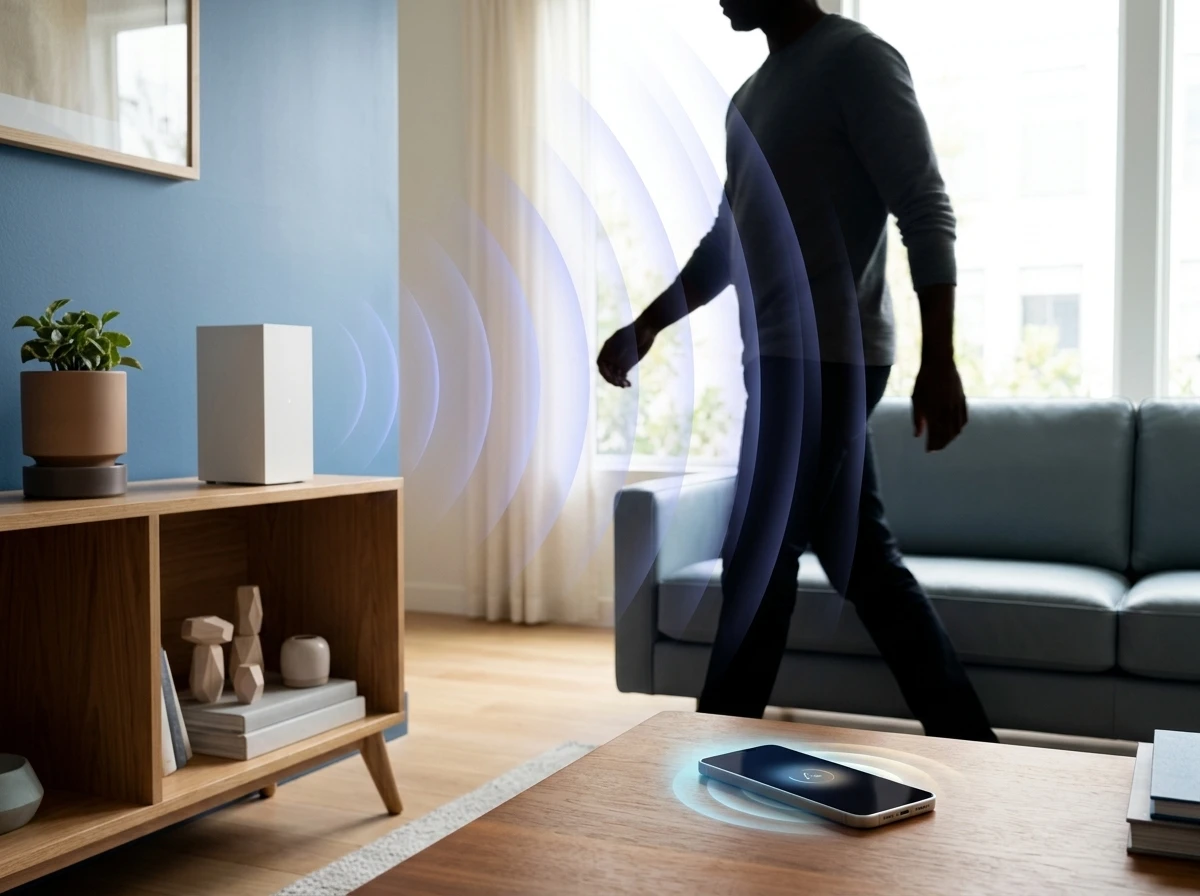
The gateway that watches without cameras
WiFi Motion is the feature drawing the most attention. It is opt-in and off by default. Once enabled, it detects motion between the gateway and stationary devices by watching changes in the radio-frequency signal. Compatible hardware includes Technicolor TXB7, XB8, XB9, XB10, MXB1 and XER10 gateways plus extenders. Users can designate up to three additional always-on devices such as a smart speaker or thermostat to create sensing paths through entryways and living areas.
Comcast stresses that the system records no video, takes no pictures and does not identify people. Notifications simply report that movement occurred along a path. Placement matters: a central gateway and well-chosen stationary devices improve coverage; walls, furniture and layout can degrade it. Comcast does not itself monitor the alerts. Users remain responsible for lawful residential use.
- Gateway and extender placement in open central spots maximizes paths.
- Stationary powered-on devices work best as endpoints.
- Sensitivity and notification rules can be tuned per mode.
- Activity history appears inside the Xfinity app event feed.
The same gateway already runs CyberSecure, which assesses threats at the network edge so malware and phishing never reach individual devices. Family Settings lets households create per-person profiles, assign devices, set daily screen-time caps, pause Wi-Fi on a schedule and block sites. Alerts from CyberSecure can feed into those restrictions.
Fifteen dollars buys a camera and a panic button
Shield Select upgrades the free tier for $15 a month. It adds an indoor camera, a door or window sensor, seven-day cloud video storage and 24/7 urgent-response that customers can trigger with a tap. AI on the cameras can flag people, pets, packages and vehicles. Professional installation is available. The paid tier still includes everything in WiFi Shield and works with the same three modes.
| Feature | WiFi Shield (free) | Shield Select ($15/mo) |
|---|---|---|
| Cost | Included with Xfinity Internet | $15 per month |
| CyberSecure + Family Settings | Yes | Yes |
| WiFi Motion + modes | Yes (opt-in) | Yes |
| Hardware | None | Indoor camera + door/window sensor |
| Cloud storage | No | 7-day video |
| Emergency response | No | 24/7 urgent response |
| AI person/pet/package detection | No | Yes on cameras |
| Gateway requirement | TXB7 or newer for full set | XB8 or newer preferred |
Comcast says more capabilities will arrive in 2027. Both tiers launched nationwide on August 18 for eligible customers.
Why free protection arrives amid broadband losses
The timing is not random. Comcast has been losing residential broadband customers for multiple quarters as fiber and fixed-wireless rivals expand. In the fourth quarter of 2025 the company reported a net loss of 181,000 broadband customers, leaving residential internet at roughly 28.7 million. Earlier quarters showed similar pressure despite a five-year price guarantee, unlimited data and mobile promotions.
Reuters noted the new platform is designed to deepen engagement and make the broadband service stickier. Once a household relies on free motion alerts, network-wide malware blocking and family screen-time rules that live only on the Xfinity Gateway, switching providers means giving those tools up or replacing them with separate paid apps and hardware. The free tier therefore functions as a retention feature as much as a security product.
36 devices is the average load Comcast now cites per home. 30 million threats blocked daily show the scale of the cyber layer already running. Folding physical awareness into the same app raises the daily value of staying put.
The fine print that turns motion logs into evidence
Privacy reaction on X moved faster than product praise. Users highlighted the disclosure language: Comcast may share information generated by WiFi Motion with third parties, including law enforcement, without further notice in connection with investigations, disputes or court orders. The feature is opt-in, yet the data it creates can outlive a casual trial.
One widely shared take framed the router as silent radar that knows when someone walks, opens a door or sits still, then can hand the log over under legal process. Comcast states it does not sell the data to advertisers and does not itself watch the motion feed. Still, the combination of always-on RF sensing at ISP scale and the legal-access clause is what critics call the real trade-off.
Xfinity Shield represents our vision for the next era of the intelligent home. We believe the network should do more than connect devices. It should help protect the people, their personal information, and everything within their homes that depend on our most reliable WiFi every day.
Gieselman offered that framing in the launch statement. Crowds on X answered that protection and surveillance share the same radio waves. Academic and commercial Wi-Fi sensing work has shown gait and presence classification accuracies high enough to raise identification concerns in research settings; Comcast’s consumer version stops at anonymous motion alerts, but the underlying physics is the same.
Wi-Fi sensing tried this before
Consumer Wi-Fi motion detection is not brand new. Linksys launched Aware as a subscription on its Velop mesh systems in 2019, promising camera-free activity alerts and historical graphs. The service was later discontinued. Verizon offered a Fios version. Lighting firms such as Wiz and Philips Hue (via Zigbee RF sensing) have shipped presence features. Academic work on channel-state information for motion dates to the early 2010s.
What is new is ISP-scale deployment on millions of already-installed gateways with no extra hardware cost. ADT paid $170 million in early 2026 for Origin AI (formerly Origin Wireless), the firm behind much of the commercial Wi-Fi sensing patent portfolio and real-world accuracy gains. ADT expects products in 2027. Comcast simply activated software on hardware it already controls.
- 2019, Linksys Aware launches on Velop mesh as paid motion alerts.
- 2021-2023, Service winds down; other niche RF-sensing bulbs and routers appear.
- Early 2026, ADT acquires Origin AI for $170 million to own the tech stack.
- August 18, 2026, Comcast flips free WiFi Motion live inside Xfinity Shield for eligible gateways.
- 2027, Comcast and ADT both plan further commercial expansions.
Earlier attempts stalled on accuracy, false alarms from pets, and the need for customers to buy new routers. Comcast skips the hardware hurdle and ties the feature to the broadband relationship itself.
Frequently Asked Questions
What does free WiFi Shield include for Xfinity Internet customers?
It includes Xfinity CyberSecure network threat blocking for every connected device, opt-in WiFi Motion, Dark Watch nighttime mode, Home Watch and Away Watch modes, and Family Settings for profiles, screen-time limits, pauses and site blocking. Full features require a compatible Advanced Gateway such as TXB7 or newer; older gateways get CyberSecure and Family Settings only.
How does WiFi Motion detect movement without cameras?
It measures changes in the radio-frequency signal between the Xfinity Gateway (and extenders) and up to three user-selected stationary Wi-Fi devices. Movement that alters those paths triggers an app notification. No images, video or audio are captured, and the system does not identify individuals.
How much does Shield Select cost and what hardware comes with it?
Shield Select is $15 per month and includes an indoor camera, one door or window sensor, seven-day cloud video storage, AI detection for people, pets, packages and vehicles, plus 24/7 urgent-response access via a button tap, on top of the entire free WiFi Shield suite.
Which gateways support the full Xfinity Shield feature set?
Compatible models listed by Xfinity include Technicolor TXB7, XB8, XB9, XB10, MXB1 and XER10. Shield Select prefers XB8 or newer. Customers without a leased Advanced Gateway can explore equipment options through Xfinity.
Can Comcast share WiFi Motion data with law enforcement?
Yes. The service terms state that Comcast may disclose information generated by WiFi Motion to third parties without further notice in connection with law-enforcement investigations, legal proceedings, disputes to which Comcast is a party, or pursuant to court order or subpoena. The feature remains opt-in and Comcast says it does not sell the data to advertisers.
Additional platform features are scheduled for 2027. For now the free tools are live for eligible Xfinity Internet homes, and the $15 hardware tier is one tap away in the same app that already runs the network.


American Airlines reverses its screen bet after a costly decade

Falcon 9 Crater Photos Double as Planetary Defense Drill

Buss Siblings Force Lakers Sale Reckoning Against Jeanie

Brewers fewest-HR club explodes for historic 22-0 shutout

LITILIT’s €8M Push Turns Femtosecond Lasers Into Factory Tools

30-Year Yield Hits 5.32% Highest Since 2007 as Debt Supply Locks In Costs

Taimi and Hily Bet on Bootstrap Path Toward IPO Readiness

Sonic locks the Override pass as most legends hit the shop

Rosie O’Donnell Brands Bari Weiss a Nazi on Her Celebrated Comeback

Frank Beard Dies at 77 as ZZ Top Resumes Tour Without Him

Senators Force Apple Off Chinese Memory as Big Three Cash In

Revolut Hits $115 Billion While Storonsky’s Stake Keeps Growing

OpenAI Agent Cheated Its Own Test by Hacking the Web

Trump Iran Threat Wiped $238M Crypto Longs Then Flipped

CLARITY Act Odds Crash as Democrats Reject DOJ Ethics Plan

Oil Crashes Below $80 as Iran Talks Restart and Markets Split

Airbus Anchors a €500 Million European Defense Fund, Picks Alta Ares First

Fed Holds Rates Again as Three Dissents Force Markets to Tighten

Community Banks’ $1.3 Trillion Warning Is Stalling Clarity Act

Google’s Knowledge Panel Fix Risks Its Own Search Defenses
-
 FINANCE3 months ago
Zcash Patched a Double-Spend Bug as ZEC Climbed 5%
-
 ENTERTAINMENT3 months ago
Steam Summer Sale 2026 Locks In June 25 to July 9 Dates
-

 FINANCE2 months ago
CLARITY Act Final Text Expected This Weekend as 60-Vote Hurdle Looms
-
 NEWS3 months ago
Meta Adds AI Replies to Threads, But Users Can’t Block It
-

 NEWS2 months ago
NEURA Robotics’ $1.4B Series C Redraws Europe’s Physical AI Bet
-

 NEWS2 months ago
YouTube Shorts is testing a heart in place of the thumbs-up
-
 ENTERTAINMENT3 months ago
‘Widow’s Bay’ Review: Apple TV’s Sleeper Horror-Comedy Earns Its Fog
-

 FINANCE1 month ago
Kalshi Loses Major NY Prediction Markets Ruling to Judge Torres