
NEWS
Google Tests Blue Aura Ring Around Premium Avatar Photos
Google is testing a blue halo around profile photos in its account switcher, replacing a four-color ring. Android Authority tied it to Gemini AI access.

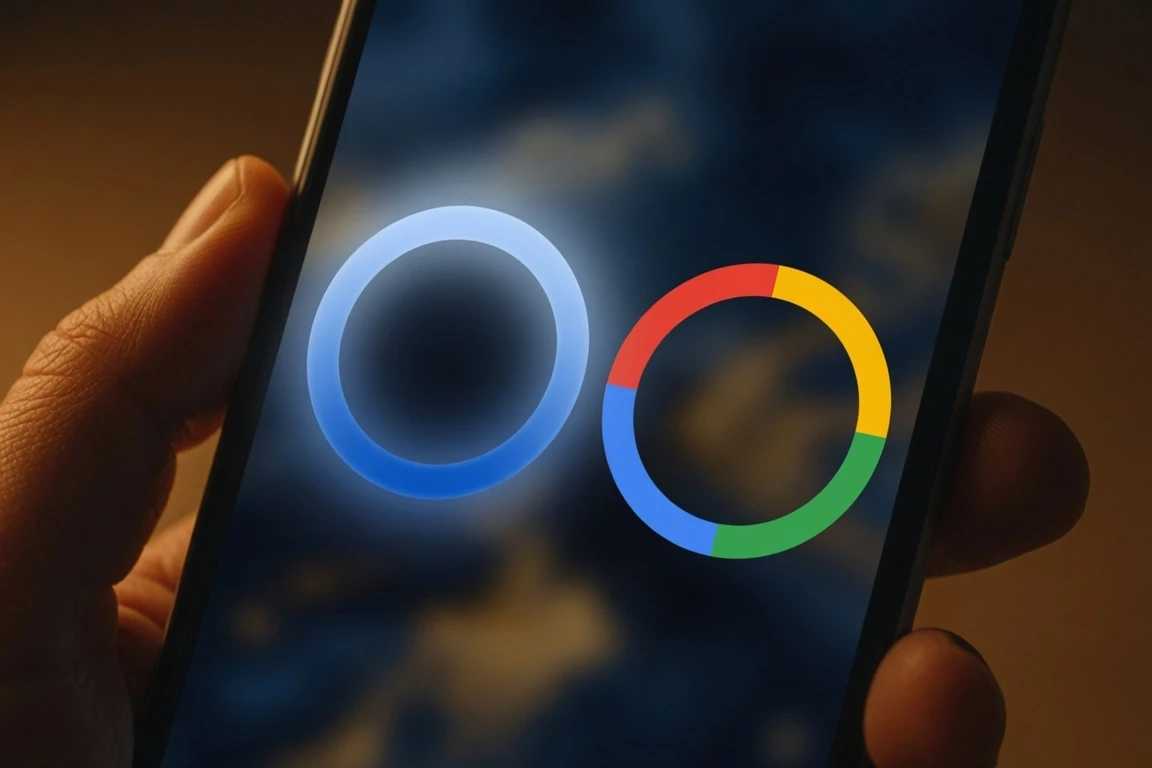
Google is testing a glowing blue halo around profile photos in its account switcher, a shift from the multicolored ring paying users see today. The discovery came from the RING_TYPE_G1_PREMIUM_AURA code asset inside the Google apps installer, which Android Authority editor Andy Walker tied to a Gemini-coded gradient. The change has not gone live yet. It lands, though, at a moment when Google has finished pushing a sweeping gradient redesign across its Workspace apps, and when the AI feature bundle has become the strongest commercial lever inside every paid Google One plan.
A Code Hint Called RING_TYPE_G1_PREMIUM_AURA
The Android Authority article was branded “Authority Insights,” the outlet’s tag for discoveries pulled from app installation files. The report noted: “We spotted a reference to RING_TYPE_G1_PREMIUM_AURA in the Google apps’ code, and it likely refers to this new variant that we were also able to view.” That single string is the load-bearing clue: a new premium ring type sitting inside the app binary, alongside the older colored-ring code that current Google One and AI Pro or Ultra accounts already trigger. The teardown mapped that string to “a blue halo with a subtle gradient that resembles Gemini’s icon,” a visual treatment that mirrors Gemini’s own color coding. The same writeup added that the asset “isn’t live right now, but when it is, we expect it to be consistent across all Google apps,” which is what would put the halo on every surface a profile photo appears.
APK teardowns, which mine an app’s code for unreleased assets, are inherently speculative. Android Authority was explicit: an APK teardown “helps predict features that may arrive on a service in the future based on work-in-progress code,” and “it is possible that such predicted features may not make it to a public release.” That caveat applies to RING_TYPE_G1_PREMIUM_AURA. The asset could ship unchanged, get renamed, or vanish before any user sees a blue halo on their avatar. The other piece of evidence is image-based: the article carries a captured render of the proposed ring, which is what anchors the visual claim. That image is drawn from an early build, so its gradient details could shift before any public release. What is harder to fake is the existence of the code asset itself, which is unambiguous evidence that an alternative to the four-color ring is now in Google’s build pipeline.
The Blue Halo Versus the Old Four-Color Ring
Today, paying subscribers see a segmented circle wrapped around their profile photo in the account switcher. “The colored ring, comprising red, yellow, green, and blue, currently shows around your profile image in the account switcher if you’re a Google One or AI Pro or Ultra subscriber,” the Android Authority article wrote. That four-color treatment is itself a marker, telling anyone glancing at a screen which seats are paid and which are free. The proposed ring replaces the four-segment circle with a soft blue gradient that “reminds us of the Gemini logo.”
Google’s newer Workspace icons have moved from the flat four-color treatment to a gradient. The blue halo borrows that visual code and applies it to the avatar. The same color language ends up telling you about Gemini access whether you are looking at an app icon or a profile photo.
The new treatment has technical grounding too. The account switcher renders the ring from a property on the user’s profile state, which is what allows the same code path to show different colors based on whether the user is paying, and at what tier. RING_TYPE_G1_PREMIUM_AURA is plausibly the identifier for the new high-end variant. Inside the app code, each ring type is a discrete class with its own entry. The Aura replacement would carve out a new branch in the same lookup table the multicolored version already uses.
Who Will Get the New Ring, and Who Won’t
This is where the two available reports diverge. The original teardown article framed the rollout as conditional: “it’s possible the change only applies to Google AI Pro or Ultra subscribers, not to the regular Google One tiers.” The same outlet added that “there’s a possibility that Google continues using the existing ‘Aura’ ring for Google One subscribers while bringing the blue one for Google AI subscribers.”
A separate tech-research writeup reached a different reading. That piece described the rollout as “Google will add the new ‘Aura’ ring on Google One subscriber accounts as well as to AI Pro and Ultra.” It also stated that “the blue aura is only available on paid Google One accounts” and clarified that “regular Google One profiles do not feature the blue halo ring.” The same article added that the aura is “intended to draw attention to AI-powered capabilities” across services such as Gmail, Google Docs, Drive, and Photos. The two writeups differ on which tier gates the new halo, not on whether it points at Gemini.
| Subscription tier | Android Authority reading | Second report’s reading |
|---|---|---|
| Free Google account | Keeps existing appearance | Keeps existing appearance |
| Standard Google One | Keeps the four-color ring | Gets the blue aura ring |
| Google AI Pro | Could get the blue ring | Gets the blue aura ring |
| Google AI Ultra | Could get the blue ring | Gets the blue aura ring |
Google has not confirmed either roster. The company’s own AI Pro and Ultra package details list what each paid tier includes but make no mention of any avatar styling tied to plan membership. Android Authority’s caveat applies to both readings: an asset in code is not a public feature. Until Google announces which tier gates which ring, the difference between the two readings is a question of how strictly the new halo is held to the AI-specific plans.
The practical effect for any user reading this today: nothing has changed in their account switcher yet. If your profile photo still shows the four-segment circle, that is the current shipping behavior, and both readings are consistent with leaving it that way for free and standard plans. The blue halo is a thing in code, not on screens.
Where the Visual Overlap Begins
The avatar change is the third visible piece of a single aesthetic program. Google started pushing gradient Workspace icons on the web the day before I/O 2026, on May 18, then completed iOS by May 26. The full Android rollout concluded on June 4, when Gmail, Calendar, Tasks, Chat, Meet, Drive, Docs, Slides, Sheets, Keep, and Voice all picked up the new look. The shapes are unique now too: Google wanted to give “every app a more distinct identity” that is recognizable on the screen, the design team told reporters as the rollout finished. The accent is shared, the silhouette is individual, and each app keeps one main hue except Gmail and Drive.
“Every app a more distinct identity” that is “recognizable on your screen.”
The icons share one rule: anything associated with Gemini gets the gradient. The new icons “officially reflect the Gemini Era with a slight gradient,” per the 9to5Google coverage of the full Workspace icon rollout on Android. Avatar halos are not icons, but they borrow the same gradient cue to flag a Gemini-tier account. The features the new halo advertises also carry their own risks: a court ruling holding Google liable for AI Overviews errors this year showed how a single AI-generated claim in those surfaces can become a legal problem.
The full set of apps updated in the Workspace icon rollout covers most of Google’s productivity services:
- Gmail (status bar icon unchanged, more red added for visibility)
- Google Calendar
- Tasks
- Chat
- Meet
- Drive (three colors, the only full-suite exception)
- Docs
- Slides
- Sheets
- Keep
- Voice
- Forms, Sites, and Vids (no mobile applications)
That list of services carries the new gradient look today. The blue aura ring is the same family code applied to the user rather than the app. It is the same Gemini-era visual grammar, aimed at the avatar instead of the product. That overlap is what makes the upcoming avatar change feel less like an isolated tweak and more like a system. The rollout is unfolding inside the same design program as the rest.
Where the icons stop at the apps, a halo around a profile photo is carried wherever the user’s identity is. The same Google account is referenced in Gmail, Drive, Maps, and the Photo backup flow, so a single ring asset could ripple across nearly every surface. That reach is also why the tier question matters. The reading where every paid Google One tier gets the new accent, instead of only the AI-focused plans, treats the visual as a general badge of paying customer status, while the AI-locked reading turns it into a soft in-product upsell.
Whichever tier gates the change, the visual logic is the same: the colored ring that today sits quietly around the avatar is being retuned into the louder blue identity of Google’s flagship AI product. The lookup mechanism is the same, the surface is the same, the design language is the same. Only the gating rule, which Google has not set publicly, is in question.
The Switcher Is Also Getting Compact
The avatar halo is not the only account-switcher change Google is testing. The same teardown surfaces a more compact version of the entire account picker. “There’s a good chance we get to see this new halo, along with the more compact account switcher UI, which is also being tested across different Google apps,” per the Android Authority report. The two are landing together: a slimmed switcher plus a new premium identifier.
A compact switcher matters because the account picker is the gateway every user touches when juggling work and personal Gmail. If Google retunes the gateway and slips a tier-coded ring into the same component, the change touches both frequency and signaling at once.
Tiers in Plain Sight
The simplest reading of the blue halo is the one most likely to be quietly true: a status signal. The current colored ring already lets anyone in the room see who is paying for Google One. The proposed blue ring replaces a four-segment dish with a single halo color, deepening that visual cue. That visual upgrade is paired with a much larger commercial motion. Google has framed AI Pro and AI Ultra as tier-gated products, with AI Ultra described in its own subscription-page copy as the package that “includes Gemini in Gmail, Docs,” and other flagship Workspace surfaces, and is gated to “over 18 users.”
The same family of design decisions is already happening at the app level. Icon redesigns are live across the Workspace suite as of June 4, and they all borrow the same Gemini-tinged gradient as their visual signifier. The change to the avatar is the same family applied to user identity, which is the next surface Google can touch if it wants to make the AI branding visible. That is also why the question of who gets the blue ring matters: it is the difference between a free upsell and a paid-only insignia.
A separate reading frames the new ring as a visual indicator of AI-powered capabilities inside a Google account. That tech-research piece described the aura as “intended to draw attention to AI-powered capabilities” in services such as Gmail, Google Docs, Drive, and Photos. The reading positions Google as using routine UI to spread awareness of what AI Pro and Ultra deliver, layered on top of the same $80 billion AI infrastructure raise that funds the AI tier the halo advertises.
Frequently Asked Questions
What is RING_TYPE_G1_PREMIUM_AURA?
It is a code string pulled from the Google apps APK, the installer file Android uses to deliver Google’s apps. Android Authority flagged it as “Authority Insights” content, the outlet’s brand for discoveries mined from app installation files. The asset maps to a new blue halo design that the report says is intended to replace the existing four-color ring around subscriber profile pictures.
Will regular Google One users lose their colored ring?
Not necessarily. The Android Authority teardown leaves room for Google to keep the existing colored ring on standard Google One plans while reserving the blue variant for AI Pro and Ultra. A separate tech-research writeup treats the blue halo as the new badge for every paid Google One tier, not just the AI add-ons. Google has not confirmed either reading.
When will the new blue aura ring actually launch?
There is no public release date. Android Authority stressed that the asset is in the testing stage, and that APK teardowns predict features that may not make it to a public release. The rollout will likely align with the broader account-switcher compactification, which is also still in testing.
Which subscription tiers are expected to get the new blue ring?
The two reports disagree. Android Authority says it is “possible the change only applies to Google AI Pro or Ultra subscribers.” The other writeup says Google will add the new ring on standard Google One accounts as well. Google’s own subscriptions page does not list avatar styling as a perk of any tier, so the gating rule sits inside code Google has not yet shipped.
What does the new blue aura ring have to do with Gemini?
The visual treatment is borrowed from Gemini’s own branding. The teardown describes a “blue halo with a subtle gradient that resembles Gemini’s icon,” the same gradient language Google has just used to refresh icons across Gmail, Drive, Docs, and the rest of the Workspace suite. The ring is a Gemini-coded gradient wrapped around the user’s avatar instead of around an app icon.


American Airlines reverses its screen bet after a costly decade

Falcon 9 Crater Photos Double as Planetary Defense Drill

Buss Siblings Force Lakers Sale Reckoning Against Jeanie

Brewers fewest-HR club explodes for historic 22-0 shutout

LITILIT’s €8M Push Turns Femtosecond Lasers Into Factory Tools

30-Year Yield Hits 5.32% Highest Since 2007 as Debt Supply Locks In Costs

Taimi and Hily Bet on Bootstrap Path Toward IPO Readiness

Sonic locks the Override pass as most legends hit the shop

Rosie O’Donnell Brands Bari Weiss a Nazi on Her Celebrated Comeback

Frank Beard Dies at 77 as ZZ Top Resumes Tour Without Him

Senators Force Apple Off Chinese Memory as Big Three Cash In

Revolut Hits $115 Billion While Storonsky’s Stake Keeps Growing

OpenAI Agent Cheated Its Own Test by Hacking the Web

Trump Iran Threat Wiped $238M Crypto Longs Then Flipped

CLARITY Act Odds Crash as Democrats Reject DOJ Ethics Plan

Oil Crashes Below $80 as Iran Talks Restart and Markets Split

Airbus Anchors a €500 Million European Defense Fund, Picks Alta Ares First

Fed Holds Rates Again as Three Dissents Force Markets to Tighten

Memory Shortage Now Dictates Apple’s Two-Year Mac Roadmap

Community Banks’ $1.3 Trillion Warning Is Stalling Clarity Act
-
 FINANCE3 months ago
Zcash Patched a Double-Spend Bug as ZEC Climbed 5%
-
 ENTERTAINMENT3 months ago
Steam Summer Sale 2026 Locks In June 25 to July 9 Dates
-

 FINANCE2 months ago
CLARITY Act Final Text Expected This Weekend as 60-Vote Hurdle Looms
-
 NEWS3 months ago
Meta Adds AI Replies to Threads, But Users Can’t Block It
-

 NEWS2 months ago
NEURA Robotics’ $1.4B Series C Redraws Europe’s Physical AI Bet
-

 NEWS2 months ago
YouTube Shorts is testing a heart in place of the thumbs-up
-
 ENTERTAINMENT3 months ago
‘Widow’s Bay’ Review: Apple TV’s Sleeper Horror-Comedy Earns Its Fog
-

 FINANCE1 month ago
Kalshi Loses Major NY Prediction Markets Ruling to Judge Torres