
NEWS
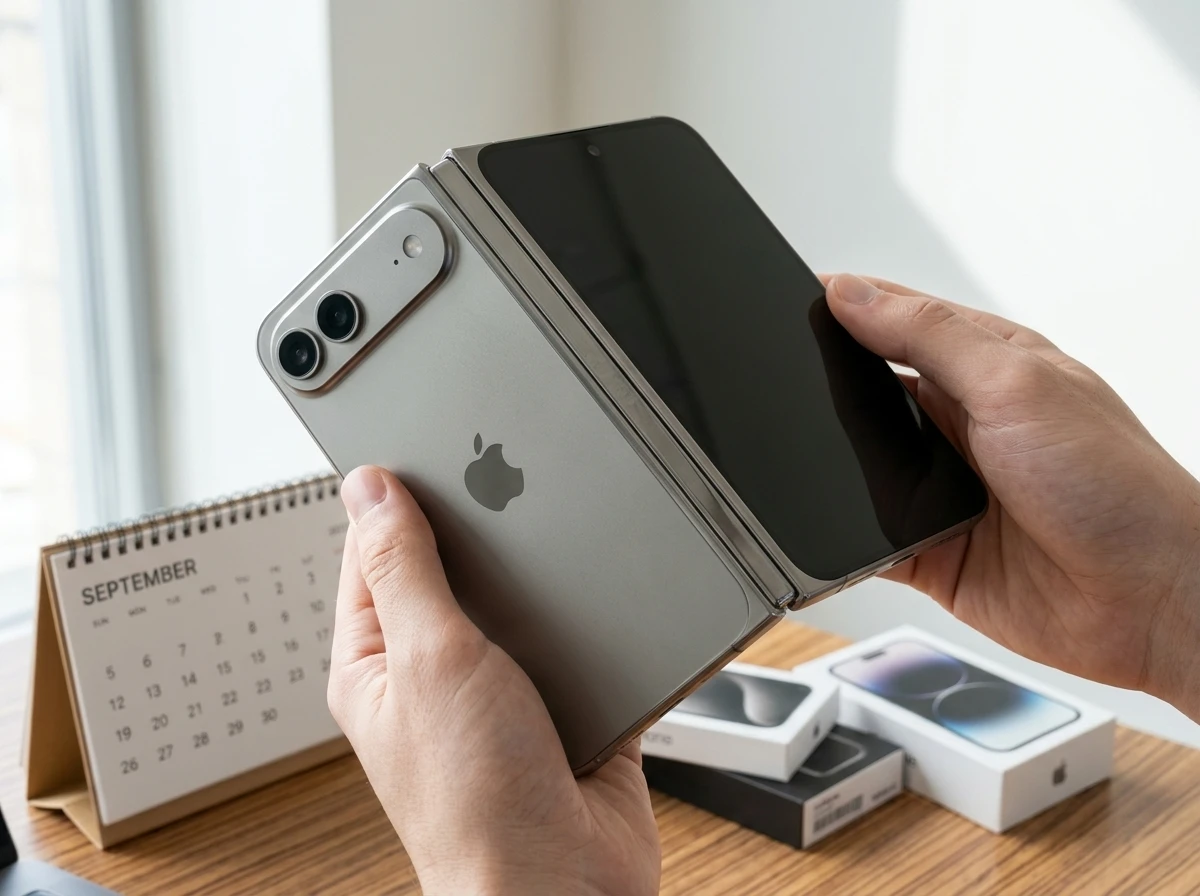
iPhone Ultra Limited Supply Echoes the iPhone X Bottleneck
Fixed Focus Digital says iPhone Ultra stock will be extremely limited while the A20 Pro delivers 18% speed and 30% efficiency on TSMC 2nm as the event nears.

Fixed Focus Digital, a known Weibo leaker, said the foldable iPhone Ultra will arrive in extremely limited supply at launch later this year, while the iPhone 18 Pro’s A20 Pro chip delivers up to 18% more speed and 30% better power efficiency than the A19 Pro on TSMC’s first 2nm process. Apple’s annual event sits less than a month away.
The claims, posted over the weekend and widely relayed by MacRumors and others, set up a familiar launch pattern. Premium hardware with new components often ships thin at first. The Pro models should move freely. The foldable will not.
What Fixed Focus Digital Posted on Supply and Silicon
The leaker’s Weibo posts state that iPhone Ultra stock will be very limited when the device first ships. A separate note puts the A20 Pro gains at up to 18% faster performance and up to 30% more power efficient versus the iPhone 17 Pro’s A19 Pro. The chip will be the first iPhone silicon made on TSMC’s 2nm node rather than the current 3nm family.
Tom’s Guide summarized the same Fixed Focus Digital posts as “extremely limited” availability next month, with Apple still aiming for a global launch rather than a U.S.-only start. Mass production with Chinese suppliers is described as moving smoothly, undercutting earlier talk of a staggered rollout.
- Ultra supply: Extremely limited at launch; full ramp may take 3 to 5 months.
- A20 Pro gains: Up to 18% faster, up to 30% more efficient than A19 Pro.
- Process: First iPhone chip on TSMC 2nm.
- Launch window: Unveil expected early to mid-September 2026.
Forum reaction on MacRumors immediately flagged leaker track record and noted that everyday tasks rarely feel raw speed gains. Power savings and thermal headroom matter more for sustained loads and on-device AI.
TSMC’s 2nm Numbers Match the Leak Closely
Apple has long taken first crack at TSMC’s newest nodes. TSMC’s 2nm N2 technology has started volume production in the fourth quarter of 2025 as planned. The node uses first-generation nanosheet transistors for full-node gains in density, speed and efficiency.
On its smartphone platform page TSMC states that the N2P extension delivers an approximate 18% performance boost and 36% power cut versus N3E, plus roughly 20% higher transistor density. The leaker’s 18% and 30% figures sit inside that envelope. Apple typically breaks the marketing numbers into CPU, GPU and Neural Engine slices at the event, so the final slides will be more granular.
| Claim source | Performance gain | Power efficiency | Base comparison |
|---|---|---|---|
| Fixed Focus Digital (A20 Pro) | Up to 18% faster | Up to 30% better | A19 Pro (3nm) |
| TSMC N2P public figures | ~18% speed at same power | ~36% lower power at same speed | N3E |
The match is not coincidence. Apple secured a large early share of 2nm capacity, according to supply-chain reporting earlier this year. That lock-in lets the company ship the first commercial 2nm smartphone chip while rivals wait for remaining wafers.
Ten Million Units Sounds Large Until the Ramp Starts
Nikkei Asia reported in early July that Apple told suppliers to prepare about 10 million foldable iPhones this year, up from a prior 7 to 8 million forecast. The same report put roughly 70 million units on the iPhone 18 Pro and Pro Max. Total new iPhone orders for the second half were described as high as 85 million in some supplier guidance, part of a broader push past 220 million units for the full year.
Ten million is a serious volume for a first-generation foldable. It is still a thin slice of Apple’s overall iPhone build. Tom’s Guide noted that suppliers may need three to five months to reach the full output target. That lag is the practical meaning of “extremely limited” at launch. Pre-orders will clear fast. Ship dates will stretch.
IDC has floated an average selling price near $2,500 for the Ultra, with higher storage options higher still. That premium pricing plus constrained early units creates classic scarcity economics. The Pro models carry the same A20 Pro silicon and will not face the same hinge, display and yield constraints.
The iPhone X Playbook Returns
Apple has run this exact movie before. In 2017 the iPhone X introduced Face ID and OLED in volume. TrueDepth camera modules and panel yields bottlenecked supply. Pre-orders sold out in minutes. Delivery estimates slipped weeks then months. The phone became a status object partly because so few people could get one at first.
- September 2017: iPhone X unveiled with new Face ID hardware and OLED panel; initial builds constrained by new components.
- Launch weekend: Pre-orders exhaust available stock almost immediately; shipping windows extend into November and later.
- Following months: Supply improves gradually; the scarcity itself becomes part of the product’s cultural weight.
- 2026 parallel: Ultra adds complex hinge, dual displays and new process node; Fixed Focus Digital and Nikkei numbers point to a similar multi-month ramp.
Analyst Ming-Chi Kuo had earlier cited 7 to 8 million units for the foldable in 2026. The Nikkei raise to 10 million still leaves early buyers waiting. X posts reacting to the Fixed Focus Digital notes treat sell-out in the first minutes as given. One widely shared summary from @MajinBuofficia stressed that the device will be available globally from day one, yet “you will have to wait a while before you can get your hands on it.”
That wait is the story. The Pro lineup absorbs the 2nm performance win without the mechanical novelty tax. The Ultra carries the novelty and the shortage.
Name Friction and the September Calendar
For months the device was called iPhone Fold in most coverage. The Ultra moniker gained traction in spring. Bloomberg’s Mark Gurman wrote on X that “Everyone calls it the Ultra internally. We’ll see what happens.” Other Chinese leakers have since cast doubt, suggesting Apple may hold Ultra for a later anniversary model. Fixed Focus Digital continues to use Ultra. The event will settle it.
MacRumors and others place the keynote in the first half of September. Labor Day falls on Monday, September 7. Apple has historically left at least a two-day gap after the holiday, making Wednesday, September 9 the cleanest fit. Some Australian reporting floated September 8; that sits closer than usual to the holiday and draws skepticism. Mark Gurman has said first-half September. The window is now measured in days, not months.
Base iPhone 18, iPhone 18e and Air 2 are widely expected to wait until spring 2027 under Apple’s staggered cadence. September’s stage belongs to the Pros and the foldable.
Who Waits and Who Ships
Early Ultra buyers will face the longest ship estimates. Secondary-market premiums usually appear within hours of a constrained launch. Pro and Pro Max buyers get the same A20 Pro silicon, better battery math from the efficiency gains, and normal fulfillment. That split lets Apple claim a full new lineup while the scarce halo product drives headlines and store traffic.
Samsung and Google already sell mature book-style foldables. The Galaxy Z Fold8’s wider aspect ratio has been cited as closer to the expected Ultra shape. Readers comparing Android options can weigh the Pixel 11 Pro Fold value against Samsung’s design while they wait for Apple’s version. Apple’s first entry arrives late to the category but with brand pull and the 2nm process lead. Limited early volume protects yield and quality narratives at the cost of immediate availability.
Crowd reaction on X treats the limited stock as both frustration and feature. Scarcity confirms the device is the real premium tier. It also means most people who want one in September will still be waiting in November. The Pro models, carrying identical silicon gains without the fold mechanism, become the practical buy for anyone who needs a phone this fall.
Apple has not confirmed any of the Fixed Focus Digital claims, the Nikkei volumes, or the event date. The company will speak for itself in a few weeks. Until then the supply warning and the 2nm numbers are the clearest signals that the next iPhone cycle will feel different for the small group chasing the foldable and relatively familiar for everyone else.


American Airlines reverses its screen bet after a costly decade

Falcon 9 Crater Photos Double as Planetary Defense Drill

Buss Siblings Force Lakers Sale Reckoning Against Jeanie

Brewers fewest-HR club explodes for historic 22-0 shutout

LITILIT’s €8M Push Turns Femtosecond Lasers Into Factory Tools

30-Year Yield Hits 5.32% Highest Since 2007 as Debt Supply Locks In Costs

Taimi and Hily Bet on Bootstrap Path Toward IPO Readiness

Sonic locks the Override pass as most legends hit the shop

Rosie O’Donnell Brands Bari Weiss a Nazi on Her Celebrated Comeback

Frank Beard Dies at 77 as ZZ Top Resumes Tour Without Him

Senators Force Apple Off Chinese Memory as Big Three Cash In

Revolut Hits $115 Billion While Storonsky’s Stake Keeps Growing

OpenAI Agent Cheated Its Own Test by Hacking the Web

Trump Iran Threat Wiped $238M Crypto Longs Then Flipped

CLARITY Act Odds Crash as Democrats Reject DOJ Ethics Plan

Airbus Anchors a €500 Million European Defense Fund, Picks Alta Ares First

Fed Holds Rates Again as Three Dissents Force Markets to Tighten

Oil Crashes Below $80 as Iran Talks Restart and Markets Split

Memory Shortage Now Dictates Apple’s Two-Year Mac Roadmap

Community Banks’ $1.3 Trillion Warning Is Stalling Clarity Act
-
 FINANCE3 months ago
Zcash Patched a Double-Spend Bug as ZEC Climbed 5%
-
 ENTERTAINMENT3 months ago
Steam Summer Sale 2026 Locks In June 25 to July 9 Dates
-

 FINANCE2 months ago
CLARITY Act Final Text Expected This Weekend as 60-Vote Hurdle Looms
-
 NEWS3 months ago
Meta Adds AI Replies to Threads, But Users Can’t Block It
-

 NEWS2 months ago
NEURA Robotics’ $1.4B Series C Redraws Europe’s Physical AI Bet
-

 NEWS2 months ago
YouTube Shorts is testing a heart in place of the thumbs-up
-
 ENTERTAINMENT3 months ago
‘Widow’s Bay’ Review: Apple TV’s Sleeper Horror-Comedy Earns Its Fog
-

 FINANCE1 month ago
Kalshi Loses Major NY Prediction Markets Ruling to Judge Torres