
GAMING
StarCraft 2 Patch 5.0.16 Reverses the 12-Worker Opening
StarCraft 2 patch 5.0.16 went live in June, reversing Legacy of the Void’s 12-worker start and forcing two hotfixes after Zerg surged.

StarCraft 2 patch 5.0.16 went live on June 22, 2026, cutting starting workers from 12 to 8. Europe and Korea got the same build on June 23. It is the first time since Legacy of the Void that Blizzard has rewritten the opening of every match.
Two hotfixes followed. Geyser gas fell from 2,500 to 2,000, and a July update tried to pull Protoss and Terran back toward Zerg. The May PTR notes that circulated in late spring are not the game on the ladder.
Blizzard Promised a Brood War Life in 2020
On October 15, 2020, Rob Bridenbecker told players the company would stop making paid StarCraft II content. No more Commanders. No more War Chests. Season rolls and balance fixes would continue, and esports would stay with ESL Gaming and GSL.
We’re going to continue supporting StarCraft II in the same manner as we have with our previous longstanding games, such as Brood War, focusing primarily on what our core and competitive communities care about most.
Rob Bridenbecker, October 15, 2020 letter
He wrote that the shift would also free the company to think about what came next for the StarCraft universe. Five years and eight months later, that next step for StarCraft II was not a new campaign. It was an economy rewrite on the live ladder, issued in the same manner as Brood War: keep the competitive game alive, stop selling boxes around it.
Wings of Liberty shipped in July 2010. The last full expansion, Legacy of the Void, landed on November 10, 2015. A public visual history of multiplayer balance already runs from those launches through the 5.0.x era. Patch 5.0.16 sits on that line as a rules change, not a content drop.
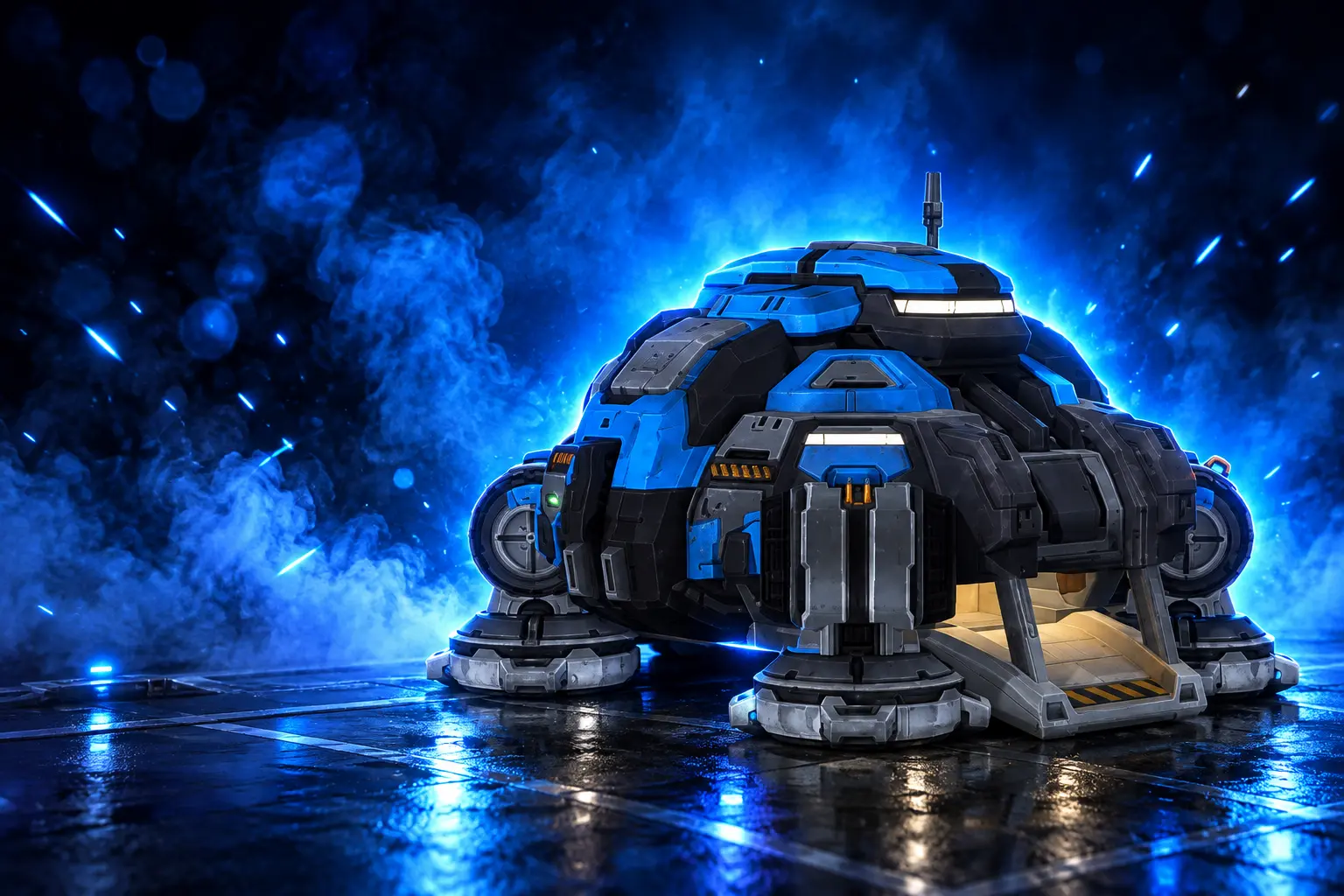
The 12-Worker Bet From 2015
Legacy of the Void doubled the opening. Workers went from 6 to 12. Town halls paid for that with extra supply: Hatcheries from 2 to 6, Command Centers from 11 to 15, Nexuses from 10 to 15. Mineral fields and geysers were thinned so players would leave the natural faster.
The point at the time was to kill idle minutes. Twelve probes, drones, or SCVs meant the first production cycle started almost immediately, and the LotV ladder learned a decade of openings on that clock. Build orders, proxy timings, and the first expand were all calibrated to a 12-worker spawn.
Patch 5.0.16 does not go back to 6. It lands in the middle, at 8, and then cuts town-hall supply again so the extra workers you do make still press against the cap. Hatcheries, Lairs, and Hives now give 4 supply instead of 6. Command Centers and Nexuses give 13 instead of 15. The 2015 bet is still the frame. The new patch just refuses to keep paying it in full.
Eight Workers Rewrite Every Build Order
Blizzard’s live notes lead with map pool and economy updates, then the race kit. The stated aim is to stretch the early and mid game so one-base through three-base play lasts longer, and to make straight Gateway production a real option beside warp-ins.
Large mineral patches fell from 1,800 to 1,600. Small patches rose from 900 to 1,100. Four large and four small still total 10,800 minerals per base, the same pile as before. The first PTR writeups that said 11,200 used a 1,200 small-patch figure that did not ship.
Gas is the number that did not survive contact with the ladder. At launch each geyser held 2,500, up from 2,250, for 5,000 per base. The June 30 hotfix cut that to 2,000 per geyser and 4,000 per base. Rich geysers still return 6 gas per trip instead of 8.
THE ECONOMY 5.0.16 ACTUALLY SHIPPED
| Resource | Before 5.0.16 | June 22 launch | After June 30 |
|---|---|---|---|
| Starting workers | 12 | 8 | 8 |
| Large mineral patch | 1,800 | 1,600 | 1,600 |
| Small mineral patch | 900 | 1,100 | 1,100 |
| Minerals per base | 10,800 | 10,800 | 10,800 |
| Vespene geyser | 2,250 | 2,500 | 2,000 |
| Gas per base | 4,500 | 5,000 | 4,000 |
| Rich gas per trip | 8 | 6 | 6 |
Four fewer workers at spawn is a third of the old opening line gone. Every first reaper, every 12-pool, every forge fast expand has to be retimed. The 8-worker start that now opens ladder games is the change players feel before they notice a single unit tooltip.
Zerg, Terran and Protoss After the Cut
The worker cut is shared. The rest of the patch is not. Each race got a different bill for the slower saturate, and some of those bills were amended in July.
Zerg Pays for Larva With Supply and Creep
Hatcheries cost 300 minerals instead of 275, and the 4-supply town hall means the first Overlords matter again. Creep spread and recede slowed from 0.45 to 0.55. In return, larva spawn went from 10.7 seconds to 9.5 seconds on launch, then to 9.9 seconds on June 30, so the hatchery still prints faster than it did in 5.0.15 even with fewer starting drones.
Spore Crawlers deal 20 damage plus 15 versus Biological, up from plus 10. Carapace upgrades dropped to 100/100, 150/150, and 200/200. Infestors gained an auto-attack, Microbial Shroud now reaches 12 instead of 9, and the shroud no longer needs an Infestation Pit upgrade. Vipers can Abduct sieged Siege Tanks. Overlords without Pneumatized Carapace crawl at 0.85 instead of 0.9.
Terran’s Ghost Is a Different Unit
The launch Ghost spent 3 supply, had 100 health instead of 125, and fired a flat 15 damage at range 7 instead of 10 plus 10 versus Light. Movement speed slipped from 3.94 to 3.85. Steady Targeting deals 170 at 75 energy and no longer cancels when the Ghost takes a hit. July 16 put Ghost supply back to 2.
Command Centers still give 13 supply. The July hotfix also cut the Command Center’s mineral cost from 400 to 300 and raised a Planetary Fortress from 150/150 to 250/150, so the cheap town hall does not become a cheap fortress. Widow Mines lock on in 0.85 seconds instead of 1.07. Reapers take 34 seconds instead of 32.
Protoss Keeps Warp Gate Research on the Core
Early PTR notes moved Warp Gate research onto the Gateway. That did not go live. Research stays on the Cybernetics Core. Finishing it sped Gateway production by 40 percent on launch and by 50 percent after July 16. Transforming a Gateway still costs 25 minerals and 25 gas once; after that, mode swaps are free. Warp-in is a flat 4 seconds, with no slow-power-field penalty.
Nexus supply is 13. Shield Batteries complete with 75 energy. Psi Storm totals 100 damage instead of 110. Disruptors picked up a phantom attack, then had that phantom’s range cut from 11.35 to 7 in 5.0.16b. Colossus damage rose from 10 plus 5 versus Light to 12 plus 3 versus Light. Adept upgrade scaling went to 2 plus 2 versus Light.
THE LIVE KIT AFTER BOTH HOTFIXES
- Zerg larva: Spawn interval is 9.9 seconds, with Hatcheries at 4 supply and 300 minerals.
- Terran expand: A Command Center costs 300 minerals, and the Ghost is back to 2 supply at 100 health.
- Protoss gates: Warp Gate research on the Cybernetics Core now cuts Gateway train time by 50 percent.
- Shared open: Every race still spawns 8 workers onto a 10,800-mineral, 4,000-gas base.
Official notes also spent a long tail on control and readability. Xel’naga towers can be selected through fog. Active Creep Tumors take selection priority. Banelings that die to enemy fire inside their own splash now play an audio cue, a fix the notes said had undermined their hard work and hurt their feelings.
The July Hotfix Aimed at Zerg
The PTR was not a quiet dress rehearsal. Blizzard already rewrote pieces of 5.0.16 on June 19 after the first test pass, including putting Warp Gate research back on the Cybernetics Core and slowing warp-in from 3 seconds to 4. The live build still needed two more passes.
FROM PTR TO THE SECOND HOTFIX
- May 30, 2026: Patch 5.0.16 hits the public test realm with the 8-worker start and the first economy pass.
- June 19, 2026: A PTR update reverts Warp Gate research to the Cybernetics Core and sets warp-in at 4 seconds.
- June 22, 2026: Version 97364 goes live in North America.
- June 23, 2026: Europe and Korea receive the same live build, with a new 1v1 map pool.
- June 30, 2026: Geysers drop to 2,000, larva moves to 9.9 seconds, and several Gateway and mine timings shift.
- July 16, 2026: Hotfix 5.0.16b buffs Colossus, Adepts, and Gateway production, cheapens the Command Center, and returns Ghost supply to 2.
Uploaded 1v1 replays tracked on Sc2ReplayStats in the first week already showed the tilt. Protoss won 534 of 1,271 PvZ games, 42.01 percent. Terran won 671 of 1,498 TvZ games, 44.79 percent. PvT sat at 386-387 in 773 games, 49.94 percent. Those samples are not a full ladder census. They were large enough for Blizzard to say out loud what they were doing.
We are making changes based on player data and feedback. We are calibrating both Protoss and Terran to help deal with Zerg. We will continue to monitor and make changes if necessary.
Blizzard Entertainment, StarCraft II 5.0.16b hotfix notes
The June 30 pass also stopped Ravager bile from instantly wiping force fields; bile now eats 50 percent of a field’s remaining duration. Mothership shields fell from 350 to 200 while health rose from 350 to 400. Adept pre-Warp-Gate train time went to 33 seconds. High Templar and Dark Templar pre-Warp-Gate times dropped from 43 seconds to 40. Load Nearby Transport, added at launch, was pulled in 5.0.16b for a later look.
Why Some Ladder Regulars Stopped Queuing
The extra early minutes are real, and a slice of the remaining ladder hates them. Grandmaster-level players have said the 8-worker spawn is not a catastrophe, only that it is not fun, and that the will to queue has dropped. Forum posts from early July called the new open slow and tedious and asked for a revert. That is the cost of walking back a decade of LotV muscle memory in one patch.
The whole game is not actually a return to Heart of the Swarm’s 6-worker crawl. Larva prints faster than it did before 5.0.16. Warp Gate research now shaves half the train time off a Gateway. Terran can drop a 300-mineral Command Center. The first five minutes run leaner. The path into a maxed army does not.
So the patch did the thing the 2020 letter implied it still could do. It also left a group of regulars staring at an opening that feels like waiting, while Zerg’s hatchery math still converts minerals into bodies faster than two races that have to click every worker. Blizzard’s answer so far has been calibration, not a return to 12.
GSTL Playoffs Run on Patch 5.0.16
The competitive calendar did not pause for the rewrite. The 2026 Global StarCraft II Team League has been playing through this build, with playoffs listed for September 15, 2026. Caster shows ran launch-day matchups on the live ladder the same week Europe patched. The map pool that shipped with 5.0.16 is the floor those games stand on.
THE 1V1 MAPS IN 5.0.16
- At Eternity’s Edge LE: New pool entry with the economy patch.
- Blackrock LE: Returns beside Fear and Faith LE and Lockdown LE.
- Old Sun Temple LE: Sits with Rainfall LE and Rorschach LE.
- Sanctuary III LE: Closes the nine-map 1v1 list with Washout LE.
Team and FFA pools were swapped in the same notes, from Fields of Death CE in 2v2 through Tuonela LE in 4v4. The ladder that still exists is playing a different opening on different ground than it was in May, and the company that stopped selling War Chests in 2020 has not shipped a 5.0.17 on top of it.
Starting workers remain at 8. Geysers remain at 2,000. The July calibration is still the last numbered pass. GSTL’s playoff weekend is the next public test of whether that hold is stable.

UPI MDR Delay Hands Traders the Calendar After Paytm Falls

Google Messages Builds Nine In-Chat Games After Samsung’s Exit

Anthropic’s $100 Million Academy Trains the Firms That Bill Both Sides

Toyota’s Electric C-HR Leaves the Cheap Twin to Subaru

Markets Bet the Fed Skips October After Hawkish Minutes

The Orchard Bug Forced Zcash to Open an Empty Pool

The $5.99 Game That Won Steam’s 2026 Summer Sale

Don Lee Joins Hemsworth as Extraction 3 Starts Shooting

YouTube Shorts Retires Dislikes and Swaps Likes for Hearts

Atlantic City Turned WWE’s Return Into a Civic Night
-
 NEWS5 months ago
The Orchard Bug Forced Zcash to Open an Empty Pool
-
 GAMING5 months ago
The $5.99 Game That Won Steam’s 2026 Summer Sale
-
 ENTERTAINMENT7 months ago
Don Lee Joins Hemsworth as Extraction 3 Starts Shooting
-
 NEWS5 months ago
YouTube Shorts Retires Dislikes and Swaps Likes for Hearts
-
 NEWS5 months ago
Atlantic City Turned WWE’s Return Into a Civic Night
-

 NEWS5 months ago
NEURA Robotics Is Spending Its $1.4B on a Machine Stack
-
 BUSINESS6 months ago
Norway’s Export Bank Backs Nscale’s $790 Million Narvik Loan
-

 GAMING5 months ago
Game of Thrones Dragonfire Follows Boston’s Conquest Playbook