
NEWS
Xiaomi’s First IFA Booth Caps a Multi-Year AI Push Into Europe
Xiaomi confirms its first-ever IFA Berlin booth for September 4-8 2026, paired with a 60 billion yuan AI investment pledge and a Human x Car x Home ecosystem showcase.

Xiaomi will appear at IFA Berlin 2026, the brand’s first-ever showing at the world’s biggest home and consumer electronics trade show. The five-day run begins September 4 and ends September 8 at Messe Berlin, with the booth built around its Human x Car x Home smart ecosystem pitch.
The debut lands alongside a multi-year AI investment plan that has lived mostly on investor-day slides until now. Xiaomi has earmarked over 60 billion yuan for AI research and development between 2026 and 2028. Executives at the IFA Kick-Off framed the Berlin floor as the place where that bet meets European shoppers in person. Munich, with the Xiaomi Europe R&D and design team inside it, is one of the engineering hubs driving the work.
A Trade-Show Debut, Years in the Making
IFA’s 2026 edition runs September 4 to 8 at Messe Berlin, with the official site calling it the place where the world’s biggest tech brands meet the boldest new ideas. A household name in European phone retail has been absent from that lineup until this year.
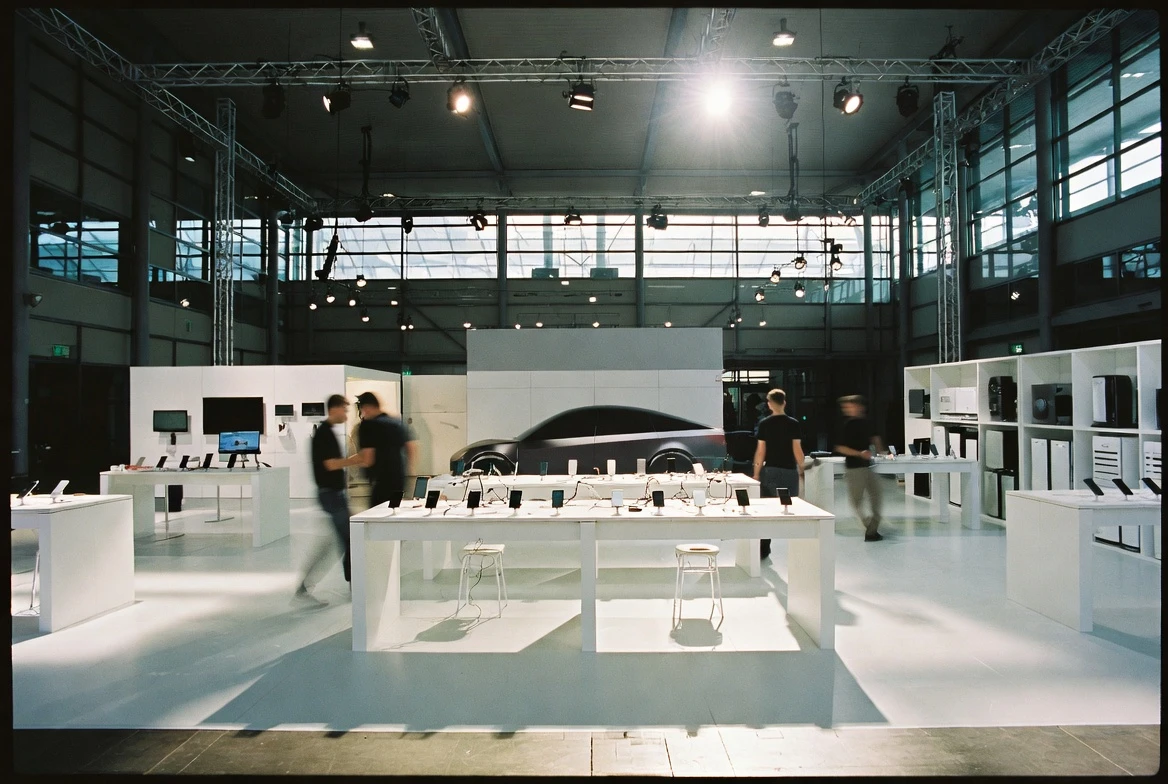
Xiaomi has now confirmed participation at this year’s IFA Berlin show. The booth plans centre on the company’s Human x Car x Home smart ecosystem, the cross-device framework Xiaomi has been building around its HyperOS software, its EV programme, and its smart-home appliance range. For European audiences, this is the first time those three layers will be shown together on a single show floor.
The significance is less a single product launch than the venue itself. IFA is where Samsung, LG and Bosch cut their September press cycles every year, and where Apple’s annual absence is itself a story. Xiaomi’s first booking is a signal that the company now sees itself competing on that same September calendar, alongside its existing online retail footprint.
The Multi-Billion AI Investment Behind the Booth
The booth is being framed as the visible part of a multi-year spending plan. Xiaomi has been more publicly sizing that commitment since its March 2026 disclosures.
At Xiaomi’s 2026 Investor Day in April, executives laid out an AI strategy that stretches across infrastructure, data, models and applications. The group has committed to over 60 billion yuan in AI investment over three years and to 200 billion yuan in total research and development over five years. Both figures set the envelope that the IFA 2026 budget sits inside.
European engineering is the explicit European target of that envelope. Xiaomi’s Europe R&D and Design Center was established in Munich in September 2025 under Rudolf Dittrich, a former BMW M division technical director. The centre now employs more than 100 engineers with an average of more than 15 years of industry experience. Its first European-built product, the Xiaomi YU7 GT, was scheduled to launch by the end of May.
The financial backdrop is mixed. Smartphone component costs are climbing, especially memory, and Omdia forecasts a 12% decline in European smartphone shipments in 2026. Xiaomi’s 2026 Investor Day in Beijing set the pace for both the smartphone and EV roadmaps at the same time, and Berlin will be the first public test of how those two threads tie together for European buyers.
The focus from both vendors and channel partners has shifted from volume to value to deliver results and operational sustainability.
(Omdia principal analyst Runar Bjorhovde, on the 1Q26 European smartphone market.)
What Visitors Will See at the Xiaomi Booth
Xiaomi has been a smartphone-first brand in Europe for most of its decade on the continent. The Berlin booth is being built as proof that the smartphone is now only one of three pillars.
- Human layer: smartphones, smartwatches and wearables anchored to Xiaomi’s HyperOS, including the Leica co-engineered Xiaomi 17 Ultra camera phone.
- Car layer: the Xiaomi Vision GT concept car, already teased as a flagship design study, alongside production EVs planned for Europe from 2027.
- Home layer: front-loading washing machines, robotic vacuum cleaners and Mini LED smart TVs from Xiaomi’s appliance portfolio.
HyperOS is the connective tissue across all three, the operating environment Xiaomi has been pushing as its answer to Apple’s iOS lock-in and Google’s wider Android surface. Visitors walking the booth will be able to move a piece of content from phone to car dashboard to living-room TV without leaving the Xiaomi software stack.
The bet inside the bet is that European consumers, long conditioned to buy Xiaomi phones on price alone, will pay more for the integrated story. The Berlin show floor is where Xiaomi tests whether that pitch lands in person, not on a spec sheet.
Behind Xiaomi’s Q1 Smartphone Numbers in Europe
Even as the European smartphone market contracts, Xiaomi holds on to third place. Q1 2026 European smartphone market ranking puts the group at 4.5 million units shipped, a 15% year-on-year drop Omdia attributes to supply rather than demand.
Xiaomi’s smartphone average selling price still climbed 21% year-on-year in Europe, lifted by the Xiaomi 17 and 15T series. Premium sales held up best in France, Germany and Spain. The wider market grew 2% to 33.0 million units even as the average selling price climbed to a record €580. Sub-€200 devices dropped to just 25% of shipments, an all-time low.
| Vendor | 1Q26 Units | Year-on-Year Change |
|---|---|---|
| Samsung | 12.6 million | +3% |
| Apple | 8.8 million | +9% |
| Xiaomi | 4.5 million | -15% |
Three vendors now hold almost 80% of European smartphone share between them. The competitive fight is moving to mid- to high-end pricing rather than volume.
Munich gives Xiaomi a European engineering story it has not had before. The Xiaomi Vision GT concept car and the in-house EV programme are the visible proof of that investment on the IFA 2026 show floor. Premium-tier ASP gains suggest the company is closing the gap to Samsung and Apple slowly, and ecosystem breadth is the new tool Xiaomi wants to use to convert pricing power into margin once the show ends.
What Opening Day Needs to Prove
Three years of investor-day slides about Europe have built up a small amount of audience fatigue. Whether IFA 2026 changes that depends less on the smartphones on display than on whether the cross-device demo actually works without a press hand holding it together. The stakes are an IFA trade-show week, and a September news cycle that runs well past the show.
The automotive story is the headline test. If the YU7 GT and a credible European EV timeline anchor the booth, the three-pillar argument lands. If the EV story stays at concept-car level, the ecosystem pitch starts to read like a marketing exercise, and the AI spending reads as overhead rather than revenue potential.
The channel test is the quieter one. Xiaomi’s European retail footprint is still heavily weighted toward smartphones, and adding appliances and cars needs new dealer relationships that Samsung and Bosch have spent decades building. The IFA 2026 exhibitor listing will show exactly how many appliance and Android rivals Xiaomi ends up shoulder to shoulder with on the floor. For broader context, the surge of capital flowing into physical-AI bets across Europe is a useful mirror for how aggressively the continent is being courted. The rest of 2026 will hinge on whether European buyers treat the booth as a vendor stand or as the start of a new competitive option.
Frequently Asked Questions
When is IFA 2026?
IFA 2026 runs September 4 to 8, 2026, at Messe Berlin in Germany. The full program and exhibitor list are published on the official IFA Berlin website.
Is this Xiaomi’s first time at IFA?
Yes. Xiaomi has confirmed 2026 as its first appearance at the IFA Berlin trade show, ending a long absence from Europe’s largest annual consumer electronics event.
What is the Human x Car x Home ecosystem?
Human x Car x Home is Xiaomi’s strategy for connecting smartphones, EVs and smart-home appliances through a single operating environment called HyperOS. The Berlin booth will show all three layers running on one software stack.
How much is Xiaomi spending on AI?
Xiaomi has committed to over 60 billion yuan in AI investment over three years and to 200 billion yuan in total research and development over five years, per its April 2026 Investor Day in Beijing. The investment spans AI infrastructure, data, models and applications.
Where is Xiaomi’s European R&D base?
Xiaomi’s Europe R&D and Design Center sits in Munich, set up in September 2025 with Rudolf Dittrich, a former BMW M technical director, in charge. The first product developed there was the Xiaomi YU7 GT. The Munich team now has more than 100 engineers.


American Airlines reverses its screen bet after a costly decade

Falcon 9 Crater Photos Double as Planetary Defense Drill

Buss Siblings Force Lakers Sale Reckoning Against Jeanie

Brewers fewest-HR club explodes for historic 22-0 shutout

LITILIT’s €8M Push Turns Femtosecond Lasers Into Factory Tools

30-Year Yield Hits 5.32% Highest Since 2007 as Debt Supply Locks In Costs

Taimi and Hily Bet on Bootstrap Path Toward IPO Readiness

Sonic locks the Override pass as most legends hit the shop

Rosie O’Donnell Brands Bari Weiss a Nazi on Her Celebrated Comeback

Frank Beard Dies at 77 as ZZ Top Resumes Tour Without Him

Senators Force Apple Off Chinese Memory as Big Three Cash In

Revolut Hits $115 Billion While Storonsky’s Stake Keeps Growing

OpenAI Agent Cheated Its Own Test by Hacking the Web

CLARITY Act Odds Crash as Democrats Reject DOJ Ethics Plan

Trump Iran Threat Wiped $238M Crypto Longs Then Flipped
30-Year Yield Hits 5.32% Highest Since 2007 as Debt Supply Locks In Costs

Fed Holds Rates Again as Three Dissents Force Markets to Tighten

Memory Shortage Now Dictates Apple’s Two-Year Mac Roadmap

Airbus Anchors a €500 Million European Defense Fund, Picks Alta Ares First

Oil Crashes Below $80 as Iran Talks Restart and Markets Split
-
 FINANCE3 months ago
Zcash Patched a Double-Spend Bug as ZEC Climbed 5%
-
 ENTERTAINMENT3 months ago
Steam Summer Sale 2026 Locks In June 25 to July 9 Dates
-

 FINANCE2 months ago
CLARITY Act Final Text Expected This Weekend as 60-Vote Hurdle Looms
-
 NEWS3 months ago
Meta Adds AI Replies to Threads, But Users Can’t Block It
-

 NEWS2 months ago
NEURA Robotics’ $1.4B Series C Redraws Europe’s Physical AI Bet
-

 NEWS2 months ago
YouTube Shorts is testing a heart in place of the thumbs-up
-
 ENTERTAINMENT3 months ago
‘Widow’s Bay’ Review: Apple TV’s Sleeper Horror-Comedy Earns Its Fog
-

 FINANCE1 month ago
Kalshi Loses Major NY Prediction Markets Ruling to Judge Torres