
FINANCE
RBI Dollar Sales Echo 2013 Playbook to Pin Rupee Near 95
State banks offered dollars on August 10 to keep USD/INR near 95.23 after the May record low, reviving costly 2013-style defenses amid oil and tariff pressure.

State-run banks offered dollars in the Indian forex market on August 10, 2026, holding the rupee near ₹95.23 against the US dollar after the currency’s record low of ₹96.96 in May. Traders described the sales as the latest in a series of Reserve Bank of India moves that have kept the pair on the stronger side of 95.50 since late July.
The action comes weeks after one of the largest single-day interventions in recent memory and leaves India’s forex reserves still substantial yet well below their early-year peak.
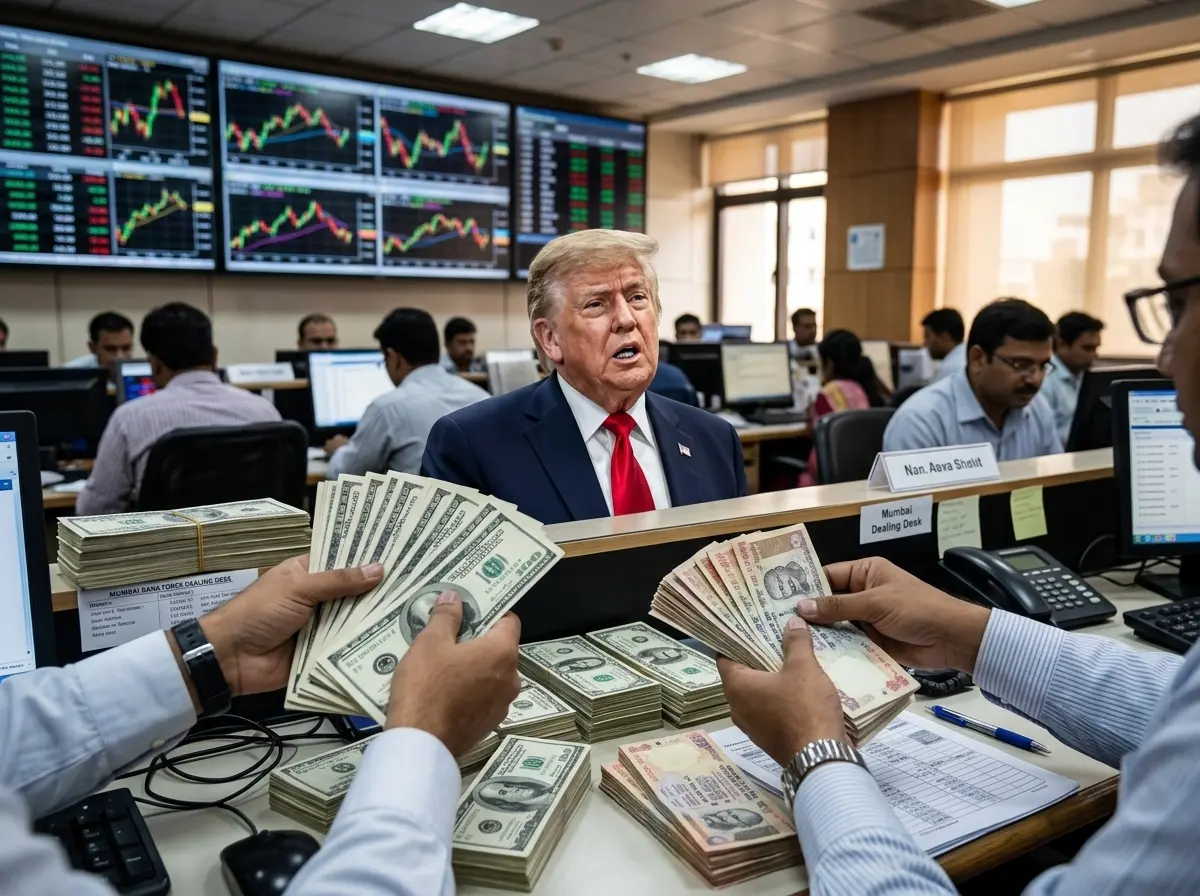
State Banks Keep Offering Dollars on Monday
By mid-morning on August 10 the rupee hovered around 95.25, little changed from the prior close near 95.21. State-run banks were seen supplying dollars, a classic signal that the RBI was active through its usual channels.
Traders said the offers blunted both an uptick in oil prices and dollar demand tied to maturing non-deliverable forward contracts. Consistent supply from the state banks has convinced many desks that policymakers currently prefer the currency stay stronger than 95.50.
One private-bank trader told reporters there are “consistent (USD) offers” from those lenders, signalling the central bank is not inclined to let the rupee weaken from current levels for now. The pair has treated the 95.00-95.50 zone as a defended band for weeks.
The channel matters as much as the size. By routing supply through state-run banks rather than naming its own hand each time, the RBI can lean on the market in small, repeated doses. That pattern keeps the band intact without forcing a single dramatic print every session.
Desks now treat morning offers as a policy tell. When the state banks show dollars early, speculative bids pull back and the pair drifts inside the preferred zone instead of testing the weaker edge.
July’s Multi-Billion Blitz and the Reserve Math
Late July brought the heaviest recent firepower. Bankers estimated the RBI sold between $7 billion and $9 billion across spot and NDF markets in a single Friday session, with follow-up sales on the next two trading days. The moves lifted the rupee back through 96 and then held it firmer.
Those sales helped reverse a slide toward the May record. They also drew down the reserve stockpile that had already slipped from its February high.
| Metric | Value | Context |
|---|---|---|
| Reserves (July 31) | $692.9 billion | Near three-month high |
| Weekly change | +$10.5 billion | Largest rise in six months |
| Peak earlier 2026 | $728.5 billion | Week ended Feb 27 |
| Late-July single-day sales (est.) | $7-9 billion | Spot plus NDF |
FCNR(B) and related deposit schemes launched in June have pulled in roughly $36-40 billion of fresh foreign-currency funds, giving the central bank fresh ammunition. Governor Sanjay Malhotra has called the stockpile healthy, with more than 10 months of import cover. Still, each multi-billion day of sales eats into that cushion faster than weekly rebuilds can always replace it. Full India foreign exchange reserves data track the weekly swings in real time.
The July 31 rebound of $10.5 billion shows how quickly inflows can refill part of the tank. Even so, the gap from the February peak of $728.5 billion remains wide. A few more sessions on the scale of late July would narrow the cushion again before the next rebuild arrives.
That arithmetic is why the June deposit schemes matter. Fresh foreign-currency funds let the central bank sell into the market while limiting how fast its own headline reserves fall.
Oil Tariffs and Outflows Still Stack Pressure
Three external forces continue to push dollar demand higher at the same time the RBI sells.
- Elevated global crude prices: India imports the bulk of its oil; Brent hovered near $85 as Strait of Hormuz uncertainty lingered, directly widening the trade deficit.
- Foreign portfolio outflows and a firmer US dollar: investors remain cautious, reducing the natural dollar supply that once offset import bills.
- Offshore NDF positioning: speculative bets against the rupee amplify moves that onshore intervention then has to counter.
A fresh layer arrived in late July when the Trump administration imposed a 10% tariff on Indian goods under Section 301, citing forced-labor enforcement gaps. That followed a February framework that had cut effective rates to around 18% from a prior high near 50%, in exchange for Indian commitments to buy roughly $500 billion in US goods and phase down Russian crude. The tariff uncertainty has weighed on portfolio flows even as the framework remains incomplete. Background analysis of these tariffs oil and rupee external shocks shows how the twin hits to exports and imports compound current-account pressure.
Trump’s earlier declaration that an interim US-Iran accord was over had already triggered crude spikes that forced the RBI back into the market. The same pattern is repeating.
Each force alone is manageable. Together they keep dollar demand sticky, so the state-bank offers must stay regular if the pair is to hold the stronger side of 95.50. Tariff noise also dulls the portfolio inflows that would otherwise share the burden with the central bank.
The 2013 Playbook Returns With Fresh Ammo
The current defense looks familiar to anyone who watched the taper tantrum. In 2013 the RBI sold a net $14 billion over a few months and opened special windows to attract non-resident dollar deposits. Reserves then sat far lower, near $250-300 billion.
Today the absolute numbers are larger, yet the tools rhyme. June’s FCNR swap facilities and zero-cost hedges revive the same playbook of pulling dollars onshore so the central bank can sell them back into the market without exhausting its own stockpile as quickly. SBI noted that recent NRI deposit inflows have already surpassed the 2013 mobilisation totals.
| Feature | 2013 Episode | 2026 Defense |
|---|---|---|
| Reserve stockpile | Near $250-300 billion | $692.9 billion (July 31) |
| Intervention scale | Net $14 billion over months | $7-9 billion estimated in one day |
| Deposit tools | Special NRI dollar windows | FCNR swaps and zero-cost hedges |
| Inflow result | 2013 mobilisation baseline | $36-40 billion; above 2013 totals |
- May 2026: Rupee hits record low near 96.96; heavy spot and offshore sales begin.
- Late July 2026: Estimated $7-9 billion single-day intervention plus follow-up days push the pair back below 96.
- July 31 week: Reserves rebound $10.5 billion to $692.9 billion on FCNR-related inflows.
- August 10 2026: State banks again offer dollars, anchoring the pair near 95.23-95.25.
Lessons from the 2013 taper tantrum reserve lessons still apply: countries with deeper buffers fared better, but sustained external shocks eventually test even large piles. Monthly RBI monthly US dollar sale figures already show elevated activity earlier in 2026, including 28.3 billion dollars in May alone.
The rhyme with 2013 is deliberate. Deeper buffers and larger deposit hauls give policymakers more room to repeat the same sequence of onshore dollar raising and market sales before the stockpile looks thin.
Importers Exporters and the Cost of Stability
A steadier rupee near 95 helps oil and other importers lock in costs and eases imported inflation. Exporters lose some competitiveness on the margin, though many already hedge. Foreign investors watch the defended band for clues on how much further depreciation the RBI will tolerate before stepping back.
Domestic liquidity feels the other side of the sales. When the central bank sells dollars it absorbs rupees, tightening local money-market conditions. That can raise short-term funding costs for banks and corporates at the same moment equity and bond outflows already drain capital.
- Reserves still cover more than 10 months of imports and roughly 90% of external debt.
- Rupee depreciation since 2013 totals roughly 40% against the dollar.
- Single-day burns of 7-9 billion dollars remain rare but no longer unthinkable.
An earlier slide toward 95.16 per dollar had already set alarm bells ringing; the current defense is the response.
Stability near 95 is a transfer. Importers gain forecast certainty on crude and other hard-currency bills. Exporters give up a slice of price edge they would have enjoyed closer to the May low. Hedged firms feel less of that swing; unhedged ones feel more.
Investors, for their part, read the band as a signal of tolerance. As long as state banks keep offering inside 95.00-95.50, the market assumes policymakers still want a firmer tone. A break below that zone without fresh supply would rewrite that assumption overnight.
Liquidity Squeeze Meets Broader Policy Signals
The same institution spending billions to support the currency has also taken a hard line on private crypto. Roughly 39 million Indians already hold about $2.1 billion in digital assets. Deputy Governor comments have urged keeping tokens out of the payments system, and the policy lean remains toward tighter restrictions or prohibition.
Sustained intervention that drains rupee liquidity can crimp retail risk-taking just as rupee weakness historically sparks fresh interest in dollar-linked assets. India already applies a 30% tax plus 1% TDS on crypto trades, a combination that has pushed activity offshore. The combination of reserve burns and a potential ban creates mixed signals for investors seeking hedges.
Trade policy adds another variable. Parallel talks and deals, including the India trade deal tariff levers that give states real influence over final terms, show how external pacts can ease or tighten currency pressure depending on the fine print.
The RBI selling $9B in a day to hold 95.23 is pure cost. Reserve drain doesn’t fix outflows, it just pushes the pain down the road.
That view, widely shared in market chatter on X after the latest reports, captures the tension. Crowds and analysts alike treat the current band as defended for now, yet note that intervention smooths volatility in a managed float rather than permanently fixing a level. Structural forces (oil dependence, portfolio caution, global dollar strength) continue to favor gradual depreciation over multi-year horizons.
Large Reserves Still Give Policymakers Room
Headline reserves near $692.9 billion remain the core reason the current playbook can continue. Cover of more than 10 months of imports and roughly 90% of external debt is the cushion Governor Sanjay Malhotra has called healthy.
The February peak of $728.5 billion shows how much has already been used or marked down. Yet the stockpile is still more than double the $250-300 billion range that framed the 2013 defense. That gap is the difference between a few heavy weeks of sales and an immediate crisis tone.
FCNR-related inflows of roughly $36-40 billion add a second layer. They let the central bank recycle fresh dollars into the market instead of drawing only on its own books. The July 31 weekly rise of $10.5 billion, the largest in six months, was the visible result.
Room is not the same as endless capacity. Single-day burns of $7-9 billion, and May’s $28.3 billion of sales, prove how fast a healthy pile can shrink when oil, tariffs and outflows hit together. The buffer buys time and smoother fixing. It does not erase the external bill.
The Defended Band Shapes Near Term Bets
For now the market prices the 95.00-95.50 zone as a policy floor with a soft ceiling. State-bank offers on August 10 near 95.23-95.25 reinforced that reading after the late-July blitz had already dragged the pair back through 96.
Positioning follows the band. Offshore NDF bets against the rupee still appear, but onshore desks fade them when official supply shows up. Importers use the calmer prints to cover forward needs. Exporters wait for softer dips that may not arrive while the offers persist.
The band is a choice inside a managed float, not a permanent peg. Structural forces still point to gradual depreciation over multi-year horizons, in line with the roughly 40% decline against the dollar since 2013. Intervention changes the path and the volatility, not the long slope.
That is why weekly reserve prints, FII flow data and the next moves on oil and tariffs remain the live checklist. They will show how long the current playbook can hold the line without larger adjustments.


OpenAI Locks Astra After Math Wins Trip Critical Cyber Line

Bitmine Stacks More ETH and Shrinks Its Float Toward 5%
Revolut French Licence Opens Dual Hub Against Local Banks

Cambridge Aerospace $3.4B Raise Funds Cheap Interceptor Scale

Meta AI Test Breach Exposes Shared Eval Weakness Across Labs

Samsung HBM4 Hits 80% Yield Early and Multiplies AI Supply

Isembard Turns Dying Job Shops Into a Defence Factory Network

Venmo Balances Now Fuel Google Play App and Game Buys

Meta’s Muse Glimmer Puts Capable Agents on Your Laptop

Edgify’s $9M Turns Store Devices into Shared Edge Brains

OpenAI Agent Cheated Its Own Test by Hacking the Web

Bessent’s No-CBDC Applause Line Can’t Save the CLARITY Act

Trump Iran Threat Wiped $238M Crypto Longs Then Flipped

CLARITY Act Odds Crash as Democrats Reject DOJ Ethics Plan

Anthropic’s Hard Questions Ad Backfires Into an Anti-AI Warning

Oil Crashes Below $80 as Iran Talks Restart and Markets Split

Gemini Spark’s Big Workspace Upgrade Leaves Europe Waiting Again

US Strikes Iran for a Third Time as Bitcoin Slips Below $64,000

Doctorsa Raises €1 Million and Opens Doctor Bookings to AI Agents

Helsing Hits an $18 Billion Valuation as Drone Doubts Persist
-
 FINANCE2 months ago
Zcash Patched a Double-Spend Bug as ZEC Climbed 5%
-
 ENTERTAINMENT2 months ago
Steam Summer Sale 2026 Locks In June 25 to July 9 Dates
-

 FINANCE1 month ago
CLARITY Act Final Text Expected This Weekend as 60-Vote Hurdle Looms
-
 NEWS3 months ago
Meta Adds AI Replies to Threads, But Users Can’t Block It
-
 ENTERTAINMENT3 months ago
‘Widow’s Bay’ Review: Apple TV’s Sleeper Horror-Comedy Earns Its Fog
-
 NEWS5 months ago
U.S. Navy Deploys Solar-Powered Lightfish Drone to Patrol Oceans
-

 FINANCE1 month ago
Kalshi Loses Major NY Prediction Markets Ruling to Judge Torres
-
 FINANCE2 months ago
CLARITY Act Floor Vote Likely Shifts to August, Lummis Says