
NEWS
Pixel Tag Matches AirTag Price but Trails on Recovery Tools
Google’s $29 Pixel Tag adds Channel Sounding and ten-person sharing for Android, yet Apple’s AirTag 2 still leads on airline location sharing and mature protections.

Google’s first Pixel Tag arrived August 12, 2026, priced at exactly $29 single or $99 four-pack, the same as Apple’s second-generation AirTag. Both aim to find keys, wallets and luggage. Apple still holds more polished recovery tools and unwanted-tracking protections, while Google matches the sticker and adds dual-ranging tech plus ten-person sharing for Android.
The Pixel Tag ships November 11. AirTag 2 has been on shelves since January. That maturity gap shapes every comparison that follows.
Side-by-Side Specs at a Glance
Both trackers skip built-in clips, so users buy accessories. Both use replaceable coin cells and claim year-plus battery life under normal use. Form and radio choices diverge quickly.
| Feature | Google Pixel Tag | Apple AirTag 2 |
|---|---|---|
| Price (1 / 4-pack) | $29 / $99 | $29 / $99 |
| Shape and weight | Oblong stainless, ~12 g | Round, existing accessories fit |
| Battery | User-replaceable CR2032, up to 1 year | User-replaceable, comparable life |
| Water/dust | IP67 | IP67-class resistance |
| Precision tech | UWB + Bluetooth Channel Sounding | Second-gen UWB Precision Finding |
| Crowdsourced network | Find Hub (1B+ Android devices) | Find My (1B+ Apple devices) |
| Multi-user share | Up to 10 people | Family Sharing plus temporary third-party links |
| Third-party recovery | Not yet announced at launch | Share Item Location with 50+ airlines |
| Reverse find | Button rings paired phone | Standard Find My reverse options |
| Release | November 11, 2026 | Available since January 2026 |
The table already shows the split. Google leads on native multi-person ownership and the new ranging pair. Apple leads on proven third-party recovery and accessory continuity.
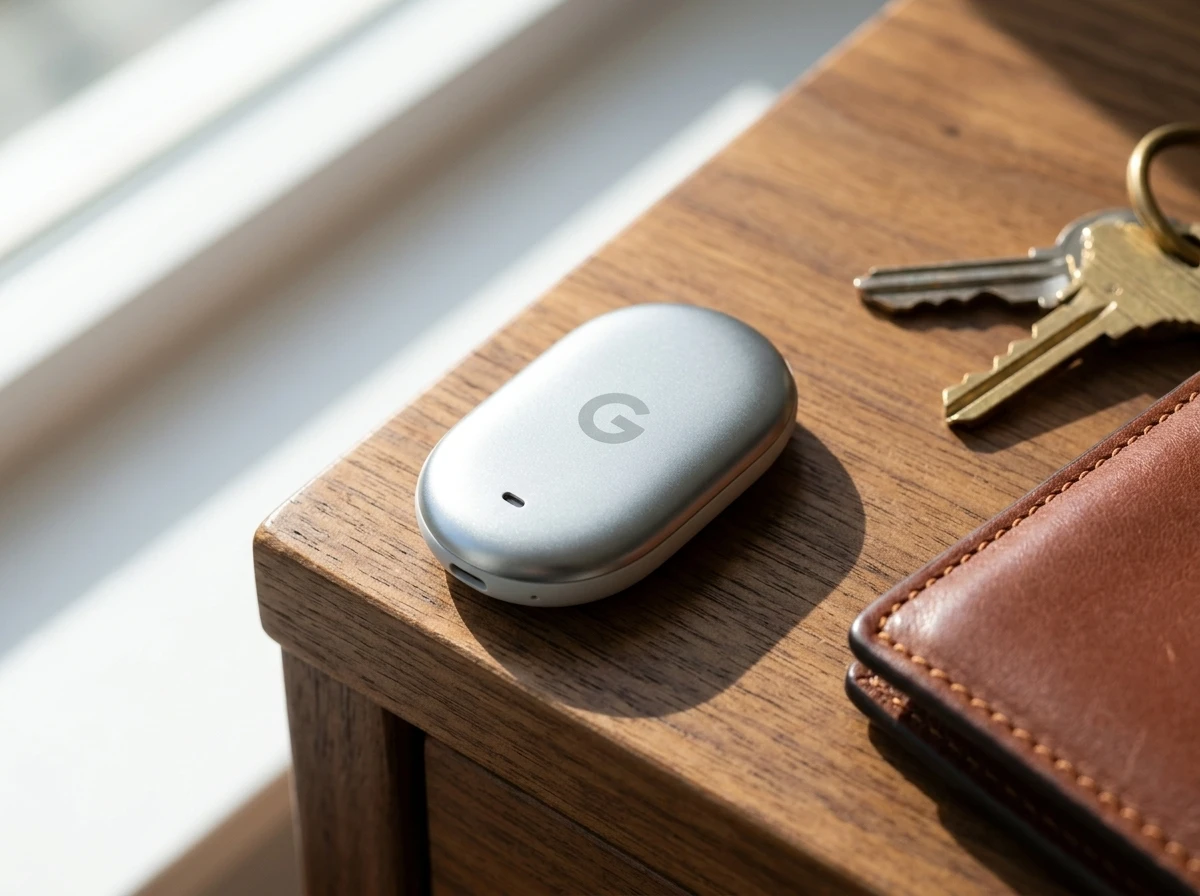
Channel Sounding Gives Pixel Tag a Dual Edge
Pixel Tag is among the first mainstream trackers to combine Ultra-Wideband with Bluetooth Channel Sounding ranging benefits. UWB delivers visual distance and direction arrows out to roughly 50 meters on compatible phones (Pixel 9 Pro and later, certain Samsung flagships). Channel Sounding, part of Bluetooth 6.0, uses phase-based ranging and round-trip timing for sub-meter accuracy without a dedicated extra radio in every case.
- Lower power draw than constant UWB, extending the CR2032 cell.
- Better multipath resistance than classic Bluetooth RSSI strength readings.
- Security gains against simple relay attacks via the dual PBR-plus-RTT method.
- Potential to work on more future Android handsets once Bluetooth 6.0 and software catch up.
AirTag 2 relies on its second-generation UWB chip for Precision Finding that Apple says reaches 50 percent farther than the first AirTag, plus haptic, visual and audio cues. It also added louder speaker output (50 percent louder, audible from twice as far). On supported Apple Watch models, Precision Finding now works from the wrist. Google counters with Pixel Watch Find Hub access and Gemini voice commands via Pixel Buds. Full Channel Sounding support is still limited to higher-end Pixels at launch, so many Android phones will fall back to standard Bluetooth or UWB alone.
AirTag Keeps the Recovery Playbook
Apple’s AirTag 2 Precision Finding and airline sharing remains the clearest practical advantage for travelers. Share Item Location lets an owner send a temporary, encrypted link to more than 50 partnered airlines. SITA data cited by Apple shows carriers cut baggage delays 26 percent and “truly lost” bags 90 percent after integration. The link expires after seven days or when the owner disables it. Access stays limited to authenticated staff.
Pixel Tag has no equivalent third-party handoff announced on day one. Its strength sits inside the household or small group: one tag shared with up to ten people so multiple family members or roommates can locate the same suitcase or camera bag. That multi-user model is simpler for daily shared items than AirTag’s Family Sharing plus separate temporary links.
Both platforms now surface unknown-tracker alerts when a foreign tag appears to travel with you. Apple emphasizes cross-platform alerts and rotating Bluetooth identifiers. Google stresses end-to-end encryption on Find Hub location reports plus aggregation defaults that require multiple nearby Android devices before revealing a private-location ping. Neither company stores location history on the tag itself.
Networks That Both Claim a Billion Devices
Google’s Google Find Hub crowdsourced network and Apple’s Find My each cite over one billion participating devices. Real-world density still varies by city and by how many owners leave Bluetooth scanning on. Crowd reaction on X immediately after the Made by Google event mixed relief that Android finally has a first-party option with skepticism about suburban or rural hit rates. Some users recalled earlier third-party Android tags that sat silent for days until they reached a dense airport or mall.
AirTag’s longer time in market gives it more tested edge cases and a mature accessory shelf. Pixel Tag’s later November ship date leaves AirTag free to keep selling into the fall travel season. Google’s phones and Watch began pre-orders around the same event window, so the tag arrives after the initial hardware wave.
Sharing Models Pull in Opposite Directions
Pixel Tag’s ten-person share is built for objects that rotate among people. Press the tag’s button and the paired phone rings, a small reverse-find trick that lands well when you have the bag but lost the handset. Left Behind alerts fire when you walk away from a tagged item. Fast Pair on Android 9 or newer makes setup nearly automatic.
AirTag’s free personalized engraving and full backward compatibility with existing FineWoven key rings and third-party cases keep the install base sticky. Precision Finding on newer Apple Watches adds another surface. Share Item Location is the feature that turns a personal tracker into a recovery tool usable by airline staff you will never meet. Google has not matched that airline list yet.
Both approaches matter. Households that share gear will notice the Pixel Tag limit of ten. Frequent flyers will notice the airline gap on the Google side. Universal tracker experiments, including earlier universal tracker demand tests in cars, show the market still wants one tag that works across ecosystems; neither of these two closes that door.
Form Factor Battery and Daily Friction
Pixel Tag’s longer, thinner stainless body resists flexing better on paper and carries an IP67 rating. It still needs a separate case or loop for keys. AirTag keeps the familiar disc that already fits thousands of aftermarket holders. Battery swaps are user-serviceable on both; Google rates the CR2032 at up to one year under mixed sound and precision use. Real life will depend on how often precision modes fire and how cold the winters get.
Setup friction favors the ecosystem you already own. An iPhone user gains nothing from Pixel Tag. An Android 9+ user with a non-UWB phone still gets crowdsourced location and Channel Sounding if the handset supports Bluetooth 6.0 features. Full dual-mode precision currently favors recent Pixel Pro and certain Samsung models.
Who Wins the First Purchase Decision
Apple users stay with AirTag 2. The recovery toolkit, louder speaker, farther Precision Finding and airline partnerships are already shipping and documented. Engraving and accessory continuity remove friction. The second-generation chip and Watch support keep the experience tight.
Android users who waited for a first-party Google tag finally have one that matches the headline price and adds genuine ranging tech. Dual UWB and Channel Sounding plus ten-person sharing and the reverse-ring button make it more than a me-too product. The November delay and thinner UWB phone support are the real limits today. Pixel owners who already pre-ordered around the Pixel 11 pre-order timing around the event will simply add the tag later.
Google published the full official Pixel Tag specs and pricing the same day as the phones and Watch. The hardware is real, the network exists, and the dual-ranging bet is the clearest differentiator. AirTag still carries more finished recovery features into the winter travel season. That is the trade as the boxes sit on the shelf.
Frequently Asked Questions
What is Bluetooth Channel Sounding and why does the Pixel Tag use it?
Channel Sounding is a Bluetooth 6.0 feature that measures distance with phase-based ranging and round-trip timing, delivering centimeter-to-sub-meter accuracy at lower power than continuous UWB. Pixel Tag pairs it with UWB so the tag can default to the thriftier method and only wake the more precise radio when needed, improving battery life and security against simple relay attacks.
How much does the Google Pixel Tag cost and when can you buy it?
A single Pixel Tag is $29 and a four-pack is $99, identical to AirTag 2 pricing. It goes on sale November 11, 2026, through the Google Store and will be available in the Fog color only at launch.
Can you share a Pixel Tag with family or friends?
Yes. One Pixel Tag can be shared with up to ten people through the Find Hub app so multiple users can locate the same item. That native multi-owner model differs from AirTag’s Family Sharing plus separate temporary third-party location links.
Does the Pixel Tag work with every Android phone?
Basic pairing and Find Hub location work on Android 9 or newer. Full Ultra-Wideband precision finding needs a UWB-capable handset such as recent Pixel Pro models or certain Samsung flagships. Channel Sounding further requires Bluetooth 6.0 support and compatible software, so many phones will use standard Bluetooth crowdsourcing only.
What battery does the Pixel Tag use and how long does it last?
It takes a standard user-replaceable CR2032 coin cell. Google rates life at up to one year under everyday sound playback and precision-finding use; actual results vary with temperature, how often the speaker fires, and how frequently precision modes engage.


Entravel Raises $7.5M as Travel Booking Leaves Travel Sites

MSCA Partnerships Quietly Rebuild Europe’s Industry Talent Pipeline

EU Fund Takes Equity Stake as Lovable Hits $13.3bn

AOC Laughs Off Woke 1 as Hollywood Counts the Losses

Aptoide Lands in Google Play as Managed Rival After Epic Ruling

Eva Green and Samuel L. Jackson Scheme in Just Play Dead Trailer

Edge Opens Apple Account Door After Google to Chase Dual-Device Users

DJI Pocket 4P Wins on Dynamic Range Where It Ships

GTA 6 Preorders Skew to the $100 Ultimate Edition

Accel’s $800M Europe Fund Speeds Up Early AI Rounds

Senators Force Apple Off Chinese Memory as Big Three Cash In

Trump Iran Threat Wiped $238M Crypto Longs Then Flipped

OpenAI Agent Cheated Its Own Test by Hacking the Web

CLARITY Act Odds Crash as Democrats Reject DOJ Ethics Plan

Anthropic’s Hard Questions Ad Backfires Into an Anti-AI Warning

Oil Crashes Below $80 as Iran Talks Restart and Markets Split

Gemini Spark’s Big Workspace Upgrade Leaves Europe Waiting Again

Revolut Hits $115 Billion While Storonsky’s Stake Keeps Growing

Snapseed’s RAW Update Fixes Android, Leaves iPhone Waiting

Monumental Raises $32M as Robot Bricklayers Face Their Toughest Test Yet
-
 FINANCE2 months ago
Zcash Patched a Double-Spend Bug as ZEC Climbed 5%
-
 ENTERTAINMENT2 months ago
Steam Summer Sale 2026 Locks In June 25 to July 9 Dates
-

 FINANCE1 month ago
CLARITY Act Final Text Expected This Weekend as 60-Vote Hurdle Looms
-
 NEWS3 months ago
Meta Adds AI Replies to Threads, But Users Can’t Block It
-
 ENTERTAINMENT3 months ago
‘Widow’s Bay’ Review: Apple TV’s Sleeper Horror-Comedy Earns Its Fog
-

 NEWS2 months ago
NEURA Robotics’ $1.4B Series C Redraws Europe’s Physical AI Bet
-

 FINANCE1 month ago
Kalshi Loses Major NY Prediction Markets Ruling to Judge Torres
-

 NEWS2 months ago
YouTube Shorts is testing a heart in place of the thumbs-up