
NEWS
Google App Videos Tab Turns Search Into a Watch Feed

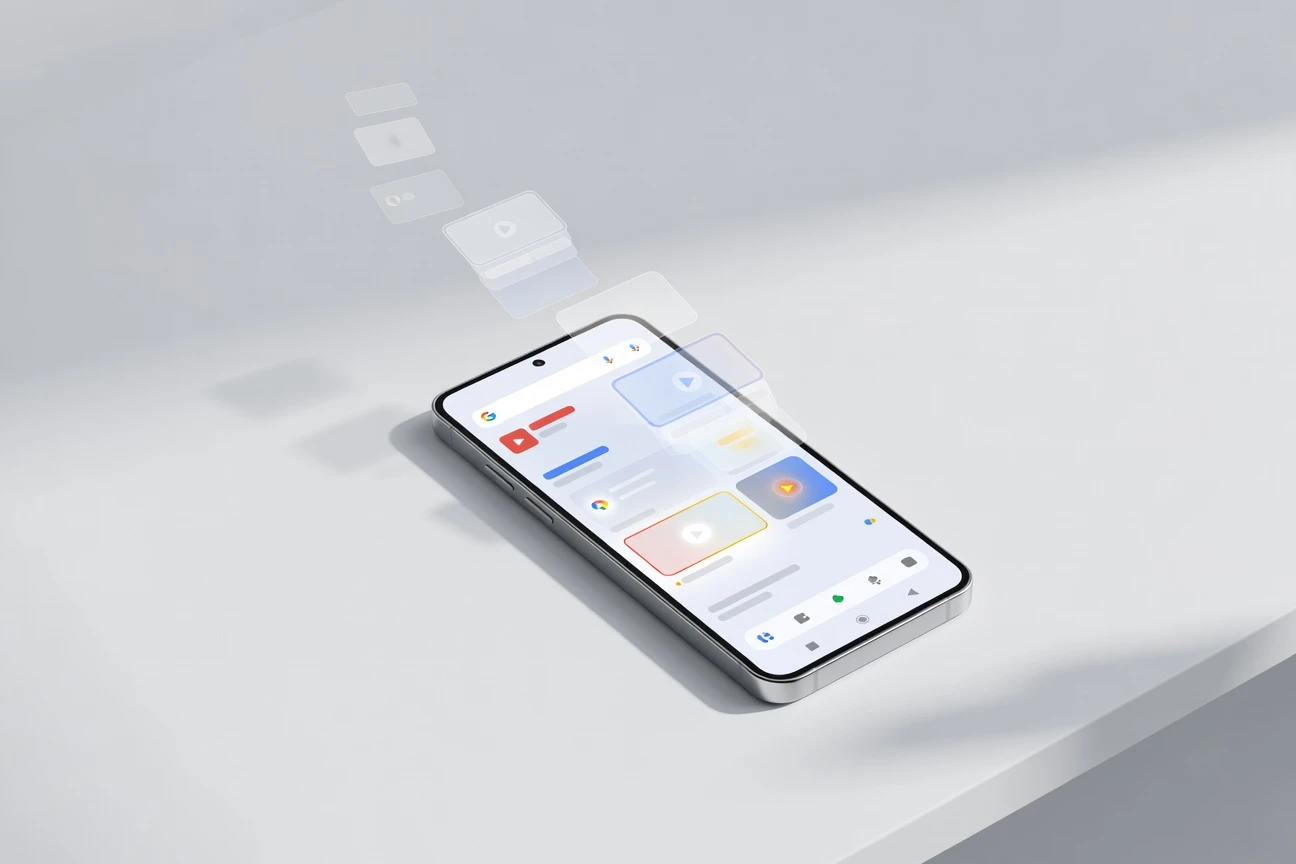
The Google app Videos tab spotted in beta code would give Search a passive video feed inside its main mobile app. Android Authority, a mobile technology publication, says the hidden bottom bar item can be forced on, but the page is blank, which points to early testing rather than a launch.
If Google ships the feature, the bigger shift is behavioral. Search would move one more step away from a typed question and toward a feed that opens before the user knows what to ask. That could make quick video discovery easier, while giving Google more control over which clips get the first look.
The Beta Clue Sits in the Bottom Bar
A bottom navigation slot is expensive space in any mobile app. It tells users what the product wants them to do without reading a label, and it trains muscle memory faster than a buried menu can. That is why the reported placement matters more than the blank page behind it.
Google already presents its core app as a place to search, use AI Mode, try AI Overviews, scan with Lens and follow topics in Discover, according to the Google app official Play Store listing. A dedicated video tab would sit beside that mix as a full destination, not a filter after a query.
The closest public precedent is Images. Google said its mobile Images icon lets users see daily visual suggestions tailored to their interests, then browse, save or search from what they find through the Images tab announcement for the Google app. A video version would use the same product grammar: open the app, tap a tab, start browsing.
| Surface | Starting Point | Main Signal | User Effect |
|---|---|---|---|
| Home and Discover | Open the Google app | Interests, activity and followed topics | News, articles and mixed updates arrive before a query |
| Images Tab | Tap Images at the bottom | Visual interests and prior searches | Pictures become a daily browsing feed |
| Possible Videos Tab | Tap Videos at the bottom | Likely search, watch and interest signals | Clips could become a standing app habit |
| YouTube Home | Open YouTube | Watch history and feedback | Video recommendations stay inside the video app |
Search Is Moving From Queries to Feeds
The old mobile search bargain was simple: type a term, get links, leave when done. The modern app is less direct. It now carries Lens, Gemini, AI answers, Discover cards, saved collections and visual browsing, all trying to reduce the moment of typing.
That change follows how people already spend time. DataReportal, a digital research publisher, says online adults spend a weekly average of 18 hours and 36 minutes on social and video feeds when YouTube and TikTok are counted with social apps, based on GWI and Similarweb data in the Digital 2026 Global Overview Report. It also says 91.1 percent of adult internet users watched online video in the prior week.
- 18 hours 36 minutes: Average weekly time online adults spend on social and video feeds in DataReportal’s global report.
- 91.1 percent: Share of adult internet users who watched online video during the prior week, according to the same report.
- 80 billion signals: The scale YouTube says its recommendation system learns from when matching viewers with clips.
Those numbers explain why a blank beta tab deserves attention. A user who searches for a recipe, phone fix or concert clip today may still end up on YouTube, TikTok, Instagram or a publisher page. A Videos tab could keep the first browse inside the Google app.
The pressure is visible across Google’s own products. This site has also tracked Chrome’s planned lazy loading for video and audio, another sign that video is no longer a side format for the web. It is a default payload that browsers, apps and search tools now have to manage.
The Source Advantage Belongs to Google
Google has three advantages if it decides to build a video feed into its search app. First, it has the query record. Second, it has Discover behavior. Third, it already understands a large amount of video metadata across the open web.
Google’s Discover help page says the product can use information from a device, other Google products and account settings such as Search Services History, app information from devices, contact information, personalized recommendations and location settings. It also tells users they can follow or unfollow topics and remove sources through the official Discover personalization controls.
- Interest signals – followed topics, liked Discover cards and recent searches can shape what appears without a new query.
- Context signals – location, device information and account settings can narrow a feed to local events, teams, movies or hobbies.
- Video signals – titles, thumbnails, watch pages and structured data can tell Google which clips belong in a results surface.
That mix is hard for a standalone video app to copy. TikTok knows what a user watches inside TikTok. YouTube knows YouTube behavior. Google can connect search intent with broader browsing, if the user’s settings allow it.
Creators Face a New Indexing Test
A Videos tab would not help every publisher or creator equally. Google Search Central says videos can already appear in the main results page, Video mode, Google Images and Discover through Google’s video indexing best practices. That means the raw material for a feed is already in place.
The tougher part is eligibility. Search Central tells site owners to use common video embed elements, avoid loading a video only after user action and provide stable URLs for thumbnails and video files. The same guidance also says a video must be embedded on an indexed watch page and cannot be hidden behind other elements if it is to qualify for video features.
Search Console adds another constraint. Its video indexing report counts indexed pages where Google detected a video, and it explains when videos were found but not indexed through the Search Console video indexing report guide. It also says Google indexes only one video per page for that report.
For publishers, that creates a practical split. A well marked watch page with a stable thumbnail may have a better chance of surfacing than a news article with a buried clip, a paywalled player or a social embed that changes URLs. If a video feed becomes a major Google app surface, technical video search optimization becomes less optional.
There is also a branding problem. If the first frame, title and source label appear inside the Google app, creators may gain reach while losing the habit of direct visits. That is the trade publishers already know from Discover, only with a format that is easier to consume and harder to leave.
A Videos Tab Would Compete With Google’s Own Habits
The awkward question for Google is where a Videos tab ends and YouTube begins. YouTube Help says its home page is primarily a personalized surface, and that its recommendations rely heavily on watch history through YouTube’s recommendation system guide. The Shorts feed is also personalized around what YouTube thinks a viewer wants next.
A Google app feed could serve a different job. YouTube is where users go when they already accept that they are watching video. Search is where a user often starts with intent. A Videos tab would sit between those modes, catching the moment when a question turns into passive browsing.
That could create friction inside Alphabet, but it could also reduce leakage to rival apps. If the tab includes YouTube, Instagram, Facebook, TikTok and publisher clips, Google can become the front door to video without making every clip a YouTube clip. If it favors YouTube too heavily, regulators and rivals will notice.
Other apps have found that video expansion can annoy users when it appears in a place built for something else. Thunder Tiger Europe recently covered Spotify’s opt-out approach to music videos, a reminder that more video is not always a cleaner product. Google’s advantage is search intent. Its risk is turning a utility app into another scroll.
The User Bargain Is Convenience for More Profiling
The best case for users is obvious. A Videos tab could make it faster to find a repair clip, a match highlight, a film trailer, a cooking demo or a creator explainer without guessing the right query first. It could also give smaller video sites a new route into mobile discovery if Google ranks them fairly.
The cost is also clear. Google’s Search help says personalized recommendations can be based on saved activity such as Search history, clicked results or ads, and Discover content a user likes or dislikes through the Search activity personalization guide. The company says users can turn personalized recommendations off, but the feed is less useful when the signals thin out.
That leaves Google with a design test. The company can make a Videos tab feel like a useful search shortcut, with clear sources, filters and controls. Or it can make it feel like a second YouTube Home tab wearing a Search badge.
As of May 27, 2026, Google has not announced a public release date for the reported tab. If the blank beta page becomes a shipped product, the first question will be whether it saves users time. The second will be who pays for that saved tap.


Boldr’s $5M Bet Puts HVAC Contractors at Grid Center

NEON Bets Big on Lily James Cliffhanger for February 2027

Gemini Locks Apex Pipes for Crypto Event Contracts

Sony Email Restates Old License Rules Amid Disc Backlash

TidalSense Breaks Spirometry’s Grip With a 75-Second COPD Test

Asus Zenbook Duo 2026 Makes Dual Screens a Daily Driver

SoftBank’s €172M Robot Bet Tops Europe’s €684M Funding Week

NEURA Gives Cleaning Robots a New Brain With ADLATUS Deal

Lotus Emira V6 Manual Delivers Pure Thrills Before Hybrid Shift

Pimax Dream Air Cracks the Bulk Barrier for High-End PCVR

Senators Force Apple Off Chinese Memory as Big Three Cash In

OpenAI Agent Cheated Its Own Test by Hacking the Web

Trump Iran Threat Wiped $238M Crypto Longs Then Flipped

Fed Holds Rates Again as Three Dissents Force Markets to Tighten

30-Year Yield Hits 5.32% Highest Since 2007 as Debt Supply Locks In Costs

Oil Crashes Below $80 as Iran Talks Restart and Markets Split

Google’s Knowledge Panel Fix Risks Its Own Search Defenses

Legora Buys Wexler Fact Engine as Fifth 2026 Deal

Capital Clusters and the Dual Tracks of European Tech Finance

Agon Raises $30M to Build Europe’s AI Weapon Training Arenas
-
 FINANCE3 months ago
Zcash Patched a Double-Spend Bug as ZEC Climbed 5%
-
 ENTERTAINMENT3 months ago
Steam Summer Sale 2026 Locks In June 25 to July 9 Dates
-

 FINANCE2 months ago
CLARITY Act Final Text Expected This Weekend as 60-Vote Hurdle Looms
-
 NEWS3 months ago
Meta Adds AI Replies to Threads, But Users Can’t Block It
-

 NEWS3 months ago
YouTube Shorts is testing a heart in place of the thumbs-up
-
 NEWS4 weeks ago
Senators Force Apple Off Chinese Memory as Big Three Cash In
-

 NEWS3 months ago
NEURA Robotics’ $1.4B Series C Redraws Europe’s Physical AI Bet
-
 ENTERTAINMENT5 months ago
Extraction 3 Is Officially Coming to Netflix in 2027