
NEWS
Insta360 X6 Turns Old X2 Frustrations Into Easy Moto Video
SlashGear’s X2-to-X6 test shows AI Director and replaceable lenses erase the edit friction and breakage fear that once shelved early 360 cameras for riders.

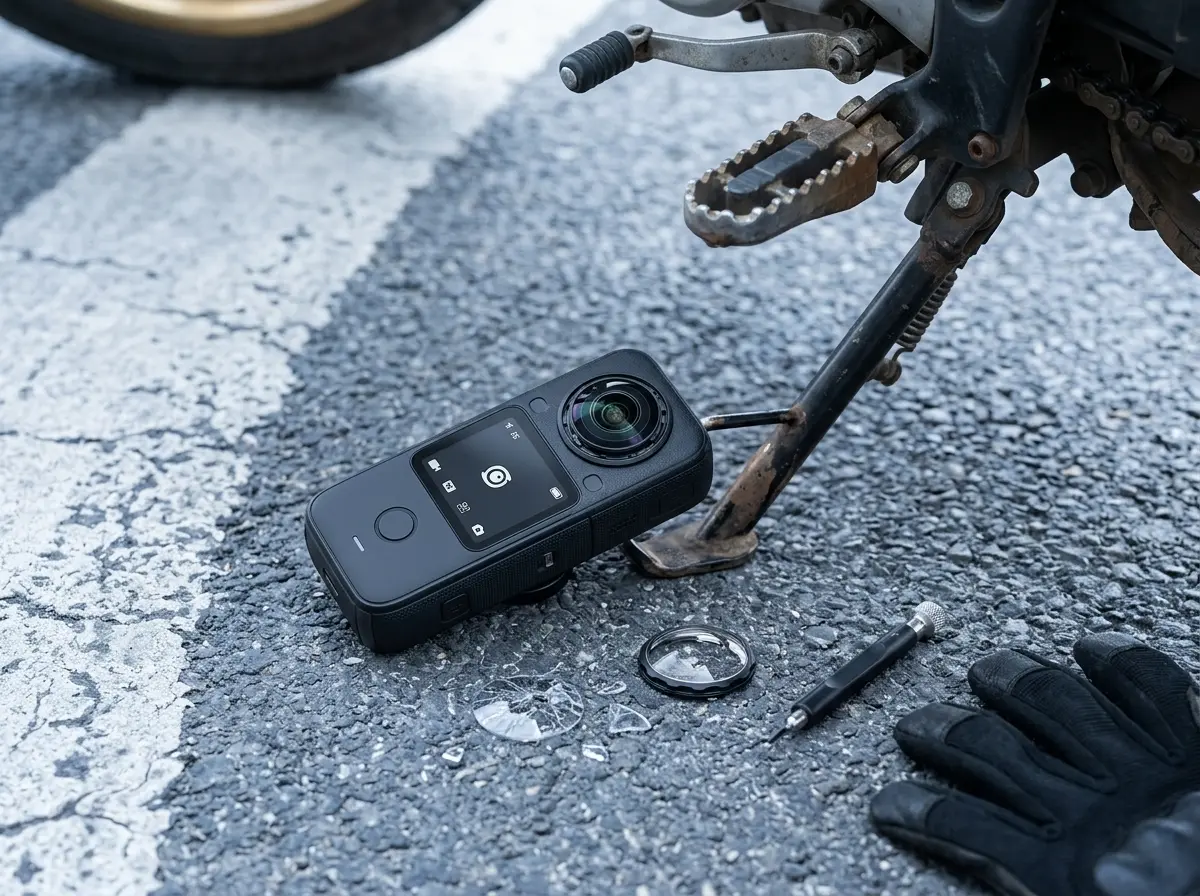
SlashGear reviewer Travis Langness crashed a brand-new Insta360 X6 off his motorcycle at roughly 50 mph, found it in the road, swapped both lenses in under 20 minutes, and kept shooting. That sequence, more than any spec sheet, shows why owners of early models like the X2 are suddenly dusting off their creative plans.
The hardware jumps are real. The second-order change is bigger: AI that edits for you and lenses you can replace roadside remove the exact frictions that once made the cameras sit on shelves.
Hardware That Leaves the X2 Behind
Langness started with an Insta360 X2 years ago for moto vlogs. Setup was easy. Transferring files, clipping, reframing and polishing was not. Interest faded. The X6 arrives with a smaller body that still carries a full OLED screen, dual custom Sony 1/1.1-inch sensors, and a 4nm triple AI chip system.
Sensor area is 33 percent larger than the X5 and dramatically bigger than the X2’s 1/2.3-inch units. Daytime and nighttime image quality jumped enough that Langness noticed it on first clips. Maximum 360 video hits 8K50fps. Photos reach 120MP. 10-bit color and native Dolby Vision land as firsts for the category.
| Spec | Insta360 X6 | Insta360 X5 | Insta360 X2 |
|---|---|---|---|
| Sensors | Dual 1/1.1-inch Sony custom | Dual 1/1.28-inch | 1/2.3-inch class |
| Max 360 video | 8K50fps | 8K30fps | 5.7K30fps class |
| Battery | 2600mAh, ~140 min 8K30 | 2400mAh, ~93 min 8K30 | 1630mAh, ~80 min 5.7K |
| Waterproof (no case) | 20 m IP68 | 15 m | lower |
| Built-in storage | 47 GB usable | None | None |
| Lens system | Replaceable 2.0 (5x scratch resist) | Replaceable | Fixed |
Park Cameras first-look numbers and the official comparison table line up on the same deltas. TechRadar’s Sam Kieldsen, after side-by-side testing, called the daylight improvement real but subtle versus the X5 and the low-light PureVideo gains more decisive. For an X2 owner the gap is a different generation entirely.
Built-in storage changes the field routine as well. The X6 carries 47 GB usable onboard where both the X5 and X2 offered none. That buffer means a rider can keep rolling if a card is full or forgotten, then offload later. Flat single-lens modes up to 5K60 and 4K120 also let the same body stand in as a conventional action cam when full 360 coverage is unnecessary.
The smaller chassis still hosts a full OLED screen, so framing and playback stay practical with gloves on. Pair that screen with the 4nm triple AI chip and the camera can handle heavier capture loads without forcing every decision back to a phone mid-ride.
The Crash That Tested Replaceable Lenses 2.0
Langness mounted the X6 on a motorcycle clamp with the wrong selfie stick extended. The stick snapped. The camera hit the road at speed. One lens shattered. The other was badly scratched. He turned around, found the camera intact enough to power on, and went home to the spare lens kit Insta360 had sent.
The roadside-to-ready sequence ran like this:
- Impact at roughly 50 mph after the extended stick failed on the clamp
- Recovery on the road with the body still able to power on
- Lens swap under 20 minutes using the spare kit at home
- Return to recording on the same ride day
The process itself used the kit as designed:
- Gloves from the kit to handle broken glass
- Lefty-loosey twist with the provided tools to unscrew each damaged lens
- Puffed air and microfiber cloth to clear dust and shards
- Righty-tighty install of the fresh lenses
He was back recording. The new lenses are marketed as five times more scratch-resistant and cheaper to replace. The field test proved the system works when a mount fails or pavement wins. That confidence is the second-order win: riders stop treating the camera like fragile glass and start treating it like durable kit they can push.
Fixed lenses on the X2 offered no such path. A shattered dome once meant a full-unit repair or a write-off. Replaceable Lenses 2.0 turn a crash into a parts swap, which is why Langness now considers creative mounting angles he would not have risked before.
AI Director Removes the Edit Wall
The feature that first hooked Langness was automatic editing. After rides he connected the phone app, picked moto templates, and let AI Director choose clips, angles, transitions and music. He cut nothing himself. The results were “pretty well” finished and ready to post.
The idea of spending a day riding, pressing a few of the right buttons, and coming away with an edited video with some cool clips to post was enticing.
That is Langness describing why the X6 revived interest the X2 lost. Insta360’s PanoMind model is trained on travel, winter sports and motorcycling scenarios. Auto Edit 2.0 and FlashCut templates push the same idea further. The stock music may not thrill everyone, yet the barrier that once meant hours of desktop work now collapses to a few taps while the camera charges.
Crowd chatter on X after launch mirrors the same split. Some X5 owners weigh the full-price jump against discounted last-gen bodies. Others who left earlier cameras unused see the AI layer as the unlock that finally makes regular posting realistic.
The phone-app path matters because it matches how riders already end a day. Wireless transfer, template pick, export. No desktop timeline. No manual reframe of every 360 clip. PanoMind’s moto training shows up in angle choices that favor the road and the rider rather than generic highlight reels.
Battery and All-Day Confidence
The Xtreme 2600mAh pack is rated for 140-minute runtime at 8K30fps. Langness never ran short on multi-hour mountain and beach rides. TechRadar’s independent test hit 136 minutes, close enough to the claim. Versus the X5’s roughly 93 minutes and the 1630mAh battery on the older X2 that delivered around 80 minutes at lower resolution, the difference is ride-length freedom.
Stats that matter in the field:
- 0 to 80 percent charge in 24 minutes with compatible fast charging
- Full charge in about 35 minutes
- No overheating shutdowns observed in continuous 8K30 testing where the X5 had cut out earlier
- IP68 waterproofing to 20 meters without a case, plus engine-sound enhancement and windproof mics for moto audio
A lunch stop can nearly refill the battery. Cold-weather readiness to -20 °C and Star-Ridge cooling keep the smaller body shooting without thermal drama. Optional Mic Pro wireless kits add clean voice and exhaust capture when onboard mics are not enough.
Runtime alone does not explain the shift. Fast top-ups and the absence of heat cutouts mean the camera stays in the mount instead of in a bag waiting to cool. Combined with 20-meter waterproofing without a case, the same unit covers wet pavement, beach spray, and cold morning starts without a packing list of housings.
Who Should Jump and Who Can Wait
X2 and earlier owners sit in the clearest win column. Image quality, battery, durability and especially the automated edit path close the loop that once made the cameras feel like chores. Langness now plans regular use and creative mounting angles he would not have risked before.
X5 owners face a narrower case. Sensors, frame rates, 10-bit across modes, internal storage, deeper waterproofing and the extra runtime are genuine. TechRadar’s verdict still ranks the X6 as the best all-round 360 camera, yet notes the daylight gap is not night-and-day and the price premium is the steepest in the small 360 class. If your X5 already delivers the clips you need and you edit comfortably, waiting for sales or the next cycle is rational.
New buyers choosing among the X6, GoPro Max 2 and DJI Osmo 360 get the current image-quality and software leader with the deepest accessory ecosystem and the strongest AI assist. Flat single-lens modes up to 5K60 and 4K120 keep it viable as a conventional action cam when full 360 is unnecessary.
A quick owner map:
- X2 and earlier: strongest upgrade case across sensors, battery, lenses, and AI editing
- X5 owners happy with manual edits: rational to wait on price or the next cycle
- X5 owners who want runtime, storage, and PureVideo gains now: the deltas are real if budget allows
- First-time 360 buyers: X6 leads on image quality, software assist, and accessories versus GoPro Max 2 and DJI Osmo 360
Price Climb and Bundle Reality
The X6 Standard Bundle lands at $699.99. The Essential Bundle that adds the invisible selfie stick, extra battery, charging case and extras sits near $769-$799 depending on the listing. That is a clear step up from the X5’s $549.99 / $659.99 structure. Motorcycle accessory kits and Mic Pro packages add further cost if you want the full riding setup.
| Bundle | Price |
|---|---|
| X6 Standard | $699.99 |
| X6 Essential | $769-$799 |
| X5 Standard | $549.99 |
| X5 Essential-style | $659.99 |
Langness judged the leap worth it from an X2. He also flagged that current X5 owners may not feel the same urgency. Competition remains real, yet the combination of sensors, runtime, replaceable optics and hands-off editing currently sits at the top of the segment.
Essential-bundle extras pull more weight for moto use than the price delta alone suggests. An invisible selfie stick, spare battery, and charging case turn one body into a day-long kit. Add a motorcycle accessory package or Mic Pro wireless set only if onboard audio and clamp options fall short of the ride you film.
How the X2 Workflow Lost Its Momentum
Langness did not abandon the X2 because mounting failed. Setup was easy. The slowdown hit after the ride: file transfer, clipping, reframing, and polishing turned a fun day into desk work. Interest faded because finished clips rarely left the drive.
The X6 attacks that same chain at every link. Larger sensors and 8K50fps capture reduce the need to rescue thin footage. The 2600mAh pack and fast charge keep the camera on the bike instead of in a charger pile. Replaceable Lenses 2.0 remove the fear that one tip-over ends the unit. AI Director, Auto Edit 2.0, and FlashCut templates finish the job on the phone while the battery tops up.
Each piece already existed as a complaint about earlier bodies. Together they change the habit. A rider can spend the day on the road, tap a moto template, and post without opening a desktop timeline. That is the mechanism behind the dusted-off creative plans, not any single line on the spec sheet.
What the Road Test Proved
A few days of mountain and beach riding plus one high-speed drop produced polished AI-cut videos and a camera that survived its own worst moment. The stock music is forgettable. The confidence is not. Owners who once shelved their X2s because footage sat unedited now have a machine that finishes the job while they pack the bike. That is the payoff beyond megapixels and milliamp-hours.
The drop mattered because it was unplanned. Wrong stick, snapped mount, shattered glass, scratched dome, power-on recovery, sub-20-minute swap, back to recording. Lab scores did not deliver that proof. The road did. Pair that durability with AI cuts Langness left untouched and the X6 clears both the capture day and the edit night that once killed momentum on the X2.
Frequently Asked Questions
What sensors does the Insta360 X6 use?
Dual custom Sony 1/1.1-inch square sensors deliver 33 percent more area than the X5’s 1/1.28-inch pair and far more light than earlier 1/2.3-inch designs, supporting 8K50fps 360 video and 120MP photos.
How long does the X6 battery last at 8K?
The 2600mAh Xtreme battery is rated for 140 minutes of continuous 8K30fps 360 recording; independent tests have recorded approximately 136 minutes under similar conditions.
Can you replace Insta360 X6 lenses in the field?
Yes. Replaceable Lenses 2.0 unscrew with included tools in minutes, come with gloves and cleaning gear, and are rated five times more scratch-resistant than the prior generation while costing less to replace.
Is the Insta360 X6 waterproof without a case?
It carries an IP68 rating and is waterproof to 20 meters (65 feet) without additional housing; official dive cases extend that to 60 meters.
Does the X6 AI Director require a computer?
No. AI Director and Auto Edit 2.0 run through the phone app after wireless transfer, selecting highlights, angles, music and transitions automatically so finished clips can leave the phone without desktop software.


Entravel Raises $7.5M as Travel Booking Leaves Travel Sites

MSCA Partnerships Quietly Rebuild Europe’s Industry Talent Pipeline

EU Fund Takes Equity Stake as Lovable Hits $13.3bn

AOC Laughs Off Woke 1 as Hollywood Counts the Losses

Aptoide Lands in Google Play as Managed Rival After Epic Ruling

Eva Green and Samuel L. Jackson Scheme in Just Play Dead Trailer

Edge Opens Apple Account Door After Google to Chase Dual-Device Users

DJI Pocket 4P Wins on Dynamic Range Where It Ships

GTA 6 Preorders Skew to the $100 Ultimate Edition

Accel’s $800M Europe Fund Speeds Up Early AI Rounds

Senators Force Apple Off Chinese Memory as Big Three Cash In

Trump Iran Threat Wiped $238M Crypto Longs Then Flipped

OpenAI Agent Cheated Its Own Test by Hacking the Web

CLARITY Act Odds Crash as Democrats Reject DOJ Ethics Plan

Anthropic’s Hard Questions Ad Backfires Into an Anti-AI Warning

Oil Crashes Below $80 as Iran Talks Restart and Markets Split

Gemini Spark’s Big Workspace Upgrade Leaves Europe Waiting Again

Revolut Hits $115 Billion While Storonsky’s Stake Keeps Growing

Snapseed’s RAW Update Fixes Android, Leaves iPhone Waiting

Monumental Raises $32M as Robot Bricklayers Face Their Toughest Test Yet
-
 FINANCE2 months ago
Zcash Patched a Double-Spend Bug as ZEC Climbed 5%
-
 ENTERTAINMENT2 months ago
Steam Summer Sale 2026 Locks In June 25 to July 9 Dates
-

 FINANCE1 month ago
CLARITY Act Final Text Expected This Weekend as 60-Vote Hurdle Looms
-
 NEWS3 months ago
Meta Adds AI Replies to Threads, But Users Can’t Block It
-
 ENTERTAINMENT3 months ago
‘Widow’s Bay’ Review: Apple TV’s Sleeper Horror-Comedy Earns Its Fog
-

 NEWS2 months ago
NEURA Robotics’ $1.4B Series C Redraws Europe’s Physical AI Bet
-
 NEWS5 months ago
U.S. Navy Deploys Solar-Powered Lightfish Drone to Patrol Oceans
-

 FINANCE1 month ago
Kalshi Loses Major NY Prediction Markets Ruling to Judge Torres