
NEWS
Molfar Raises €1.5M as Drone Radar Moves to the Front
Molfar raises €1.5M from Front Ventures to move tactical anti-drone radar from prototype work toward field trials in Ukraine and allied countries.

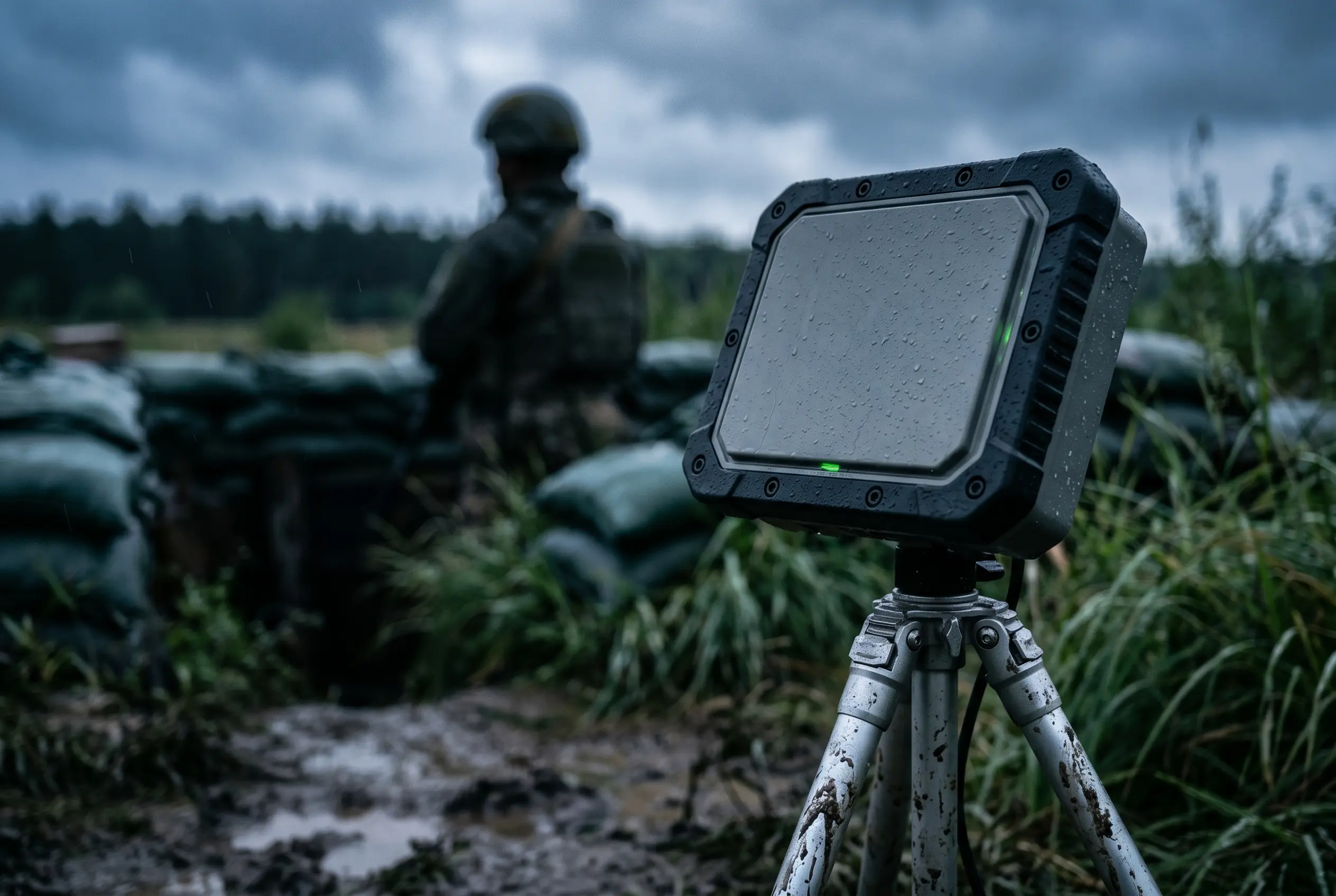
Molfar’s tactical anti-drone radar funding gives the Polish-Ukrainian defence tech company €1.5 million from Front Ventures, the first tranche of a €2 million round aimed at taking its small unmanned aerial vehicle (UAV, a drone without an onboard pilot) detection system from prototype work into field validation in Ukraine and allied countries. The company says its tactical radar capabilities for small aerial threats cover detection, localisation and tracking of low-flying targets that hide in weather, birds and ground clutter.
The product plan puts radar close to the tactical unit. In that version of the counter-drone stack, detection starts near the soldiers expected to move, hide and survive under the drone feed.
Front Ventures Bets on a Sensor Layer
Front Ventures, a Swedish investment company, is the company’s lead and first institutional investor in the tranche. The firm’s early-stage defence technology mandate covers Sweden and Ukraine, with focus areas that include software, drone technology, communications and electronic warfare; its B-shares trade on NGM Nordic SME. The investor is adding a sensing company to a portfolio already heavy with drones, software and defence infrastructure.
The announcement puts Maks Dzherikhov, co-founder at the startup, in the role of selling a familiar battlefield request in venture language: earlier warning, lower false alarms and enough modularity to fit an existing air defence network.
Molfar was created to give defence units earlier visibility against micro drones and small UAVs. We are building tactical radar systems that can be deployed close to the units that need them and scaled across real defence environments.
Dzherikhov said this in the company announcement on the funding round. The claim leaves four testable jobs for the field: find the drone, classify it, hold track and pass usable coordinates before an operator has to react.
Why Micro Drones Beat Old Radar Habits
North Atlantic Treaty Organization (NATO) planners describe small uncrewed systems as cheap, sophisticated tools for surveillance, targeting, disruption and attack. Allied Command Transformation’s Layered Counter-UAS Initiative for drone defence is built around connected sensors, effectors, electronic warfare tools and decision systems, with current Ukrainian tactics feeding the test scenarios. Counter-unmanned aircraft systems (counter-UAS, defence against drones and their control links) are being treated as a network problem.
A tactical radar built for those conditions has a different checklist from an airport surveillance radar or a long-range air-defence sensor. The target set includes small, low-observability drones, autonomous aircraft and swarms.
- Low-altitude clutter – birds, tree lines, weather and ground returns can look like targets at short range.
- Electromagnetic noise – frontline units operate near radios, jammers and other emitters that can bury weak returns.
- Low radar signature – micro drones give the sensor less metal, less power and less time than larger aircraft.
Radar feeds jamming, guns, interceptor drones and command software by giving them a target track. Shortening that chain can give a unit seconds that usually belong to the drone operator.
The Radar Design Starts With Classification
The company describes its core technology as a proprietary multidimensional structural target representation combined with signal-processing algorithms. In plainer terms, the radar reads the physical signature of an aerial object, then uses filters to separate drones from birds, weather effects and other clutter in the detection zone.
Its listed functions include real-time detection, target coordinates, continuous tracking and high-precision localisation. The site also lists operation in rain, fog, snow and wind, plus features designed to reduce the probability that an adversary detects or localises the radar position.
- 90° or 360° coverage – the product is planned in sector and full-circle configurations.
- All-weather operation – listed operating conditions include rain, fog, snow and wind.
- Several patent applications – the company says filings cover core radar detection technologies.
The public announcement gives no range, weight, power draw or unit cost, the numbers a battalion procurement officer would ask for before committing space on a vehicle or mast.
Ukraine Supplies the Trial Conditions
Molfar says it works with the Ukrainian Armed Forces and one of Poland’s major defence and dual-use equipment suppliers. That gives the startup access to operators using radars, jammers, acoustic sensors, optical systems and interceptors against targets that change weekly.
Ukraine’s Ministry of Defence said in lower-tier air defence work near the line of contact that it was developing protection against enemy UAVs in frontline areas, and cited a Brave1-backed turret that had reached more than ten military units. Brave1, Ukraine’s state defence innovation cluster, has become a route for quick testing and certification of small defence systems during the war.
For a radar company, the country offers the data that defence labs struggle to reproduce: small drones in bad weather, nearby jammers, pressured operators and soldiers ready to reject hardware that adds weight without adding warning time.
The risk is also plain. A sensor that emits can become a target. The low-probability-of-detection wording is a response to that problem, but field trials will have to show how the radar behaves after Russian electronic warfare units know it is present.
Europe Is Buying Interoperability
The European Commission’s Readiness Roadmap places the European Drone Defence Initiative beside the Eastern Flank Watch, the European Air Shield and the European Space Shield. The European drone defence and border surveillance plan calls for multi-domain surveillance, drone and counter-drone capabilities, electronic warfare and operational coordination in cooperation with NATO.
That policy language meets a procurement problem visible in NATO’s own experiments: sensors and effectors bought by different countries need to share data and commands. The European Defence Fund project awards selected 57 projects under its latest calls, with €1.07 billion of investment and work covering artificial intelligence, cyber defence, drones and counter-drone systems. The European Defence Fund (EDF, the EU programme for joint defence research and development) is also bringing smaller firms into projects through sub-calls.
| Programme or Company | Work Area | Procurement Test |
|---|---|---|
| Polish-Ukrainian radar startup | Tactical detection and tracking of small UAVs | Warning near units under battlefield conditions |
| NATO LCI-X | Layered counter-UAS experiments | Shared data between sensors, effectors and command tools |
| EU Readiness Roadmap | Drone defence and eastern flank surveillance | Common planning with NATO systems |
| EDF awards | Drones, counter-drone systems, sensors and cyber projects | Joint research and development across member states |
For the startup, the hard requirement sits outside the antenna: the radar has to pass target data into other systems without forcing a ministry to rebuild its air-defence software around one supplier.
Production Will Set the Ceiling
The round funds engineering hires across radar development, signal processing and systems integration, along with the move from prototype to field-validated systems. The company is also opening an office in Ukraine to keep engineers closer to its primary deployment environment and to armed forces already involved in testing.
The Swedish investor says its model favours companies with finished prototypes, patent opportunity or cost advantage, fast production paths and existing permits or licences. It also says it uses existing European manufacturers and production lines. That helps a radar company after the design settles enough to build repeatably.
The gap between a working radar and a deployable radar usually sits in ordinary hardware questions. The unit has to be powered, mounted, repaired, encrypted, networked and shipped under defence export rules.
Cost will be watched because small drones have forced armies to compare every countermeasure with the price of the thing it kills or detects. A radar that helps a unit spend a cheap interceptor once instead of firing blind has a route into budgets across the country’s partners.
The next public test is field validation in Ukraine and NATO countries.


Boldr’s $5M Bet Puts HVAC Contractors at Grid Center

NEON Bets Big on Lily James Cliffhanger for February 2027

Gemini Locks Apex Pipes for Crypto Event Contracts

Sony Email Restates Old License Rules Amid Disc Backlash

TidalSense Breaks Spirometry’s Grip With a 75-Second COPD Test

Asus Zenbook Duo 2026 Makes Dual Screens a Daily Driver

SoftBank’s €172M Robot Bet Tops Europe’s €684M Funding Week

NEURA Gives Cleaning Robots a New Brain With ADLATUS Deal

Lotus Emira V6 Manual Delivers Pure Thrills Before Hybrid Shift

Pimax Dream Air Cracks the Bulk Barrier for High-End PCVR

Senators Force Apple Off Chinese Memory as Big Three Cash In

OpenAI Agent Cheated Its Own Test by Hacking the Web

Trump Iran Threat Wiped $238M Crypto Longs Then Flipped

Fed Holds Rates Again as Three Dissents Force Markets to Tighten

30-Year Yield Hits 5.32% Highest Since 2007 as Debt Supply Locks In Costs

Oil Crashes Below $80 as Iran Talks Restart and Markets Split

Google’s Knowledge Panel Fix Risks Its Own Search Defenses

Legora Buys Wexler Fact Engine as Fifth 2026 Deal

Capital Clusters and the Dual Tracks of European Tech Finance

Agon Raises $30M to Build Europe’s AI Weapon Training Arenas
-
 FINANCE3 months ago
Zcash Patched a Double-Spend Bug as ZEC Climbed 5%
-
 ENTERTAINMENT3 months ago
Steam Summer Sale 2026 Locks In June 25 to July 9 Dates
-

 FINANCE2 months ago
CLARITY Act Final Text Expected This Weekend as 60-Vote Hurdle Looms
-
 NEWS3 months ago
Meta Adds AI Replies to Threads, But Users Can’t Block It
-

 NEWS3 months ago
YouTube Shorts is testing a heart in place of the thumbs-up
-
 NEWS4 weeks ago
Senators Force Apple Off Chinese Memory as Big Three Cash In
-

 NEWS3 months ago
NEURA Robotics’ $1.4B Series C Redraws Europe’s Physical AI Bet
-
 ENTERTAINMENT5 months ago
Extraction 3 Is Officially Coming to Netflix in 2027