
ENTERTAINMENT
Spider-Noir Trailer Lands as Nicolas Cage Brings Marvel to Prime Video

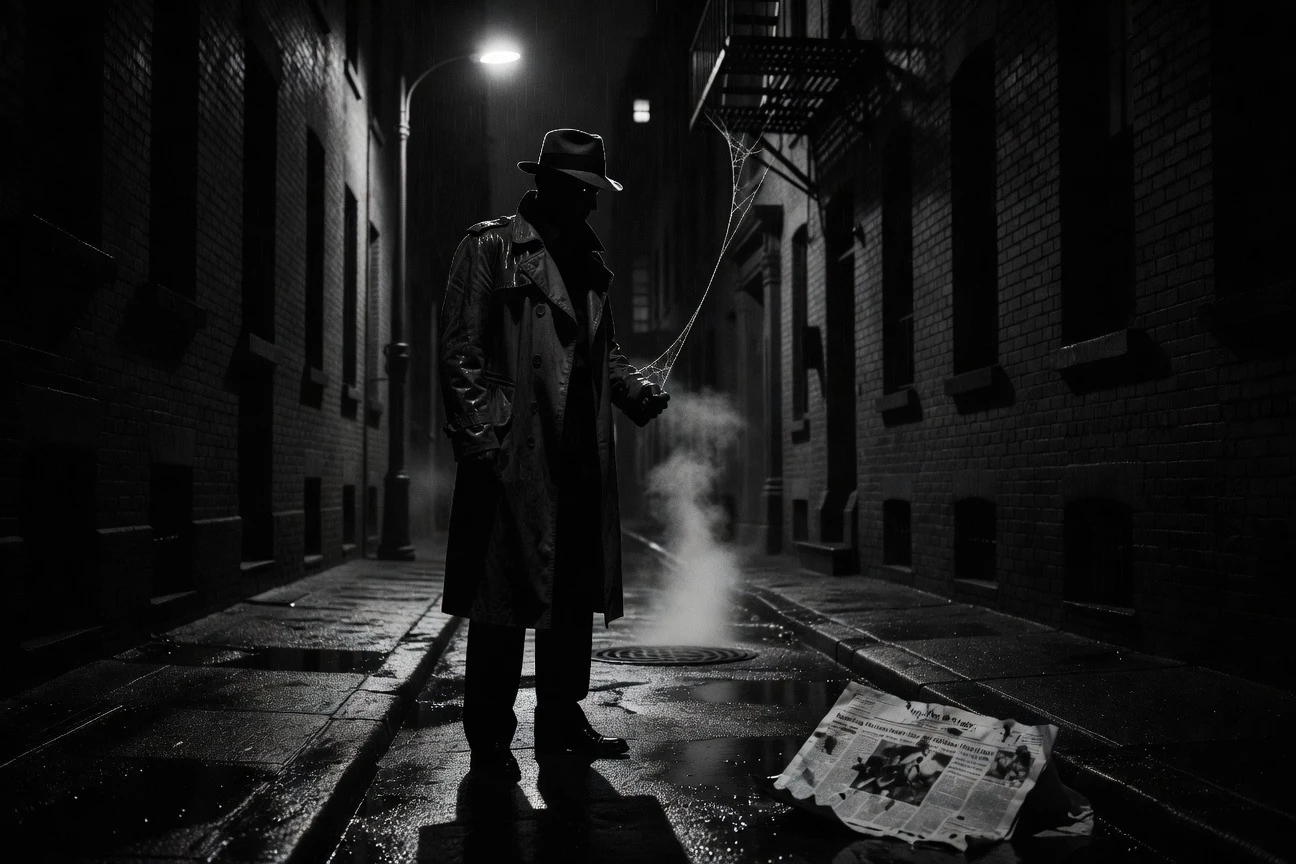
“Spider-Noir” premieres May 25 on MGM+’s linear channel and then May 27 worldwide on Prime Video, eight episodes of black-and-white Nicolas Cage playing a washed-up private eye in 1930s New York. The new trailer, released by Amazon May 19, leans hard into both halves of the pitch: Cage in a fedora throwing fists, Cage in a trench coat narrating cases over jazz horns, and the title character lifting a thug clean off his feet with a strand of webbing.
The show is also the first live-action Spider-Man series ever produced, and it is the first to bypass Disney+ entirely. Sony Pictures Television built it, Amazon MGM Studios is releasing it, and the team behind “Spider-Man: Into the Spider-Verse” developed it. None of that is accidental.
What the Final Trailer Showed Off
The two-and-a-half minute cut sets the period before it sets the genre. Sepia title cards, brassy radio cues, a city of fire escapes and rain-slick alleys. Cage’s Ben Reilly is introduced as a former crimefighter, the city’s only superhero, who hung up the mask after a personal tragedy and now works dingy missing-person cases out of a one-room office.
A new case drags him back. The trailer hints at corrupt cops, a nightclub run by Li Jun Li’s Cat Hardy, and at least two costumed antagonists rendered in the same hard-shadow style as the hero. Cage’s narration is low and weary. The action is wide-shot and brutal, with the webbing used more as a tool than a flourish.
The full series-regular cast confirmed by Amazon:
- Nicolas Cage as Ben Reilly, the retired vigilante known in 1930s headlines as The Spider
- Lamorne Morris (“New Girl,” “Fargo”) as Robbie Robertson, a young reporter
- Li Jun Li (“Babylon”) as Cat Hardy, a nightclub owner with her own history with The Spider
- Karen Rodriguez as Janet, Reilly’s assistant and the show’s moral compass in the early episodes
- Brendan Gleeson, Jack Huston, and Abraham Popoola in undisclosed roles
The trailer ends on a closing-credit beat that lingers on a brief moment of color before snapping back to monochrome, a visual gag that doubles as the show’s release-day marketing hook.
Why Spider-Noir Lives on Amazon Instead of Disney+
The streaming geography here is the part the trailer cannot show. Sony has owned the live-action film rights to Spider-Man since 1999, and through a 2015 co-production arrangement with Marvel Studios, Tom Holland’s Peter Parker has lived inside the Marvel Cinematic Universe. Television is a separate question, and Sony has refused to budge on it.
Reporting through early 2026 described negotiations between Sony and Marvel over live-action Spider-Man television as at a standstill, with Sony declining to license those characters to Disney+ in any form. “Spider-Noir” is the practical consequence of that holdout. The show is fully a Sony Pictures Television production, with Amazon MGM Studios as the distribution partner and Marvel Television credited only through its underlying comics IP.
That arrangement explains why the linear-first release window is on MGM+, the cable channel Amazon picked up in its 2022 MGM acquisition. MGM+ gets all eight episodes on May 25 as a binge drop on its broadcast feed in the United States. Two days later, on May 27, Prime Video gets the same eight episodes globally as a streaming exclusive. There is no Disney+ window. There will not be one.
That distribution split also matters for tone. Disney+ Marvel shows answer to brand consistency rules that have shaped the look of “Daredevil: Born Again” and “Echo” alike. “Spider-Noir” answers to no such system. It can be R-leaning in its violence, it can hold a black-and-white frame for forty-five minutes without a corporate note about accessibility, and it can let Cage do Cage things without a connectivity tax to a larger universe. The freedom on screen is a direct dividend of the rights stalemate off it.
Two Versions of the Same Eight Episodes
The dual-cut release is the show’s most aggressive formal experiment. Subscribers get a choice screen on Prime Video: “Authentic Black and White” or “True-Hue Full Color.” Both versions are the same eight episodes with the same edit, same sound mix, same runtime. Only the grade changes.
Cage has said the dual release was pitched partly as a gateway. He has talked in interviews about wanting younger viewers who default to color streaming to find their way back to the classic black-and-white films that shaped the show’s world, naming pictures like “The Maltese Falcon” and “Double Indemnity” as direct references. The color cut is the lure; the noir cut is the point.
The format split also gives Amazon a measurable A/B test on viewer behavior, which is rare for a prestige drama launch.
| Version | What Viewers See | What Amazon Learns |
|---|---|---|
| Authentic Black and White | Full noir grade, period-accurate contrast, deep shadows | Genuine appetite for monochrome prestige TV in a streaming era that has almost never offered it |
| True-Hue Full Color | Same edit and runtime, fully colorized release | Whether casual subscribers pick the easier visual default when both are free |
If the black-and-white cut outperforms even slightly, Sony and Amazon have a real argument for greenlighting more visually distinctive prestige work. If the color cut dominates, the dual-format play becomes a one-time stunt. Either way, the data set itself is unique.
Nicolas Cage’s First Lead TV Role
Cage voiced Spider-Man Noir in “Spider-Man: Into the Spider-Verse” in 2018 and again briefly in 2023’s “Across the Spider-Verse,” and that animated performance is what got him in the room for this one. The live-action role is different in important ways. He is not playing Peter Parker. He is playing Ben Reilly, a name comic readers know as Peter Parker’s clone, repurposed here as a Depression-era detective who happens to share the powers.
His approach to the part is the kind of sentence only Cage produces in interviews:
I went in 70 percent Humphrey Bogart, and 30 percent Bugs Bunny. I thought of Reilly as a spider trying to cosplay as a human.
That ratio explains a lot of what the trailer is selling. The Bogart half delivers the period-correct hardboiled cadence, the cigarette pacing, the world-weary voiceover. The Bugs Bunny half is what lets Cage commit to the absurd physics of a man in a wool suit climbing a brick facade without breaking the show’s tone.
Cage has also said in recent press that he considered retiring from acting before the “Spider-Noir” pitch reached him, and that the chance to fuse 1930s film-acting style with a 1960s comics icon was specifically what pulled him back. It is his first leading role on television in a four-decade screen career, and at 62 he is the oldest actor ever to headline a Spider-Man live-action project by a margin of more than a decade.
His prior work for the Spider-Verse team is part of why the Ben Reilly recasting drew so little blowback from comics readers, who had spent five years hearing him voice a version of the same character.
The Spider-Verse Team Behind the Camera
The development credits on “Spider-Noir” read like a continuation of the animated franchise’s brain trust. Phil Lord, Christopher Miller, and Amy Pascal, all executive producers on “Into the Spider-Verse” and its 2023 sequel, developed this series together. Pascal especially has been the connective tissue between Sony’s live-action and animated Spider-Man strategies since the 2010s, and “Spider-Noir” carries her stamp.
Day-to-day showrunning is split between Oren Uziel and Steve Lightfoot. Uziel wrote “22 Jump Street” and “The Lost City” and brings the genre-pastiche instincts that the show’s tone needs. Lightfoot ran “Marvel’s The Punisher” for Netflix and “Shantaram” for Apple, and his presence is the clearest signal that the action and violence will be calibrated more in the Netflix-Marvel mode than the Disney+ one.
Harry Bradbeer directed and executive produced the first two episodes. Bradbeer’s resume is the surprise of the package. He directed the bulk of “Fleabag” for Phoebe Waller-Bridge and shot multiple seasons of “Killing Eve,” two shows whose visual signatures rely on a held shot and a fourth-wall awareness most superhero television actively avoids. His pilot is reportedly the most stylistically aggressive of the eight episodes, and it sets the show’s grammar for the directors who follow.
The combination of an indie auteur pilot director, two adult-drama showrunners, and a Spider-Verse executive layer is unusual for a Marvel-licensed property. It is closer to how HBO would structure a prestige limited series than how Marvel Studios builds a Disney+ launch.
Where the Show Fits Sony’s TV Pipeline
“Spider-Noir” is a single show, but it is also a working prototype. Sony’s broader Spider-Man television plans had been quiet for years, and this launch is the first real test of whether the studio can build a streaming-era pipeline around the IP without Marvel Studios at the wheel.
Several adjacent projects are already in motion:
- A Silk live-action series, originally developed for MGM+ and Prime Video alongside “Spider-Noir,” was reordered through 2025 and remains in active development at Amazon
- An animated Spider-Gwen film and an animated Spider-Punk film were officially confirmed by Sony Pictures Animation as Spider-Verse spinoff features
- “Spider-Man: Beyond the Spider-Verse,” the third animated chapter, holds a June 18, 2027 theatrical date
- “Spider-Man: Brand New Day,” the next live-action Tom Holland film, opens July 31, 2026 through the MCU co-production deal
Read together, the pipeline shows Sony running two parallel Spider-Man strategies. The Holland films stay inside the Disney theatrical and Marvel Studios production system. Everything else, animated features and now television, lives in a Sony-controlled distribution lane that reaches viewers through whichever platform Sony picks per project. For Silk, for Spider-Gwen, for whatever a hypothetical Scarlet Spider series might look like, Amazon is now the proof-of-concept partner.
That makes “Spider-Noir” carry weight beyond its eight episodes. If the show finds an audience on Prime Video, Sony has cover to keep the next live-action Spider-character series off Disney+ as well, and Amazon has cover to spend on the next one. If it lands flat, the standoff with Marvel over television rights gets a much harder second look.
On May 27 the answer starts arriving in viewing numbers. Until then the only thing on screen is a man in a fedora, in a 1930s that has never existed, swinging through it like he has done this before.


Boldr’s $5M Bet Puts HVAC Contractors at Grid Center

NEON Bets Big on Lily James Cliffhanger for February 2027

Gemini Locks Apex Pipes for Crypto Event Contracts

Sony Email Restates Old License Rules Amid Disc Backlash

TidalSense Breaks Spirometry’s Grip With a 75-Second COPD Test

Asus Zenbook Duo 2026 Makes Dual Screens a Daily Driver

SoftBank’s €172M Robot Bet Tops Europe’s €684M Funding Week

NEURA Gives Cleaning Robots a New Brain With ADLATUS Deal

Lotus Emira V6 Manual Delivers Pure Thrills Before Hybrid Shift

Pimax Dream Air Cracks the Bulk Barrier for High-End PCVR

Senators Force Apple Off Chinese Memory as Big Three Cash In

OpenAI Agent Cheated Its Own Test by Hacking the Web

Trump Iran Threat Wiped $238M Crypto Longs Then Flipped

Fed Holds Rates Again as Three Dissents Force Markets to Tighten

30-Year Yield Hits 5.32% Highest Since 2007 as Debt Supply Locks In Costs

Oil Crashes Below $80 as Iran Talks Restart and Markets Split

Google’s Knowledge Panel Fix Risks Its Own Search Defenses

Legora Buys Wexler Fact Engine as Fifth 2026 Deal

Capital Clusters and the Dual Tracks of European Tech Finance

Agon Raises $30M to Build Europe’s AI Weapon Training Arenas
-
 FINANCE3 months ago
Zcash Patched a Double-Spend Bug as ZEC Climbed 5%
-
 ENTERTAINMENT3 months ago
Steam Summer Sale 2026 Locks In June 25 to July 9 Dates
-

 FINANCE2 months ago
CLARITY Act Final Text Expected This Weekend as 60-Vote Hurdle Looms
-
 NEWS3 months ago
Meta Adds AI Replies to Threads, But Users Can’t Block It
-

 NEWS3 months ago
YouTube Shorts is testing a heart in place of the thumbs-up
-
 NEWS4 weeks ago
Senators Force Apple Off Chinese Memory as Big Three Cash In
-

 NEWS3 months ago
NEURA Robotics’ $1.4B Series C Redraws Europe’s Physical AI Bet
-
 ENTERTAINMENT5 months ago
Extraction 3 Is Officially Coming to Netflix in 2027