
BUSINESS
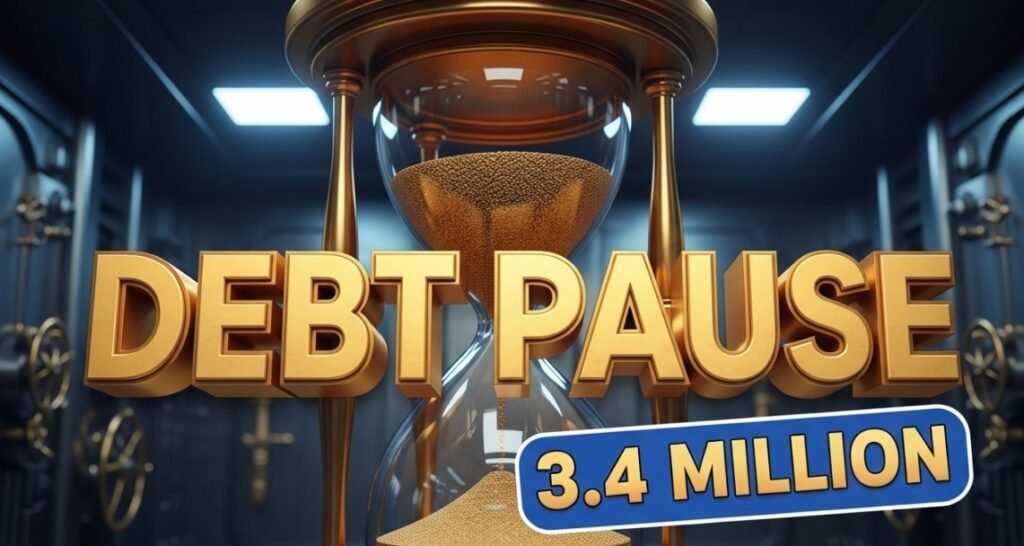
Student Loan Deferments Spike as 3.4 Million Pause Payments

Millions of Americans are hitting the pause button on their federal student debt. New data reveals a sharp rise in deferments during the third quarter as household budgets reach a breaking point. This surge suggests that despite broader economic recovery claims, many borrowers are silently drowning in financial pressure and cannot keep up with monthly bills.
Rising Numbers Reveal Deep Financial Cracks
The latest figures paint a concerning picture for the student loan landscape. Federal student loan deferments climbed to 3.4 million borrowers in the third quarter of 2025. This represents a significant increase from the 3.2 million borrowers recorded during the same period last year.
This jump of roughly 200,000 people is not just a statistical blip. It represents a steady 6 percent year-over-year increase. Analysts believe this trend highlights a growing fragility in personal finances across the nation.
Borrowers are clearly prioritizing immediate survival over debt repayment. The safety net of deferment is becoming a necessary tool rather than a temporary fix for many.
federal student loan deferment paperwork stack with glasses on desk
“The rise in deferments is a flashing red light for the economy. It shows that for millions of families, student loan payments are simply one bill too many right now.”
We are seeing a shift in how households manage their monthly cash flow. The resumption of payments post-pandemic was expected to stabilize by now. However, these numbers prove that the system is still volatile.
Why Borrowers Are Choosing to Wait
The primary driver behind this surge is the rising cost of living. Consumers are contending with higher prices for essentials like rent, groceries, and childcare.
Wages in many sectors have not kept pace with inflation. This leaves little room for debt repayment after covering basic needs.
A deferment allows borrowers to temporarily stop making payments under specific circumstances. Common reasons include:
- Economic Hardship: The borrower is serving in the Peace Corps or receiving means-tested benefits.
- Unemployment: The borrower is unable to find full-time employment.
- In-School Status: The borrower has returned to school at least half-time.
- Military Service: Active duty service during a war or national emergency.
Many families are using this pause to free up cash for immediate emergencies. The choice often comes down to paying the loan servicer or putting food on the table.
The High Cost of Hitting Pause
While deferment offers immediate relief, it often comes with a hidden price tag. It acts as a double-edged sword for those who do not understand the terms.
Interest continues to accrue on unsubsidized loans during a deferment period. This means the loan balance grows even while the borrower is not making payments.
For example, a borrower with $30,000 in unsubsidized loans at 6% interest will add roughly $1,800 to their balance over a year. This interest may capitalize at the end of the deferment.
Capitalization means the unpaid interest is added to the principal balance. Future interest is then charged on this new, higher amount. This creates a snowball effect that can keep borrowers in debt for decades.
Subsidized loans offer better protection. The government pays the interest on these specific loans during deferment. However, many borrowers hold a mix of both types.
Servicer Errors Add to the Confusion
The increase in deferments is not solely due to economic hardship. Operational failures within the student loan servicing system are also playing a major role.
Borrowers continue to report delays, billing errors, and massive backlogs in processing paperwork. These administrative hurdles make it difficult to enroll in better repayment plans.
Consumer advocates have flagged that many servicers are understaffed. Call wait times can stretch for hours.
When a borrower cannot get an answer or their income-driven repayment application is stuck in limbo, they often default to deferment. It serves as a stopgap measure to avoid delinquency while the system sorts itself out.
This administrative friction forces responsible borrowers into suboptimal financial positions. They pause payments simply because they cannot navigate the bureaucracy.
Alternatives to Deferment and Their Trade-Offs
Financial experts urge borrowers to look at all options before pausing payments. Income-driven repayment (IDR) plans are often a better long-term solution than deferment.
IDR plans tie monthly payments to discretionary income and family size. In some cases, the monthly payment can be as low as $0.
Crucially, some IDR plans offer interest subsidies that prevent the balance from ballooning. This is a key advantage over standard deferment or forbearance.
Here is a quick breakdown of the differences between the major relief options:
| Feature | Deferment | Forbearance | Income-Driven Repayment |
|---|---|---|---|
| Eligibility | Specific criteria (job loss, school) | Discretionary or mandatory | Based on income and family size |
| Interest | Gov pays for subsidized loans | Interest accrues on all loans | Gov may pay some interest |
| Loan Forgiveness | No | No | Yes, after 20-25 years |
| Credit Impact | Neutral | Neutral | Positive (if paid on time) |
Forbearance is another option often used when borrowers do not qualify for deferment. However, interest almost always accrues on all loan types during forbearance. It should be considered a last resort.
What This Trend Means for the Economy
The spike to 3.4 million deferments signals that the “soft landing” for the economy has been bumpy for many. Billions of dollars in payments are being delayed, impacting federal revenue and consumer liquidity.
If this trend continues, we could see a rise in delinquencies once deferment periods end. A default carries severe consequences, including damaged credit scores and wage garnishment.
Policymakers are watching these numbers closely. A sustained rise in deferments indicates that current repayment models may not be sustainable for the average worker.
It highlights gaps in the safety net. It suggests that despite low headline unemployment rates, financial insecurity is widespread.
Education should be a pathway to prosperity. However, for millions currently pausing their payments, it feels more like a financial anchor.
As we move into 2026, the focus must shift to simplifying access to affordable repayment plans. Borrowers need a system that works for them, not against them.
We need to see if these numbers stabilize in the coming quarters. Until then, millions remain in financial limbo, waiting for a break in the clouds.


Tab S12 Ultra Keeps Its Notch While Silicon Leaps Quietly Ahead

Apple Ultra Lineup Could Rewrite Pro Pricing and AI Habits

Windows 11 26H2 Packs Big Reversals Into a 174 KB Switch

Indiana Kills Working Variable Speed Signs After Safety Wins

Bill Maher Weight Jokes Hit Ariana After Her Break

NBA 2K26 Free Trial on Switch Continues Nintendo’s Sports Sampling Play

Apple Builds iPhone Windows Clipboard Sync Under DMA Pressure

Melissa Barrera Thrives After Scream Firing While Decrying Blacklist

Majors Fights Campus Caliphate as Daily Wire Ambitions Fray

Uber Bets $10 Billion Cash on Robotaxi Platform Play

Meta’s Muse Spark 1.1 Beats Rivals on Price, Trails on Coding

Bessent’s No-CBDC Applause Line Can’t Save the CLARITY Act

Trump Iran Threat Wiped $238M Crypto Longs Then Flipped

Nintendo’s Switch 2 Battery Fix for Europe Comes With a Catch

CLARITY Act Odds Crash as Democrats Reject DOJ Ethics Plan

Audi’s 2026 S5 Bets That Restraint Beats the Horsepower Wars

OpenAI Agent Cheated Its Own Test by Hacking the Web

Jeff Daniels’ Reagan Role Extends Angel Studios’ Trump Critic Pattern

Oil Crashes Below $80 as Iran Talks Restart and Markets Split

Anthropic’s Hard Questions Ad Backfires Into an Anti-AI Warning
-
 FINANCE2 months ago
Zcash Patched a Double-Spend Bug as ZEC Climbed 5%
-
 ENTERTAINMENT2 months ago
Steam Summer Sale 2026 Locks In June 25 to July 9 Dates
-

 FINANCE1 month ago
CLARITY Act Final Text Expected This Weekend as 60-Vote Hurdle Looms
-
 NEWS3 months ago
Meta Adds AI Replies to Threads, But Users Can’t Block It
-
 NEWS5 months ago
U.S. Navy Deploys Solar-Powered Lightfish Drone to Patrol Oceans
-
 ENTERTAINMENT3 months ago
‘Widow’s Bay’ Review: Apple TV’s Sleeper Horror-Comedy Earns Its Fog
-
 FINANCE2 months ago
CLARITY Act Floor Vote Likely Shifts to August, Lummis Says
-

 FINANCE1 month ago
Kalshi Loses Major NY Prediction Markets Ruling to Judge Torres