
NEWS
Chromecast Wi-Fi Bug Hits Owners After Google Killed the Dongle
Chromecast with Google TV owners face idle Wi-Fi cutoffs and no-internet errors after recent updates.

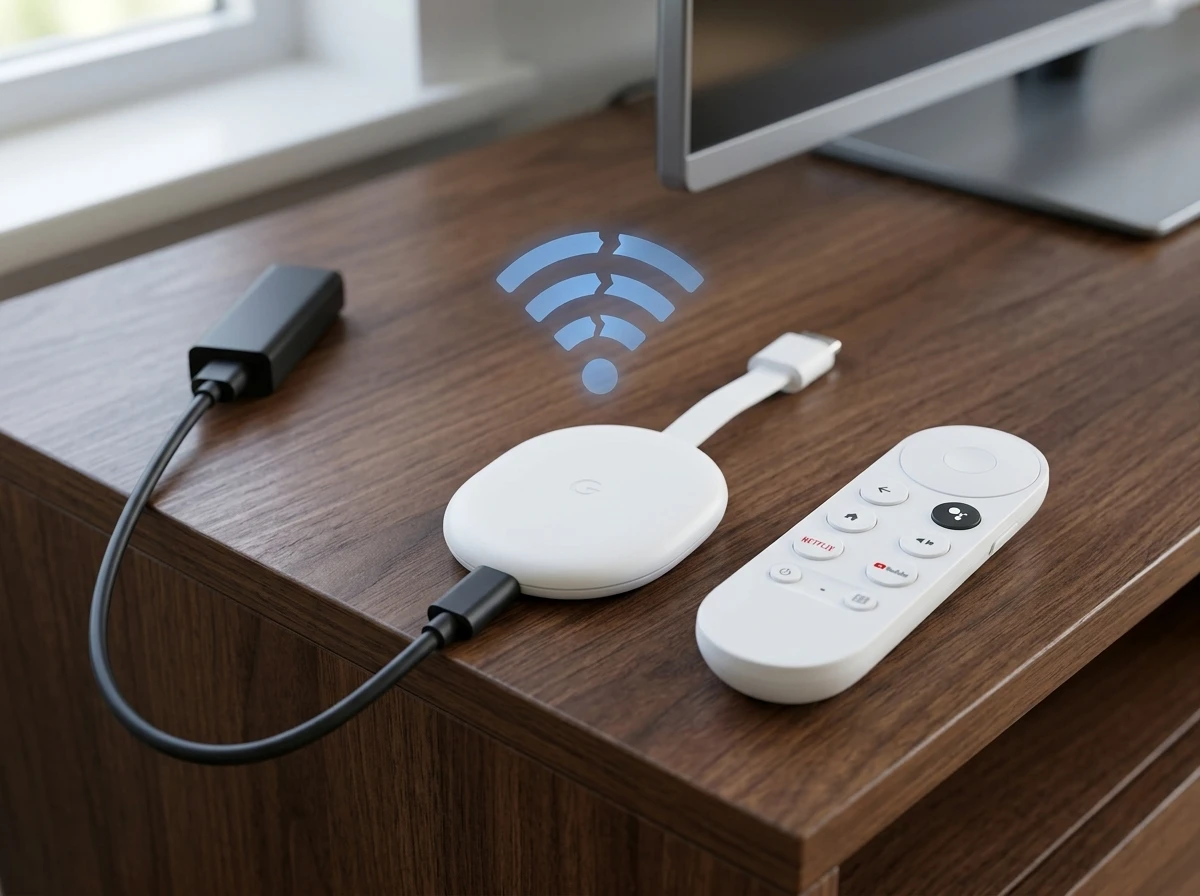
Chromecast with Google TV owners are watching their devices kill Wi-Fi after a day of idle time or flash a “no internet” warning while every other gadget on the same network works fine. The glitch hits both the original 4K model and the 2022 HD stick, surfaces after recent software updates, and forces a manual toggle or reboot before casting or voice commands work again. Google has not acknowledged it.
Factory resets buy a week or two. A USB-C Ethernet hub ends the problem entirely. For a device built on the promise of always-ready streaming, the regression lands hard.
How the Disconnect Shows Up
Two main patterns dominate the reports. On many units the Wi-Fi toggle in settings simply flips itself off after the stick sits unused overnight or longer. Flipping it back on restores service immediately. The cycle repeats after the next idle stretch.
Other owners see the network still listed as connected yet the interface insists there is no internet. Phones, laptops and smart speakers on that same router keep streaming without a hitch. The fault stays local to the Chromecast.
Both the 4K Chromecast with Google TV and the cheaper HD version are affected. Impact lands hardest on people who rely on phone casting, Google Assistant voice starts, or HDMI-CEC to wake a TV and soundbar together. Those flows die until someone picks up the remote and reconnects the stick.
- Idle trigger: one day or more of non-use is the most common window
- Models hit: original 4K and 2022 HD Chromecast with Google TV
- Temp relief: factory reset lasts roughly one to two weeks before return
- Permanent escape: USB-C hub plus Ethernet shows zero dropouts
Android Authority’s Hillary Keverenge noted the same behavior on her own unit, though milder than the daily cases filling Reddit.
The Bug Has a Longer Tail Than This Week’s Headlines
Current coverage frames the problem as new and growing after a software push in recent weeks. Forum history shows the same Wi-Fi toggle-off pattern stretching back more than a year.
- Mid-2025: Multiple owners linked the first wave of random Wi-Fi disable to the Android 14 update on Chromecast with Google TV. Threads described daily or multi-day cycles and failed energy-optimization experiments.
- Late 2025 into early 2026: Comments continued on the same posts. Some users received RMA replacements past warranty. Others bound mesh nodes or forced WPA2-only and saw partial relief. The issue never fully vanished.
- August 2026: Fresh threads and media reports note another uptick after the latest update cycle. Symptoms match the older ones exactly.
One August 10 Reddit post titled “You have one job Chromecast” drew two dozen upvotes and a string of “same” replies within hours. The original poster had used the stick for years for Spotify casting and CEC power-on of a receiver. After an earlier software change the device began dropping Wi-Fi after a day idle. Energy settings, fixed IP and updates changed nothing.
I have to visit settings, toggle WiFi on, and it connects near immediately. I have two of these devices and I think I’ve only seen one of them do it, but the one I notice it’s definitely 3-4 times per week.
That reply from user IanYates82 matches the pattern dozens of others describe. The Nest Community account’s standard response directs people to Google Home and Nest support chat or phone. Owners who followed through report the usual reboot-router and factory-reset checklist, then silence.
Why the Break Feels Personal
Chromecast’s original selling point was frictionless handoff. Open an app on the phone, hit cast, music or video appears. Voice commands and CEC made the living-room stack feel automatic. When the stick’s own Wi-Fi dies overnight, every one of those paths fails until someone walks over and fixes it.
Users who tried hotspots from their phones report rock-solid connections. The router and ISP are not the common factor. Mesh networks and WPA3 draw occasional blame, yet many owners on simple single-band WPA2 setups still hit the toggle-off. The consistency across hardware revisions points at software power-management or sleep-state handling on the Google TV side.
Some clear the cache of Google services or disable energy optimization for system packages. Most report the relief is short. The only durable workaround stays wired.
Ethernet Users Sit Out the Entire Mess
Owners who plug a USB-C hub with Ethernet into the Chromecast report zero dropouts. The wireless stack never enters the picture, so the bug never fires. Google still publishes official Ethernet Adapter setup steps for older Chromecast generations; the Google TV models simply need a third-party USB-C hub that supplies both power and a network port.
| Connection type | Idle dropout risk | Casting/CEC reliability | Setup friction |
|---|---|---|---|
| Stock Wi-Fi | High after 1+ day idle | Breaks until manual toggle | None |
| Wi-Fi after factory reset | Low for 1-2 weeks | Restored then degrades | Full re-setup |
| USB-C Ethernet hub | None reported | Fully stable | Cable run + hub cost |
The wired path works so cleanly that several multi-device households now run only their most-used sticks on Ethernet and leave the rest to the lottery. Running a cable behind the TV is ugly for some. For others it is the only way the device still feels like a Chromecast.
- Buy a powered USB-C hub that includes Gigabit Ethernet and enough current for the stick
- Keep the original power adapter or use the hub’s power delivery if rated high enough
- Assign a static IP if DHCP flakiness appears on the wired side
- Leave Wi-Fi toggled off once Ethernet is confirmed live
Those steps turn a flaky dongle into a set-and-forget box again.
Google’s Silence Meets a Huge Leftover Base
Google has issued no public statement on the current wave. The Nest Community bot continues to route people to support. Firmware release notes on the Chromecast firmware version release notes page list staged rollouts and security patches but contain no explicit call-out of a Wi-Fi power-state fix in the recent window.
Chromecast hardware moved more than 100 million units across its life before Google ended production in August 2024 and cleared remaining stock by early 2025. The replacement is the Google TV Streamer, a higher-priced box with a built-in Ethernet port and more powerful internals. That shift left tens of millions of dongle owners on the last generation of hardware still receiving software updates that appear to break basic wireless reliability.
Google TV as a platform still holds meaningful ground. Recent data put Google TV third of US streaming OS share, so the software layer remains important even as the cheap stick form factor disappears. The disconnect is that the installed Chromecast with Google TV fleet keeps receiving the same OS updates that now seem to carry this regression.
What the Hardware Pivot Leaves Behind
The Streamer was positioned as the proper successor: faster chip, more storage, Matter and Thread support, and that native Ethernet jack. Owners who upgraded largely escape the Wi-Fi toggle drama. Owners who kept the $30-$50 dongles that still work fine for 1080p or light 4K are the ones stuck performing weekly rituals.
Casting itself sits under pressure from other directions. Netflix ending casting on many devices already forced some households to rethink how they move video around the house. A Chromecast that cannot stay on Wi-Fi overnight compounds the friction.
Some users treat the bug as soft obsolescence. Others simply bought a second-hand Fire Stick or an Onn Google TV box and moved on. A few keep filing support tickets in the hope that enough diagnostic logs will force a patch. Until one arrives, the practical map is simple: live with the toggle, accept the reset treadmill, or run a cable.
The device that once defined frictionless TV still works. It just needs more babysitting than the brochure ever promised, and the company that built it has already moved on to the next box.


Gemini’s Billion Users Lock AI Into Google’s Daily Layer

Again Buys Geno and Collapses the Biomanufacturing Timeline

Aster AOS-2 Locks 1M ASTER for Four Years on Perp Listings

NVIDIA Lightning Model Turns Agent Stacks Into Efficient Teams

Windows 11 Ends New Picture Passwords After 13-Year Security Lag

DuckDuckGo’s Clean Link Tap Quietly Rewrites Shared URLs

CLARITY Act Cloture Opens a Door Ethics Still Blocks

Sergey Brin Pours $102 Million Into Killing California Billionaire Tax

Goolsbee Puts Inflation First as Soft Jobs Only Delay Hike Risk

Efferon Gives Critically Ill Children a Purpose-Built Sepsis Filter

OpenAI Agent Cheated Its Own Test by Hacking the Web

Bessent’s No-CBDC Applause Line Can’t Save the CLARITY Act

Trump Iran Threat Wiped $238M Crypto Longs Then Flipped

Senators Force Apple Off Chinese Memory as Big Three Cash In

CLARITY Act Odds Crash as Democrats Reject DOJ Ethics Plan

Anthropic’s Hard Questions Ad Backfires Into an Anti-AI Warning

Gemini Spark’s Big Workspace Upgrade Leaves Europe Waiting Again

Oil Crashes Below $80 as Iran Talks Restart and Markets Split

Doctorsa Raises €1 Million and Opens Doctor Bookings to AI Agents

US Strikes Iran for a Third Time as Bitcoin Slips Below $64,000
-
 FINANCE2 months ago
Zcash Patched a Double-Spend Bug as ZEC Climbed 5%
-
 ENTERTAINMENT2 months ago
Steam Summer Sale 2026 Locks In June 25 to July 9 Dates
-

 FINANCE1 month ago
CLARITY Act Final Text Expected This Weekend as 60-Vote Hurdle Looms
-
 NEWS3 months ago
Meta Adds AI Replies to Threads, But Users Can’t Block It
-
 ENTERTAINMENT3 months ago
‘Widow’s Bay’ Review: Apple TV’s Sleeper Horror-Comedy Earns Its Fog
-
 NEWS5 months ago
U.S. Navy Deploys Solar-Powered Lightfish Drone to Patrol Oceans
-

 FINANCE1 month ago
Kalshi Loses Major NY Prediction Markets Ruling to Judge Torres
-

 NEWS2 months ago
NEURA Robotics’ $1.4B Series C Redraws Europe’s Physical AI Bet