
FINANCE
CLARITY Act Faces Two-Week Senate Window Before August Recess
The CLARITY Act cleared the Senate Banking Committee 15-9 but Galaxy Digital cut its 2026 passage odds to 50%, citing a calendar eaten by FISA and housing fights.

The Digital Asset Market Clarity Act, the most ambitious US crypto market-structure bill to clear a congressional committee, has roughly two weeks to reach a Senate floor vote before the August recess closes the procedural window for 2026. The bill sits on the Senate Legislative Calendar as item No. 423, formally eligible for floor action since June 1. No date has been scheduled, and no motion to proceed has been filed.
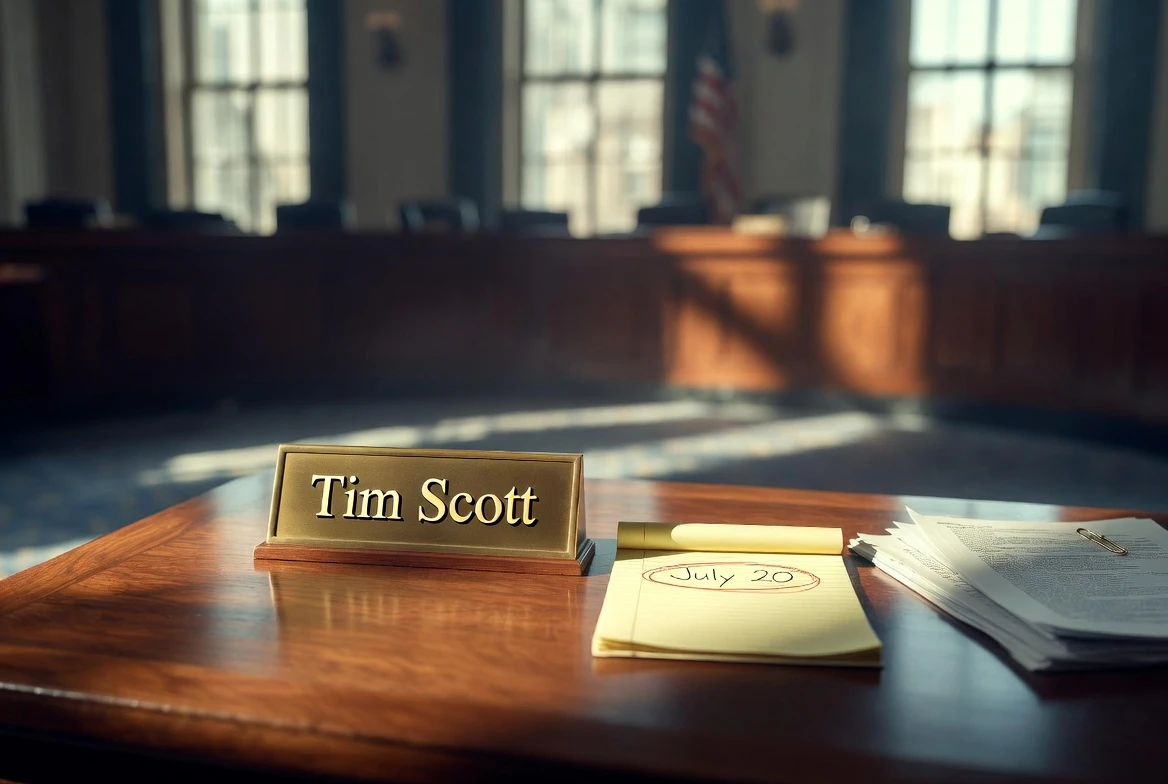
Galaxy Digital has cut its 2026 passage estimate from 60% to 50%, citing floor time lost to FISA reauthorization and a packed legislative queue. Senator Tim Scott, who chairs the Senate Banking Committee, said on Monday the chamber “should vote on crypto market structure legislation in July.” Senate Majority Leader John Thune has yet to commit to a specific date. With the calendar this compressed, leadership has little incentive to spend a week on a bill whose Democratic votes are not yet locked. The gap between being on the calendar and being on the floor is measured in days the chamber does not obviously have.
Where the Bill Stands at Recess
The House passed the Digital Asset Market Clarity Act 294-134 on July 17, 2025, sending the largest crypto-market-structure measure Congress has considered to the Senate. The Senate Banking Committee advanced the bill 15-9 on May 14, 2026, with all 13 Republicans joined by two Democrats, Senators Ruben Gallego of Arizona and Angela Alsobrooks of Maryland. Both committee Democrats said their support did not guarantee floor votes without movement on ethics provisions.
On June 1, the bill was placed on the Senate Legislative Calendar under General Orders as Calendar No. 423, making it formally eligible for floor consideration, according to the bill’s committee actions and Senate calendar placement. To become law, the chamber must still merge the Banking text with a separate version from the Senate Agriculture Committee, debate and amend the bill, clear a 60-vote filibuster, reconcile with the House-passed version, and win a presidential signature. Senators return from the July 4 recess on July 13. Galaxy Research puts the August recess at the end of July. Floor time between those two dates is the only realistic runway, and every step eats days the chamber does not obviously have.
The Calendar Just Got Tighter
The runway shrank this month. On June 5, the Senate failed to advance reauthorization of Section 702 of the Foreign Intelligence Surveillance Act, with a procedural vote falling 47 to 52 that consumed a week of usable floor time, per Galaxy Research’s June 5 Senate-calendar note.
Section 702 lapsed on June 12, and the scramble to reauthorize it absorbed most of the chamber’s attention the following week. The Senate also lost a week in late May to a fight over the administration’s anti-weaponization fund, and the FY2027 National Defense Authorization Act, a must-pass annual defense bill, sits unfinished. President Donald Trump conditioned his signature on a bipartisan housing bill that passed 358-32 in the House and 85-5 in the Senate on his demand that Congress first pass the SAVE Act voter-identification measure. Thune has said the SAVE Act lacks the votes.
- 50%: Galaxy Digital’s current 2026 passage estimate, down from 60% on June 5
- 15-9: Senate Banking Committee vote on May 14, 2026
- 294-134: House passage of the CLARITY Act on July 17, 2025
- 47 to 52: June 5 procedural vote that killed FISA Section 702 reauthorization
- 4 weeks: Senate floor time remaining before the summer break, per CoinDesk
CoinDesk reported on Monday that there are only about four weeks of Senate floor time remaining before the summer break. Galaxy Research’s June 5 note flagged the same arithmetic and warned that Majority Leader Thune realistically needs to schedule floor time in July for any chance of passage before the recess. Anything later and the procedural steps do not fit, the firm wrote, leaving a post-recess September push that runs directly into midterm dynamics.
Senator Tim Scott, the chairman of the Senate Banking Committee, posted on X on Monday that the Senate “should vote on crypto market structure legislation in July,” per the Senate Banking Chairman’s Monday floor-vote call. Punchbowl News reported the same day that Thune may bring the bill to a vote whether Democrats are ready or not. Eleanor Terrett’s reporting, cited across the industry, puts the realistic earliest window at the week of July 20 onward, after the National Defense Authorization Act clears. With the calendar this compressed, Thune has little incentive to spend a week on a bill whose Democratic votes are not locked. The lobbying burst has tracked the odds decline.
Odds Are Sliding in Public
The downgrade is a calendar story more than a substance story. Galaxy Research cut its 2026 passage estimate twice in roughly six weeks, from 75% on May 22 to 60% on June 5, and now to 50% in a June 29 note signed by head of firmwide research Alex Thorn. The substance-versus-calendar framing is the same one the firm made in Galaxy Research’s June 5 Senate-calendar note. The bill itself cleared committee with bipartisan support, was placed on the calendar, and remains administratively live. The odds have moved anyway.
JPMorgan analysts have assessed a less than 50% chance the bill passes this year, citing similar legislative constraints. Prediction markets have moved in the same direction: Polymarket’s 2026 passage contract now sits between 47% and 55%, depending on the platform and the day. Bitwise chief investment officer Matt Hougan, citing “D.C. insiders” he spoke with, put the passage range between 5% and 30%.
- 75% to 60% to 50%: Galaxy’s three 2026 passage estimates since May 22
- <50%: JPMorgan’s 2026 passage assessment
- 47-55%: Polymarket’s current 2026 passage range
- 5-30%: Bitwise CIO Matt Hougan’s passage range from “D.C. insiders”
- June 29: Date of Galaxy’s latest cut, signed by head of firmwide research Alex Thorn
The decline is not a verdict on the bill’s merits. Thorn wrote that the May 14 committee vote was real, the administration remains engaged, and the bill is formally on the calendar. The gap between being on the calendar and being on the floor is measured in days the Senate does not obviously have, and this week’s events widened that gap. Continued silence into mid-July, Thorn wrote, would push the firm’s estimate lower still. A scheduling announcement in the next two weeks, paired with credible movement on the open issues, would push it back toward 60%.
Section 604 Is the New Front Line
The substantive fight that has stalled floor scheduling centers on Section 604 of the bill, the Blockchain Regulatory Certainty Act. The provision protects software developers from being treated as money transmitters when they build decentralized-finance tools without controlling user funds. Industry groups including the Blockchain Association argue the protection is essential for non-custodial software to keep being built in the United States. The House Agriculture Committee version of the bill advanced 47-6 with bipartisan support earlier in the process.
Law enforcement groups want the developer shield narrowed. The National Sheriffs Association wrote to Senate Banking Committee leaders in May that “no good reason supports giving mixers, tumblers, and DeFi a blanket exemption,” arguing that some software developers are engaged in money transmitting and should remain subject to Bank Secrecy Act regulation. Senator Elizabeth Warren, the top Democrat on the Banking Committee, has maintained a steady drumbeat of criticism on the bill’s illicit-finance front, routinely citing crypto’s use by criminal groups and cartels.
You should be the biggest cheerleaders for this bill, because this is really what is missing.
The White House has invited law enforcement organizations objecting to Section 604’s language to sit down for a meeting on Monday, June 29, according to a person briefed on the plan. The meeting is meant to iron out objections over illicit finance, per the White House’s Monday law-enforcement sit-down. White House crypto adviser Patrick Witt has led the engagement, telling an industry-hosted audience earlier this month that the bill imposes real regulatory constraints on actors that currently live in uncertainty. His framing to law enforcement officials at the same event was direct. Punchbowl News reported separately that Thune is weighing whether to bring the bill up for a vote whether or not Democrats are ready.
The substance has not visibly moved. Galaxy’s June 5 note flagged that the issues raised on May 12, including BRCA, illicit finance, and ethics, mostly remain open, while the Lummis compromise amendments from the Senate Banking markup moved the needle slightly on BRCA but the illicit-finance hawks continue to seek further changes and no middle ground has been published.
Ethics Holds Democratic Votes Hostage
Floor passage requires 60 votes, and Republicans hold 53 seats. Galaxy Research expects two no votes from within the caucus: Senators Josh Hawley and Rand Paul, both of whom voted against the GENIUS Act last year. Leadership therefore needs at least nine Democratic crossovers. The only two Democrats who voted yes in committee, Senators Ruben Gallego and Angela Alsobrooks, each set explicit conditions, according to the legislative tracker entry covering the bill’s path through 2025 and 2026.
Gallego named ethics provisions as a precondition for his vote. Alsobrooks said she would not support a floor vote unless the bill includes a provision covering government officials’ crypto holdings, a fight that turns on conflicts of interest for the President’s family. A Van Hollen conflict-of-interest amendment failed 11-13 in committee, and the question was deferred to the floor.
What Could Still Move the Window
Galaxy Research identified three signals that would push its estimate back up. First, a credible floor commitment from leadership for early-to-mid July. Second, public signs that the ethics and remaining illicit-finance questions have been bridged in a way that delivers a durable block of nine or more Democratic votes. Third, news that the Banking and Agriculture Committees have merged their texts and a package is ready for the floor, the same thrust as a separate XRP chart read that mapped the same July 20 floor window.
On the third condition, the two committee texts remain unreconciled. The Senate Agriculture Committee advanced its version of the bill on January 29, 2026, on a 12-11 party-line vote after a series of Democratic amendments were rejected, with no Democrats publicly supporting it at the time. Staff-level work to merge the Banking and Agriculture texts is ongoing, and no unified legislative text has been made public.
The June 7 coalition letter to Thune and Minority Leader Chuck Schumer was led by Stand With Crypto, the Blockchain Association, the Crypto Council for Innovation, and the Digital Chamber. More than 200 companies and organizations signed on, including Coinbase, Circle, Ripple, Kraken, Andreessen Horowitz, Binance.US, Multicoin Capital, Riot Platforms, and Uniswap Labs. The Blockchain Association followed up with a separate letter on June 2 cosigned by 160 former national security and law enforcement officials expressing strong support for the bill. Galaxy’s note put the runway at “a handful of usable weeks,” with each procedural step eating days the chamber does not obviously have, and Thorn wrote the firm will update once leadership signals its intentions on floor scheduling. For now the bill waits at No. 423 on the Senate calendar, real but unscheduled, in a chamber that keeps finding other things to do.
Frequently Asked Questions
What is the CLARITY Act?
The Digital Asset Market Clarity Act is the most comprehensive US crypto market-structure bill to clear a congressional committee, designed to draw jurisdictional lines between the Securities and Exchange Commission and the Commodity Futures Trading Commission and to establish when a digital asset is a commodity versus a security. The House passed the bill 294-134 on July 17, 2025, and the Senate Banking Committee advanced it 15-9 on May 14, 2026, placing it on the Senate Legislative Calendar as item No. 423 on June 1.
Why did Galaxy Digital cut its passage odds to 50%?
Galaxy Research cut its 2026 passage estimate from 60% to 50% in a June 29 note signed by head of firmwide research Alex Thorn, citing a tightening Senate calendar that lost a week to a failed FISA Section 702 procedural vote, another week to an anti-weaponization fund fight, and unresolved ethics and Section 604 negotiations that have kept leadership from scheduling floor time.
What is Section 604 and why is it contested?
Section 604 is the Blockchain Regulatory Certainty Act inside the CLARITY Act, which protects non-custodial software developers from being treated as money transmitters. The National Sheriffs Association told Senate Banking leaders in May that the language gives “mixers, tumblers, and DeFi a blanket exemption,” and the White House convened law enforcement groups on June 29 to negotiate narrower wording.
Which senators are expected to vote no?
Galaxy Research expects two Republican no votes from Senators Josh Hawley and Rand Paul, who both voted against the GENIUS Act in 2025. Floor passage therefore requires at least nine Democratic crossovers, and the only two Democrats who voted yes in committee, Senators Ruben Gallego and Angela Alsobrooks, set ethics and government-holdings provisions as preconditions.
What happens if the bill misses the July window?
If a floor vote is not scheduled by early July, the realistic path shifts to September, where Galaxy Research expects floor time to thin out as midterm election dynamics take hold and members return home to campaign. Galaxy’s note put a post-recess push as a viable but harder route, and JPMorgan analysts have separately assessed a less than 50% chance of 2026 passage.
Disclaimer: This article is for informational purposes only and does not constitute investment, legal, or tax advice. Figures and forecasts are accurate as of publication and may change. Consult a qualified professional before making any decisions related to digital assets or legislation affecting them.


Pixel Journal Auto Format Puts Google Private AI to the Diary Test

Android 17 QPR2 Beta 3 Quietly Delivers Native App Lock

Binance Cuts HTX Rails and Seals Off High-Risk Liquidity

Dell 14S Quietly Delivers Multi-Day Battery in Midrange Aluminum

OCC Conditionally Clears Trump-Linked USD1 Trust Bank

Coyote vs. Acme Turns Its Own Burial Into the Sharpest Gag

Google Health Adds Off Switch After AI Coach Clutter Backlash

SpaceX Issues 389 Million Shares as Cursor Deal Closes

Bank Leumi Hands Galaxy the Rails for Israeli Crypto Trading

Apple Maps Ad Bookings Open and Turn Local Search Into a Bid Game

Senators Force Apple Off Chinese Memory as Big Three Cash In

OpenAI Agent Cheated Its Own Test by Hacking the Web

Trump Iran Threat Wiped $238M Crypto Longs Then Flipped

CLARITY Act Odds Crash as Democrats Reject DOJ Ethics Plan

Revolut Hits $115 Billion While Storonsky’s Stake Keeps Growing

Gemini Spark’s Big Workspace Upgrade Leaves Europe Waiting Again

Anthropic’s Hard Questions Ad Backfires Into an Anti-AI Warning

Oil Crashes Below $80 as Iran Talks Restart and Markets Split

Duda’s New AI Tools Speed Up Agencies, but Risk Sameness

Community Banks’ $1.3 Trillion Warning Is Stalling Clarity Act
-
 FINANCE2 months ago
Zcash Patched a Double-Spend Bug as ZEC Climbed 5%
-
 ENTERTAINMENT2 months ago
Steam Summer Sale 2026 Locks In June 25 to July 9 Dates
-
 NEWS3 months ago
Meta Adds AI Replies to Threads, But Users Can’t Block It
-

 FINANCE1 month ago
CLARITY Act Final Text Expected This Weekend as 60-Vote Hurdle Looms
-

 NEWS2 months ago
YouTube Shorts is testing a heart in place of the thumbs-up
-

 NEWS2 months ago
NEURA Robotics’ $1.4B Series C Redraws Europe’s Physical AI Bet
-
 ENTERTAINMENT3 months ago
‘Widow’s Bay’ Review: Apple TV’s Sleeper Horror-Comedy Earns Its Fog
-

 FINANCE1 month ago
Kalshi Loses Major NY Prediction Markets Ruling to Judge Torres