
ENTERTAINMENT
Press Pounds Louis C.K. for 2017 Admission While Platner Gets a Pass
Why does the press keep punishing Louis C.K. for admitted 2017 misconduct while downplaying the abuse allegations against Senate candidate Graham Platner?

Louis C.K. is back on Netflix. Ridiculous, the comedian’s first major-streamer hour since his 2017 admission of sexual misconduct, dropped Tuesday at the Beacon Theater in New York, and the reviews poured in the same way they did nine years ago: with the scandal doing most of the talking. Slate’s headline called it “Back With His First Major Stand-Up Special Since #MeToo. He Hasn’t Really Changed.” Variety’s review ran under the kicker “a caustic comeback.” The Guardian’s verdict landed as “with a whimper.” None of them could stop writing about 2017.
That same month, across the country in Maine, Graham Platner clinched the Democratic nomination for U.S. Senate with more than 70 per cent of the primary vote. He carries a skull-and-crossbones chest tattoo that the Anti-Defamation League says resembles the Totenkopf, the death’s-head emblem of the Nazi SS. Three of his former girlfriends told The New York Times his behavior was “unsettling,” and one said he grabbed her hard enough to leave marks. He has been credibly accused of sending sexually explicit messages to other women while married. The legacy press has, mostly, let him campaign.
The Special, the Scandal, and a Reopened Wound
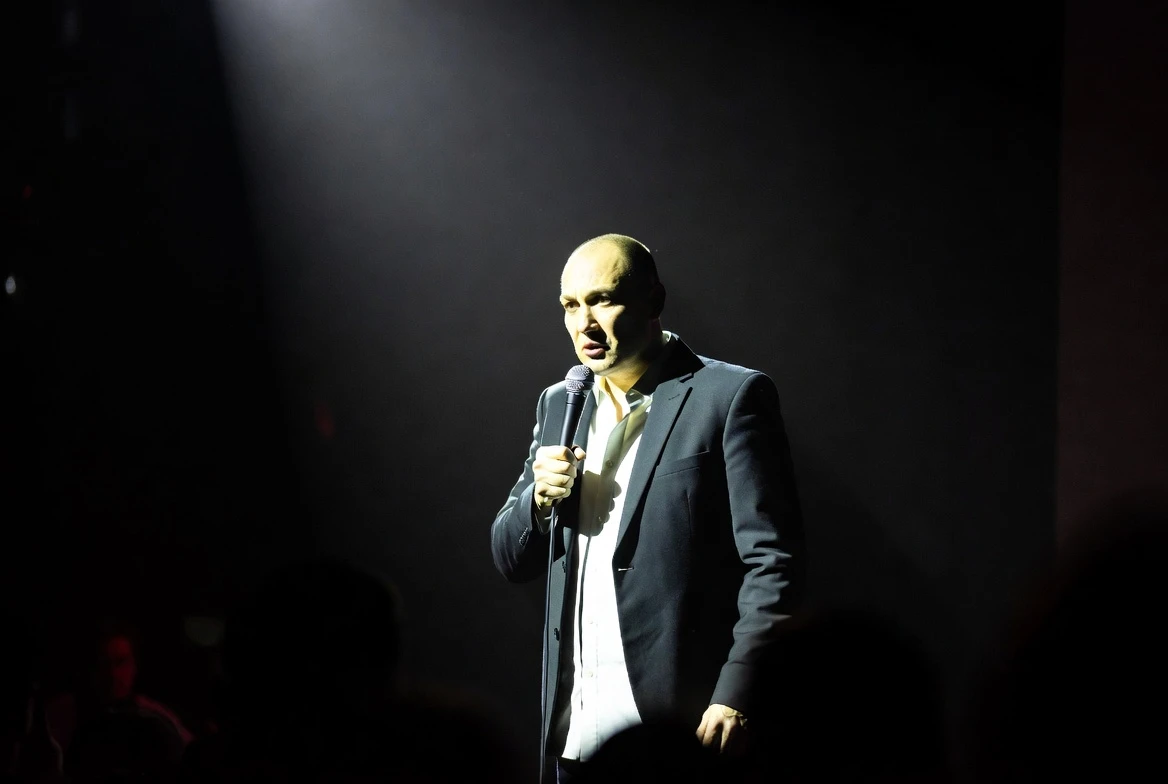
Ridiculous was filmed at the Beacon Theater, and Variety’s caustic review of his first Netflix hour since 2017 noted that the comic himself “also directed” it, calling it “a strong hour of material performed with practiced expertise.” It is, the same review conceded, “in fact the comic’s fifth special since the New York Times story that prompted his temporary hiatus.” Only the first, Sincerely Louis C.K., “addressed his behavior head-on.” The next hour was titled Sorry. The two after that were self-released. Now the fifth has landed on Netflix, and Variety observed that the only thing C.K. won’t touch on stage is the topic the press can’t let go of.
Variety was blunt: “Pedophilia, diarrhea and the Holocaust are each addressed in turn. The only topic truly off-limits, it seems, is why C.K. took a nine-year break from Netflix after ‘2017.’” The Guardian agreed, calling the hour “less a triumphant return than a gradual slinking back, an unspoken assumption that no one really cares that much about his behavior; no particular defense or apology, just a shruggy emoticon.” The Guardian’s review of his Netflix return ran under the headline framing his return as the troubled comedian’s whimper, and called the special “halting” and “uneven,” brilliant in stretches and dopey in others.
Inside the hour, C.K. tells a crowd that he toured his elderly father’s prospective nursing home and that “the theme of the tour is: ‘This Is What This Is,'” an acceptance that the comic and his audience share.
The theme of the tour is: ‘This Is What This Is.’
C.K. said the line on stage during Ridiculous, as quoted by The Guardian’s review of the Netflix special, where it lands less as a slogan and more as a shrug.
What He Admitted in 2017
The 2017 story was not a rumor or an unresolved accusation. In November of that year, five women told The New York Times that C.K. had masturbated in front of them, asked to do so, or, in the case of comedian Abby Schachner, done it over the phone while she was inviting him to one of her shows. Two of them, Dana Min Goodman and Julia Wolov, said he stripped naked and masturbated after inviting them to his hotel room at the 2002 U.S. Comedy Arts Festival in Aspen. C.K. confirmed the accounts in a written statement that ran, in full, the same day. He admitted the stories were true and said he had “wielded” his power over the women “irresponsibly.”
“These stories are true,” the BBC reproduced in its report on the admission. “At the time, I said to myself that what I did was okay because I never showed a woman my dick without asking first, which is also true. But what I learned later in life, too late, is that when you have power over another person, asking them to look at your dick isn’t a question. It’s a predicament for them. The power I had over these women is that they admired me. And I wielded that power irresponsibly.” The full text of his 2017 admission statement was carried by the BBC and others at the time. The fallout was immediate: HBO purged his projects, FX cut ties, his film I Love You Daddy was shelved, and Slate later noted that he has said the cancellations and lost engagements cost him $35 million. In 2017, Slate’s framing was plain: he “abused his power and committed acts of sexual harassment.”
A Skull-and-Crossbones, Three Ex-Girlfriends, and a Denial
Platner is a 41-year-old oyster farmer and Marine veteran from Sullivan, Maine. He launched his campaign from nowhere, won the June 9 Democratic primary with more than 70 per cent of the vote after Gov. Janet Mills dropped out in late April, and now faces Republican Sen. Susan Collins in a race that could decide control of the U.S. Senate. His campaign is also a rolling inventory of controversies.
The most-cited is the tattoo. Platner says he got the skull-and-crossbones in 2007 on a drunken liberty stop in Split, Croatia, during his third Marine Corps deployment. The Anti-Defamation League, as cited by Maine Public’s local report on the allegations, says the design resembles “Totenkopf,” a death’s-head symbol “adopted by the SS, a major paramilitary organization under Adolf Hitler and the Nazi Party.” Platner says he did not know what the symbol meant and only learned of the resemblance in October 2025, at which point he had it covered within days. His ex-girlfriend Lyndsey Fifield told The New York Times he knew and would joke about it being a Nazi tattoo, calling it “my Totenkopf.” Fifield previously worked for right-leaning groups and briefly on Nikki Haley’s 2024 presidential campaign, a detail the Platner campaign seized on. Maine Public’s reporting on the three ex-girlfriends notes Fifield’s account alongside two other women whose experiences the Times described as “unsettling,” against three other women who spoke positively of Platner.
- A skull-and-crossbones chest tattoo resembling the Nazi SS Totenkopf, which Platner says he got on a 2007 Croatia liberty and covered within days of learning its meaning in late 2025; his ex-girlfriend told The New York Times he knew what it was.
- Sexually explicit text messages he sent to multiple women while married to Amy Gertner, whom he married in 2023, first reported by The Wall Street Journal and confirmed by Platner in a statement carried by NPR.
- Abuse allegations from three ex-girlfriends, including Fifield, who told the Times he grabbed her hard enough to leave marks, twisted her arm behind her back, shoved her into a bedroom, and once pulled her out of a cab by the wrist. Platner denies the physical allegations as “made up or lies” and calls them politically motivated.
Earlier, in the fall of 2025, old deleted Reddit posts from Platner resurfaced. NPR reported they included racist comments and statements that blamed sexual assault on its victims. He apologized at the time, attributing the posts to undiagnosed PTSD after multiple combat tours in Iraq and Afghanistan. Platner has framed the steady drip of stories about his past as evidence that “the political establishment feels threatened.”
The Reviews That Refuse to Move On
The reviews of Ridiculous are not unanimous in their verdicts on the comedy, but they are nearly unanimous on the man. Variety’s caustic review of his first Netflix hour since 2017 ran with the line that C.K. “is one of the most gifted and influential performers of his generation, and would remain so even if he never took the stage again.” The same review cataloged his accusers by name. Julia Wolov and Rebecca Corry, Variety wrote, “are fellow comedians whose public statements suggest C.K. has not made amends to an extent that makes me feel comfortable turning to him for entertainment.” Variety’s review of how the special marks C.K.’s uncancellation went further, calling the return itself “never much of one to begin with.”
Slate’s framing was harsher on the arithmetic of return: C.K. took the stage again “within less than a year” of the scandal, kept touring, self-released four specials, and now has the Netflix seal. Slate’s review of the special that marks C.K.’s uncancellation quoted an earlier Slate prediction from 2018: “Every time C.K. or one of his canceled peers reemerges, some people will get mad, but most people won’t, and there will be other, more pressing outrages to smother with energy, and before anyone fully grasps what’s going on, they’ll be back on tour… with an ugly entry on their Wikipedia pages but a growing bank account to soothe that indignity.”
| Dimension | Louis C.K. (Ridiculous) | Graham Platner (Senate run) |
|---|---|---|
| The original scandal | Admitted in 2017 to masturbating in front of, or asking to do so in front of, five women, including four named comedians. | A Totenkopf-resembling chest tattoo, sexually explicit texts to women while married, and abuse allegations from three ex-girlfriends. |
| Press treatment in 2026 | Reviews of Ridiculous revisit the 2017 story; Variety notes the topic is “the only one truly off-limits” on stage. | Treated as a “complication” by legacy outlets; CBC’s analysis says the controversies “have not been enough to dissuade many Democratic voters.” |
| The subject’s own response | Apologized in 2017, said he would “step back and take a long time to listen,” and has not directly addressed the scandal in any post-2017 special, including Ridiculous. | Denies the physical allegations as “made up or lies”; apologizes for the Reddit posts as a product of PTSD; says he covered the tattoo in days after learning of its meaning. |
What the table shows is not symmetry. It is selective enforcement.
What the Press Hasn’t Asked Platner
Inside the Democratic coalition, the standard is supposed to be unanimous. Democratic strategist Julie Roginsky, who became a prominent figure in the #MeToo movement after accusing former Fox News CEO Roger Ailes of sexual harassment, told CBC that “a person with a Nazi tattoo on their chest should be disqualified as a candidate for political office.” Roginsky was blunt about the abuse allegations: “I’m hard pressed to understand why we have to elevate somebody with this history of treating women.” Maine Public reported on June 5, 2026, that Platner had, by that point, “managed to consistently top both primary and general election polls despite a steady stream of controversies.” The same outlet quoted him arguing that the press focus shows “just how little that they want to talk about the actual challenges that the American people are facing.”
Roginsky also admitted the bind Democratic voters were placed in. “I tremendously resent that I’m being put in a position to have to make that choice,” she said. The framing in legacy coverage has often followed her reluctant path, treating each new allegation as a complication to absorb rather than a disqualifier. Rainn Wilson’s case against media bias on Platner, an interview the actor gave to Fox News Digital, named the pattern directly: “They’re willing to overlook the Platner Nazi tattoo, but if it was someone from the other side that had a tattoo that was questionable they would be all over MSNBC about it.” The actor tied it back to the same kind of cancel-culture comedy he says would not survive today.
- $35 million – Slate’s reported figure for what C.K.’s #MeToo fallout cost him.
- Fifth special – Variety’s count of C.K. comedy hours since the 2017 New York Times story.
- 18 years – the period Platner says he carried the Totenkopf-resembling tattoo before covering it.
- More than 70% – the share of the vote Platner took in the June 9 Maine Democratic primary, per CBC.
What the Coverage Gap Reveals
The pattern that emerges from the contrast is not new. Variety’s review of Ridiculous closed with a flat observation: “Even at its peak, #MeToo felt seismic precisely because the movement was an aberration from the historical norm; nearly a decade later, that norm has reasserted itself with inertia on its side.” The same outlet noted that Netflix’s stand-up czar Robbie Praw had told Variety that releasing Ridiculous is “just about giving [subscribers] an option” and that viewers “have a decision to make” about their own viewing habits, a framing Variety called a downplay of “the decision Netflix itself made to re-enter a business relationship with C.K.” The Guardian’s caustic comeback verdict landed as a final shrug: “the pedestrian nature of some of this Netflix-released special is what makes it valuable. It’s a reminder that Louis C.K.’s weaknesses, on and off the stage, are ultimately his own doing.” What the press has not produced, and what the parallel story in Maine makes plain, is the same willingness to keep that reminder pointed at figures whose political tribe does not require it.
Frequently Asked Questions
What did Louis C.K. admit to in 2017?
Five women, four of them named comedians, told The New York Times that C.K. had masturbated in front of them or asked to do so. He confirmed the accounts in a written statement the same day, saying the stories were true and that he had wielded his power over the women “irresponsibly.”
What is Graham Platner accused of?
The New York Times interviewed six women who had been romantically involved with Platner; three described his behavior as “unsettling” and “volatile,” and one, Lyndsey Fifield, said he grabbed her hard enough to leave marks, twisted her arm behind her back, shoved her into a bedroom, and once pulled her out of a cab by the wrist. Platner has denied the physical allegations as “made up or lies” and called them politically motivated.
What happened with Platner’s Nazi-linked tattoo?
Platner says he got a skull-and-crossbones in 2007 on a drunken liberty stop in Split, Croatia, and did not learn until October 2025 that the design resembled the SS Totenkopf. He had the tattoo covered within days of learning its meaning. Fifield told The New York Times that he knew what the symbol was and joked about it.
Did Platner win the Maine Democratic primary?
Yes. Platner won the June 9, 2026 Democratic primary with more than 70 per cent of the vote after Gov. Janet Mills dropped out of the race in late April, and will face Republican Sen. Susan Collins in the November general election.


Pixel Journal Auto Format Puts Google Private AI to the Diary Test

Android 17 QPR2 Beta 3 Quietly Delivers Native App Lock

Binance Cuts HTX Rails and Seals Off High-Risk Liquidity

Dell 14S Quietly Delivers Multi-Day Battery in Midrange Aluminum

OCC Conditionally Clears Trump-Linked USD1 Trust Bank

Coyote vs. Acme Turns Its Own Burial Into the Sharpest Gag

Google Health Adds Off Switch After AI Coach Clutter Backlash

SpaceX Issues 389 Million Shares as Cursor Deal Closes

Bank Leumi Hands Galaxy the Rails for Israeli Crypto Trading

Apple Maps Ad Bookings Open and Turn Local Search Into a Bid Game

Senators Force Apple Off Chinese Memory as Big Three Cash In

Trump Iran Threat Wiped $238M Crypto Longs Then Flipped

OpenAI Agent Cheated Its Own Test by Hacking the Web

CLARITY Act Odds Crash as Democrats Reject DOJ Ethics Plan

Revolut Hits $115 Billion While Storonsky’s Stake Keeps Growing

Oil Crashes Below $80 as Iran Talks Restart and Markets Split

Community Banks’ $1.3 Trillion Warning Is Stalling Clarity Act

Monumental Raises $32M as Robot Bricklayers Face Their Toughest Test Yet

Uber’s €13 Billion Delivery Hero Bid Echoes a Deal Regulators Killed

Airbus Anchors a €500 Million European Defense Fund, Picks Alta Ares First
-
 FINANCE2 months ago
Zcash Patched a Double-Spend Bug as ZEC Climbed 5%
-
 ENTERTAINMENT2 months ago
Steam Summer Sale 2026 Locks In June 25 to July 9 Dates
-
 NEWS3 months ago
Meta Adds AI Replies to Threads, But Users Can’t Block It
-

 FINANCE1 month ago
CLARITY Act Final Text Expected This Weekend as 60-Vote Hurdle Looms
-

 NEWS2 months ago
YouTube Shorts is testing a heart in place of the thumbs-up
-

 NEWS2 months ago
NEURA Robotics’ $1.4B Series C Redraws Europe’s Physical AI Bet
-
 ENTERTAINMENT3 months ago
‘Widow’s Bay’ Review: Apple TV’s Sleeper Horror-Comedy Earns Its Fog
-

 FINANCE1 month ago
Kalshi Loses Major NY Prediction Markets Ruling to Judge Torres