
ENTERTAINMENT
The Capture Season 3 Caught Up With Its Own Warning
The Capture season 3 scored 100% from seven reviews and 3.11 million UK viewers, then went quiet, with no fourth series from the BBC.

The Capture season 3 averaged 3.11 million UK viewers, scored 100% on Rotten Tomatoes from seven reviews, and still has no fourth series. BBC One ran the six episodes weekly from 8 March to 12 April 2026. Peacock put the full season out in the United States on 18 June.
Creator Ben Chanan wrote the run as if it might be the last. Holliday Grainger, who plays acting SO15 commander Rachel Carey, has said the first series now looks almost passe, because anyone can make a deepfake from a phone. The new villain is a military AI called Simon, and Carey ends the season using the same trick she spent two series trying to kill.
Season 3 Already Ran, and America Got It Late
The BBC released an extended first-look trailer on 24 February 2026. Episode 1, Don’t Look at the Camera, went on iPlayer at 6am on Sunday 8 March and on BBC One at 9pm that night, then new hours landed each Sunday. Peacock, which already held the first two series, waited until 18 June and opened all six episodes on Peacock at once.
That gap is the whole American problem. UK viewers lived with Carey’s case for five weeks. U.S. subscribers got a finished thriller that British papers had already picked apart, on a streamer that has never made the show a flagship. The official Peacock trailer is still the cleanest way in.
THE UK TO U.S. CALENDAR
- 24 February 2026: The BBC posts the series 3 trailer and artwork, with Killian Scott, Joe Dempsie, Linus Roache, and Hugh Quarshie among the new names.
- 8 March 2026: Series 3 opens on BBC iPlayer at 6am and BBC One at 9pm.
- 12 April 2026: The finale, Someone to Watch Over Me, closes the UK run.
- 7 June 2026: ABC Television and iview begin the Australian window.
- 18 June 2026: Peacock drops the season in the United States.
The June 18 Peacock drop also sat next to a separate European fight over deepfake rules, which is why a UK Sunday drama arrived in America looking like a briefing document. Universal Television was still clipping old series 2 scenes on 11 September 2026 and pointing viewers at iPlayer and Peacock, with no word of a new commission.
3.11 Million Watched a Show the U.S. Barely Noticed
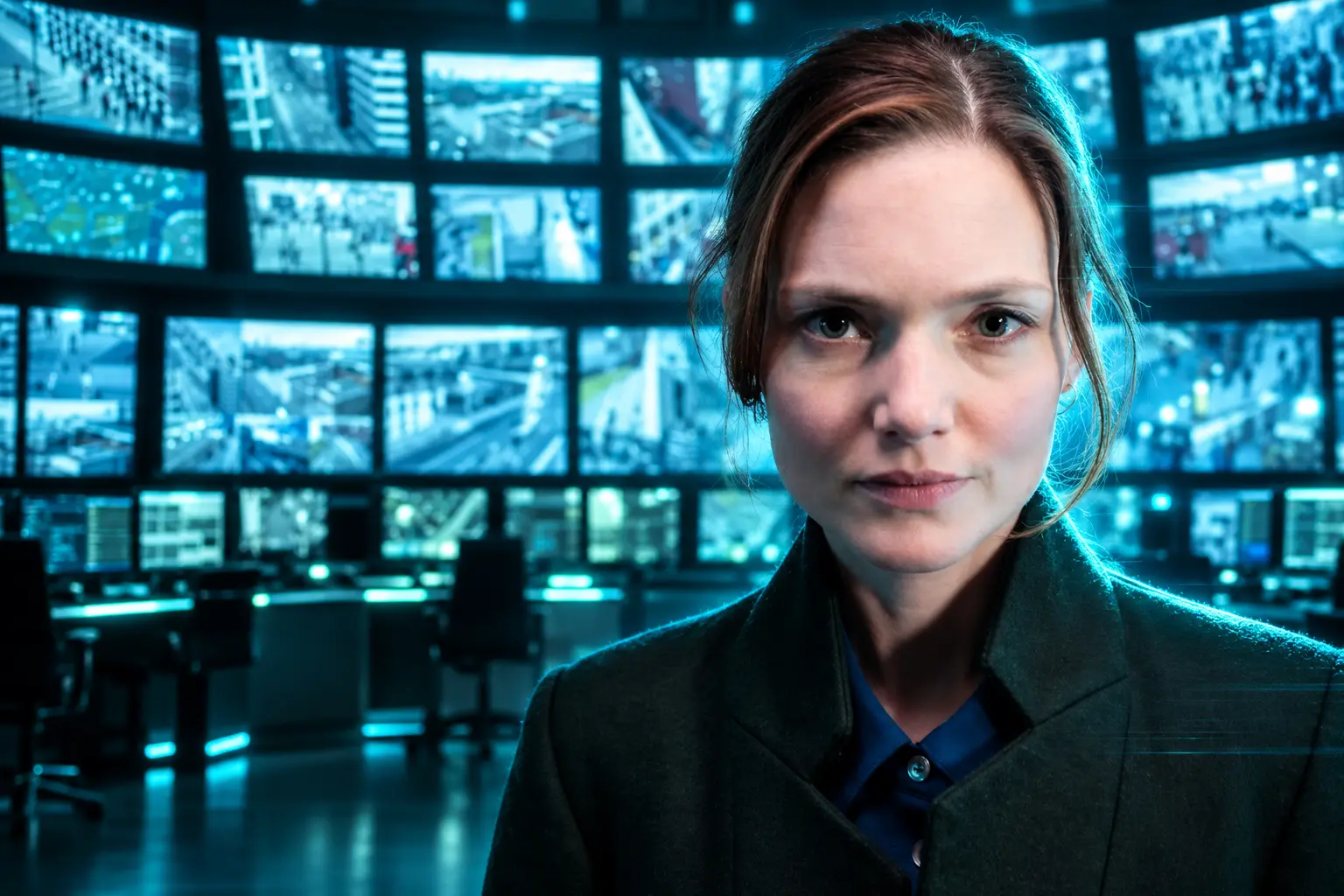
The third series held a 3.11 million average in the UK, down from 5.66 million for series 1 in 2019 and 3.81 million for series 2 in 2022. The finale was the local peak at 3.43 million. Overnight figures never fell below 3.01 million, so the audience did not collapse. It just never got back to the first run, when Callum Turner’s Shaun Emery was the face of the posters.
HOW THE THREE SERIES LANDED
| Series | UK run | Avg UK viewers (m) | Rotten Tomatoes |
|---|---|---|---|
| 1 | 3 Sep 2019 to 8 Oct 2019 | 5.66 | 92% (39 reviews) |
| 2 | 28 Aug 2022 to 12 Sep 2022 | 3.81 | 100% (12 reviews) |
| 3 | 8 Mar 2026 to 12 Apr 2026 | 3.11 | 100% (7 reviews) |
Critics stayed louder than the ratings. Jack Seale called the new series a superlative drama. James Hibbs went to 5 out of 5 and named it Grainger’s finest hour. Anita Singh, less sold, gave it 3 out of 5 and said the plots had become quite ridiculous. Seven reviews is a small sample, and 100% on that base is a perfect mark with a thin jury.
American notices kept repeating the same complaint in different clothes: the show is gripping, and almost nobody there is watching. Peacock’s British shelf has been a quiet corner of the app, and a Sunday-night BBC thriller dumped in June does not change that. The comparison UK viewers reach for is Line of Duty. The comparison U.S. viewers never get to make is the one that requires they press play.
The Premise That Reviewers Once Called Preposterous
When series 1 aired in 2019, some reviews treated real-time fake CCTV as a stretch. Grainger has been blunt about those notices. She remembered write-ups that called the idea ridiculous and far away, then watched consumer apps close the gap.
And in just a few years, it’s not just special tech guys in the military that are doing deep fakes, it’s anyone on TikTok. You can literally do it in your front room. The technology has evolved so quickly that the first series is almost passé.
Holliday Grainger, actor, series 3 press
She told another interviewer that people did not believe the first series because the real world lagged the fiction, and that by series 3 they were believing it. Working on the show, she said, reframed how she read world events, and she cannot unsee it. Chanan, for his part, has said he still does not know how a court is supposed to treat a video of a crime when anyone can fake one at home.
That is the reckoning the new season is built on. Series 1 asked if you can trust CCTV. Series 2 asked if you can trust the news, after a live hack of Paapa Essiedu’s Isaac Turner. In a BBC Writers note dated 5 March 2026, Chanan said series three asks a new question: can you trust your own eyes? Carey is no longer the detective circling the machine. She is the witness, and the machine disagrees with her.
What Happens in Season 3 of The Capture?
Twelve months after Carey blasted a live deepfake across Piccadilly Circus and exposed the intelligence programme called Correction, she is acting head of Counter Terrorism Command and the public face of Operation Veritas, a double-lensed camera net sold as proof against real-time fakes. A gunman hits the Veritas launch at the QEII Centre, kills Turner (now Home Secretary and a leadership favourite) and four armed officers, and the official footage shows a different man than the one Carey chased. The rest of the season is her trying to make other people believe what she saw.
The next paragraphs describe the full six-episode plot, including the finale.
THE SIX EPISODES
- Don’t Look at the Camera (8 Mar, 3.09m): Veritas launches, Turner is shot, and Carey recognises new commander Noah Pierson as the gunman.
- Lone Wolves (15 Mar, 3.06m): Pierson’s alibi holds on camera; James Whitlock is named to the press; Carey’s own team starts to doubt her.
- The Scarecrow (22 Mar, 3.02m): Ron Perlman’s Frank Napier tortures Pierson, then dies when Pierson kills the CIA team.
- Kill Switch (29 Mar, 3.05m): Pierson is named as an E Squadron operative under Colonel Figgis, taking orders from Simon.
- Simon Says (5 Apr, 3.01m): Flashbacks show Captain William Walker, the implant in his heart, and Simon’s order to kill Turner and Carey.
- Someone to Watch Over Me (12 Apr, 3.43m): Walker kills Gemma Garland on camera, Carey shoots him, and she uses Correction herself.
Chanan directed the finale, with Anthony Philipson on the first three hours and Johnny Allan on episodes 4 and 5. Heyday Television made the series for the BBC, with David Heyman, Rosie Alison, and Sue Gibbs among the executive producers, and NBCUniversal handling global distribution. Killian Scott, already known to UK viewers from Strike, plays Pierson as a man who looks like a colleague and moves like a weapon.
Simon Is the Villain Who Does Not Blink
Correction, in the first two series, was people in a room editing pictures. Series 3 hands the steering wheel to Simon, a predictive military model that E Squadron treats as a commander. Peacock’s own recap is blunt about the body count: the season delivers four main character deaths, two of them in the last hour.
WHO DIES IN SERIES 3
- Isaac Turner: Shot in episode 1 at the Veritas launch, the first of the four main deaths.
- Frank Napier: Killed in episode 3 after he tries to break Pierson in a black site.
- Gemma Garland: Shot by Walker in the inquiry room in the finale, then immediately rewritten on the official tape as Whitlock’s kill.
- William Walker: Shot by Carey in the tunnels; his last line is that he did save her, because Simon wanted Garland dead instead.
Whitlock and his family are killed off-screen by MI6, which is a fifth grave if you are counting civilians. Chanan has said the major deaths were planned so each loss earned its place. He also called Noah Pierson his favourite character he has written for the show, a man who appears one way and then another. Scott plays that unreadability as policy, not mystery-box teasing.
Simon’s logic is colder than Correction ever was. It wants Turner dead because of a future in which he becomes prime minister. It wants Garland dead because the public will read her corpse as the end of the deepfake programme. It wants Carey alive because it has already modelled the one thing that would make her use Correction. Figgis later tells her they asked the model that question, and the season is the answer.
Holliday Grainger’s Carey Uses the Machine She Fought
Carey spends the first two series as the person who will not sign off on a lie. Series 3 puts her in command, then strips the command, then hands it back once Walker is in a safe house. When Figgis kidnaps her and puts a gun on her sister Abigail, the feed may be fake; Abigail is alive at the end. The pressure is not. Walker, sent to rescue her, walks into the inquiry instead and executes Garland. Carey finds him in the tunnels and fires.
Then she does the thing the whole show has been warning against. To overwrite the fake of Whitlock shooting Garland, she has the CIA technician known as Wizard build a Correction of what she believes happened, and she puts that tape out. Her team hates it. Figgis loves it, because now she is compromised. Fake news floods out that Walker was a Russian asset. Men who sat on the inquiry toast the result, including Commissioner Yates, former Home Secretary figures, and the judge who chaired the hearings.
The last image is a selfie. Carey and Abigail, both alive, then Gemma standing on the deck behind them. Grainger’s own gloss on that shot was a shrug toward the show’s thesis: do you believe what you see? The honest read is that Garland is dead and Simon is still in her phone. The other read is the one the series has trained you to keep open, which is that a picture is now a claim, not a fact.
Ben Chanan Still Will Not Call It a Finale
Chanan has been circling the same answer since the UK finale. He wrote series 3 as if it were the last, because he thinks that is a healthier way to work. He also will not close the door.
Three is a nice number. A trilogy feels nice. What we do after this, I don’t know. This is maybe it. We’re just at the beginning of it, so there’s plenty of material and inspiration if we want to do another series.
Ben Chanan, creator, after the UK finale
Grainger has said she feels the best shows are trilogies, then added that The Capture has the scope to go anywhere, and that it would depend on Chanan’s brain. She has also sounded ready to leave the procedural years behind. The BBC has not announced a fourth series. Wikipedia still lists the show as ongoing. Episode guides that prefer a hard status have already marked it ended. Those two labels can sit together only because nobody in charge has picked one.
A fourth run, if it comes, would likely sit years out. Series 2 followed series 1 by about three years, and series 3 arrived more than three years after series 2 ended on 12 September 2022. Chanan has talked about waiting for reality to throw him a new nightmare. Simon is already that nightmare, and Carey is already on the wrong side of her own rule. The open wound is not a missing twist. It is a commander who used the machine, a dead mentor who may still be a file, and a model that has learned her price.
Frequently Asked Questions
When Did The Capture Season 3 Premiere in the UK and the US?
BBC iPlayer carried episode 1 from 6am on Sunday 8 March 2026, with BBC One showing it at 9pm, then weekly Sunday slots through 12 April. Peacock released the full season in the United States on 18 June 2026. ABC Television and iview opened the Australian window on 7 June 2026, so some international viewers finished the story before Americans were allowed to start it.
How Many Episodes Are in The Capture Season 3?
Six, matching series 1 and series 2, for 18 episodes in total across the whole show. Running times sit between 56 and 73 minutes, and Chanan wrote every hour himself, which is why the plot can turn on a single planted frame and still feel like one person’s argument.
What Is Correction in The Capture?
Correction is the show’s name for a clandestine intelligence programme that edits video in real time so fake pictures can pass as evidence. Series 1 used it on CCTV, series 2 pushed it into live television, and series 3 folds it into Simon, an AI that also plans killings and political outcomes rather than just doctoring tape.
Is Gemma Garland Dead in The Capture Season 3 Finale?
On screen, Walker shoots her through the head at the inquiry, and Carey later sees her in a selfie under the alias Jacqueline Goldcross. Grainger’s line on that last frame was to ask whether you believe what you see, which is the show refusing to certify a corpse the way a police report would.

UPI MDR Delay Hands Traders the Calendar After Paytm Falls

Google Messages Builds Nine In-Chat Games After Samsung’s Exit

Anthropic’s $100 Million Academy Trains the Firms That Bill Both Sides

Toyota’s Electric C-HR Leaves the Cheap Twin to Subaru

Markets Bet the Fed Skips October After Hawkish Minutes

The Orchard Bug Forced Zcash to Open an Empty Pool

The $5.99 Game That Won Steam’s 2026 Summer Sale

Don Lee Joins Hemsworth as Extraction 3 Starts Shooting

YouTube Shorts Retires Dislikes and Swaps Likes for Hearts

NEURA Robotics Is Spending Its $1.4B on a Machine Stack
-
 NEWS5 months ago
The Orchard Bug Forced Zcash to Open an Empty Pool
-
 GAMING5 months ago
The $5.99 Game That Won Steam’s 2026 Summer Sale
-
 ENTERTAINMENT7 months ago
Don Lee Joins Hemsworth as Extraction 3 Starts Shooting
-
 NEWS5 months ago
YouTube Shorts Retires Dislikes and Swaps Likes for Hearts
-
 NEWS4 months ago
NEURA Robotics Is Spending Its $1.4B on a Machine Stack
-
 NEWS5 months ago
Atlantic City Turned WWE’s Return Into a Civic Night
-
 AUTO6 months ago
Kawasaki Bets the New Z1100 Against Its Own Supercharger
-
 BUSINESS5 months ago
Norway’s Export Bank Backs Nscale’s $790 Million Narvik Loan