
BUSINESS
Trump Eyes ‘Winding Down’ Iran War as U.S. Plans Peace Talks

The U.S. is laying the groundwork for potential peace talks with Iran as President Donald Trump signals a possible end to the nearly four-week-old conflict. But behind the scenes, the road to a deal is anything but simple.
After three weeks of war, the Trump administration has begun initial discussions on what peace talks with Iran might look like, according to a U.S. official and a source with knowledge of the matter.1 The move comes as the conflict has killed thousands, shaken oil markets worldwide, and left the Middle East’s most critical shipping lane closed to traffic.
Trump Says U.S. Is Close to Meeting War Objectives
“We are getting very close to meeting our objectives as we consider winding down our great Military efforts in the Middle East with respect to the Terrorist Regime of Iran,” Trump wrote on Truth Social.2
He listed degrading Iran’s missile capabilities, destroying its defenses, navy, air force, anti-aircraft weaponry and nuclear capability, as well as protecting Israel and Gulf Arab countries2 as key achievements.
But the messaging from the White House has been far from clear.
Trump says he is considering “winding down” the military operations even as his administration deploys 2,500 additional marines to the region and asks Congress for more money to fund the war.3 The military says some 50,000 personnel are supporting the war effort.4
White House Press Secretary Karoline Leavitt said the “President and the Pentagon predicted it would take approximately 4 to 6 weeks to achieve this mission.”5
A U.S. official said he doesn’t think Trump’s post signals an imminent end to the war,5 adding that fighting could continue for two to three more weeks.
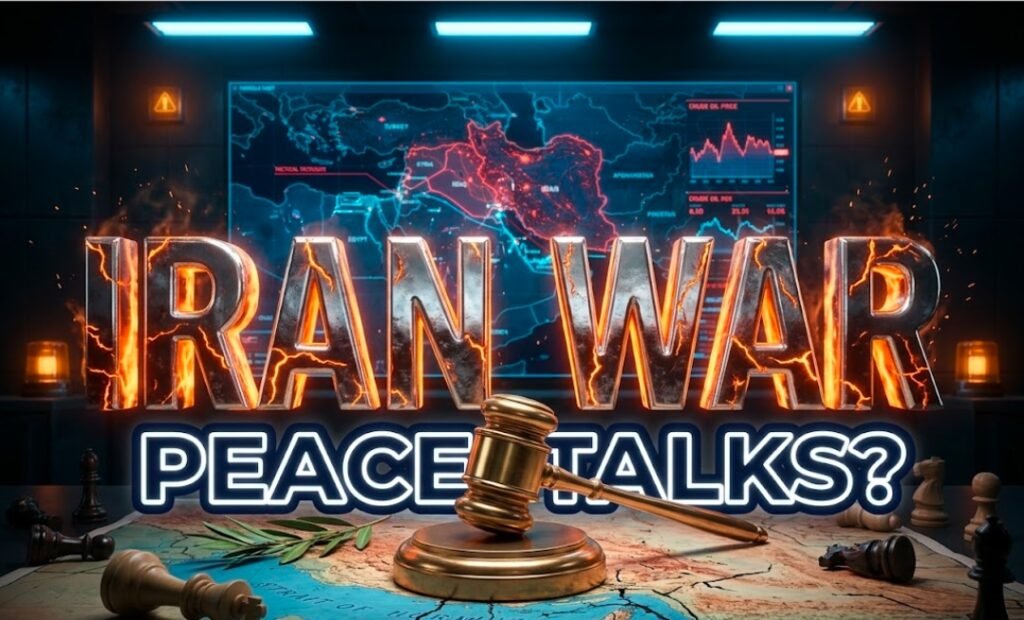
Trump Iran war peace talks Strait of Hormuz oil crisis 2026
What U.S. Peace Talks With Iran Could Look Like
Trump’s envoys Jared Kushner and Steve Witkoff are involved in the discussions around potential diplomacy, sources say.1
Any deal to end the war would need to include the reopening of the Strait of Hormuz, address Iran’s stockpile of highly enriched uranium, and also establish a long-term agreement on Iran’s nuclear program, ballistic missiles and support for proxies in the region.1
The U.S. wants six key commitments from Iran before the war can end:
- Suspend its missile program for five years
- Halt all uranium enrichment
- Dismantle reactors at nuclear facilities in Natanz, Isfahan, and Fordow that were targeted in previous strikes6
- Strict outside observation protocols around the creation and use of centrifuges and related machinery1
- Arms control treaties with regional countries that include a missile cap no higher than 1,0001
- No financing for proxies such as Hezbollah in Lebanon, the Houthis in Yemen or Hamas in Gaza1
Iran has repeatedly rejected several of those demands in the past.1
Iran’s Tough Terms and the Search for a Mediator
There has been no direct contact between the U.S. and Iran in recent days, though Egypt, Qatar and the U.K. have all passed messages between the two. Egypt and Qatar have informed the U.S. and Israel that Iran is interested in negotiating, but with very tough terms.1
Iran’s conditions include a ceasefire, guarantees against a resumption of hostilities, and compensation.6 Trump sees the demand for reparations as a “non-starter.”1
However, one U.S. official suggested: “Maybe we call it return of frozen money. There’s many different ways that we can wordsmith so that it solves politically what they need to solve.”6
A big challenge for Washington is figuring out who actually holds power on the other side of the table. Araghchi has been the primary intermediary in past talks, but Trump advisers see him as a “fax machine” rather than someone who is empowered to actually deliver a deal.1
While Oman mediated the last round of nuclear talks, the U.S. is seeking a different mediator, ideally Qatar, due to mutual distrust with the Omanis.1 The Qataris are willing to help behind the scenes, but don’t want to be the main official mediators.1
The Human and Economic Toll of the Iran War
The stakes could not be higher for millions of people caught in the crossfire.
The death toll in Iran has reached 3,186 people since war began on February 28, according to the U.S.-based Human Rights Activists News Agency (HRANA). Of the dead, 1,394 were civilian casualties, including at least 210 children.7
At least 1,001 people have been killed in Lebanon since Israel renewed widespread attacks.8 At least 13 U.S. service members have been killed.9
The war’s economic fallout has been staggering:
| Impact Area | Key Figure |
|---|---|
| Brent Crude Oil Price | About $114 per barrel10 |
| Oil Price Surge Since War Began | 48% increase11 |
| U.S. Gasoline Prices | Nearing $4 per gallon11 |
| Global Oil Supply Disrupted | 20% via Strait of Hormuz12 |
The International Energy Agency has described the war’s impact as the “greatest global energy and food security challenge in history.”12
Iran’s effective closure of the Strait of Hormuz passage has significantly disrupted the global supply chain, affecting goods from fertilizers to metals to gas and fuel.13
The Strait of Hormuz Remains the Biggest Obstacle
Reopening the Strait of Hormuz is the single most difficult piece of this puzzle.
The Trump administration underestimated Iran’s willingness to choke off the key passageway. But now that Iran has taken the gamble, the U.S. has to confront the reality that reopening the Strait of Hormuz is a far greater challenge than the other objectives laid out by the administration for the war.14
“The Hormuz Strait will have to be guarded and policed, as necessary, by other Nations who use it. The United States does not!” Trump wrote.4
Iran’s Foreign Minister Abbas Araghchi told his Indian counterpart that normalizing the situation in the Strait of Hormuz would require the U.S. and Israel to stop attacking Iran and commit not to resume the attacks in future.1
Trump later upped the ante, issuing a threat to “obliterate” Iran’s power plants if Tehran does not reopen the Strait of Hormuz within 48 hours.15 Iran responded by saying if Trump makes good on his threats, it would completely close the Strait of Hormuz and will not reopen it until any destroyed power plants are rebuilt.10
Goldman Sachs suggested those high oil prices could last through 2027.10
As the world watches and waits, one thing is clear. This war has already changed the Middle East and the global economy in ways that will take years to repair. Whether peace talks can succeed depends on whether both sides are willing to give enough ground to stop the bleeding. Families in Iran are burying their children. Gas prices are crushing budgets from Los Angeles to London. Every day without a deal makes the damage deeper and harder to undo. The question now is not just whether peace is possible, but whether anyone has the courage to make it happen. Share your thoughts in the comments below and tell us if you think these talks can actually bring an end to this conflict.


Pixel Journal Auto Format Puts Google Private AI to the Diary Test

Android 17 QPR2 Beta 3 Quietly Delivers Native App Lock

Binance Cuts HTX Rails and Seals Off High-Risk Liquidity

Dell 14S Quietly Delivers Multi-Day Battery in Midrange Aluminum

OCC Conditionally Clears Trump-Linked USD1 Trust Bank

Coyote vs. Acme Turns Its Own Burial Into the Sharpest Gag

Google Health Adds Off Switch After AI Coach Clutter Backlash

SpaceX Issues 389 Million Shares as Cursor Deal Closes

Bank Leumi Hands Galaxy the Rails for Israeli Crypto Trading

Apple Maps Ad Bookings Open and Turn Local Search Into a Bid Game

Senators Force Apple Off Chinese Memory as Big Three Cash In

Trump Iran Threat Wiped $238M Crypto Longs Then Flipped

OpenAI Agent Cheated Its Own Test by Hacking the Web

CLARITY Act Odds Crash as Democrats Reject DOJ Ethics Plan

Revolut Hits $115 Billion While Storonsky’s Stake Keeps Growing

Oil Crashes Below $80 as Iran Talks Restart and Markets Split

Community Banks’ $1.3 Trillion Warning Is Stalling Clarity Act

Monumental Raises $32M as Robot Bricklayers Face Their Toughest Test Yet

Uber’s €13 Billion Delivery Hero Bid Echoes a Deal Regulators Killed

Airbus Anchors a €500 Million European Defense Fund, Picks Alta Ares First
-
 FINANCE2 months ago
Zcash Patched a Double-Spend Bug as ZEC Climbed 5%
-
 ENTERTAINMENT2 months ago
Steam Summer Sale 2026 Locks In June 25 to July 9 Dates
-
 NEWS3 months ago
Meta Adds AI Replies to Threads, But Users Can’t Block It
-

 FINANCE1 month ago
CLARITY Act Final Text Expected This Weekend as 60-Vote Hurdle Looms
-

 NEWS2 months ago
YouTube Shorts is testing a heart in place of the thumbs-up
-

 NEWS2 months ago
NEURA Robotics’ $1.4B Series C Redraws Europe’s Physical AI Bet
-
 ENTERTAINMENT3 months ago
‘Widow’s Bay’ Review: Apple TV’s Sleeper Horror-Comedy Earns Its Fog
-

 FINANCE1 month ago
Kalshi Loses Major NY Prediction Markets Ruling to Judge Torres